Portuguese
  Spanish


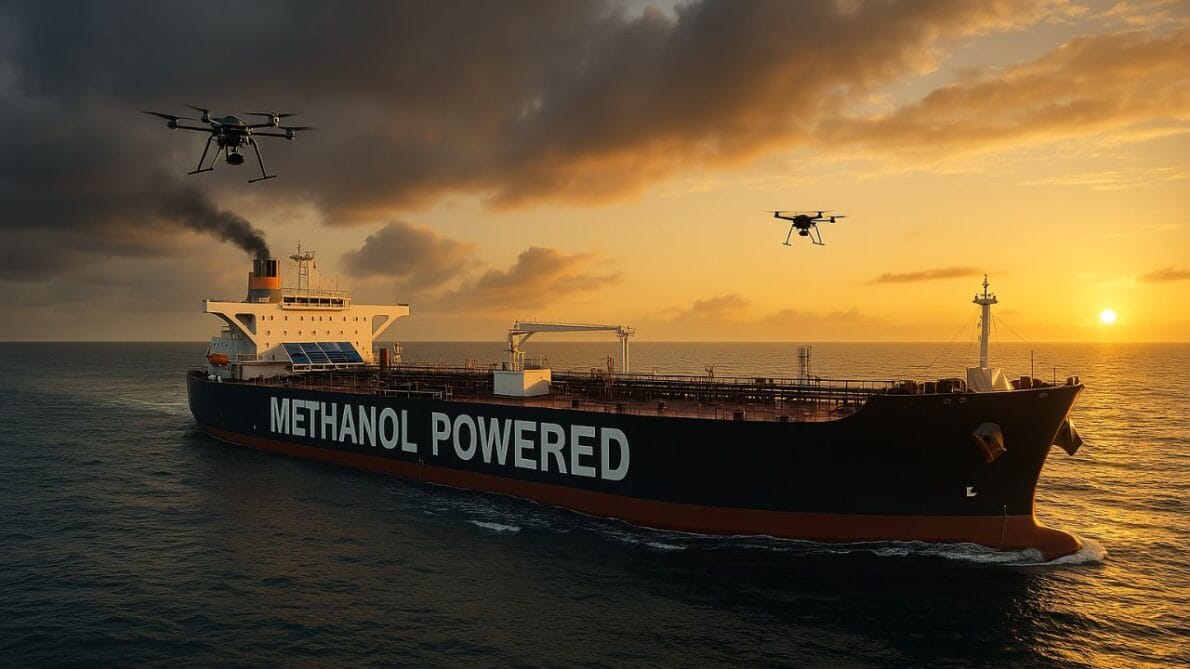

With 310 Thousand Tons and Nearly 340 Meters in Length, NYK Line Ship Represents a Global Milestone in Sustainable Navigation
In a bold step towards the decarbonization of maritime transport, the Japanese company NYK Line announced the construction of the world’s first VLCC (Very Large Crude Carrier) powered by methanol, with a capacity of 310 thousand tons and hybrid propulsion. The giant vessel will be built by Nihon Shipyard and is expected to be delivered by 2028, operating under contract with Idemitsu Tanker. The initiative marks a strategic advancement in the naval sector, combining innovation, efficiency, and a commitment to global environmental goals.
A Giant Oil Tanker with a Green Soul Able to Operate with Methanol
Measuring 339.5 meters in length, the new VLCC ranks among the largest vessels in the world, but it stands out mainly for its dual-fuel propulsion system, capable of operating with methanol and conventional fuel oil. This combination allows for a significant reduction in greenhouse gas emissions while providing operational flexibility across different routes and ports.
The project includes a high-efficiency shaft generator, which further helps to reduce energy consumption and emissions, especially during low-speed operations or port maneuvers.
-
Petrobras Approves $1.2 Billion Refinery in Brazil to Produce Aviation Fuel and Diesel from Plants

-
Petrobras Secures $2.2 Billion Contract to Build and Operate Four Support Vessels for Brazil’s Offshore Oil Fields
-
Oil production grows in Rio, but reserve replacement raises a warning sign

-
Petrobras is expected to complete the drilling of the Morpho well in the Foz do Amazonas in August 2026, the first well in the Equatorial Margin, an oil frontier that the ANP estimates at more than 30 billion barrels and could redraw the map of Brazil.



Why Methanol?
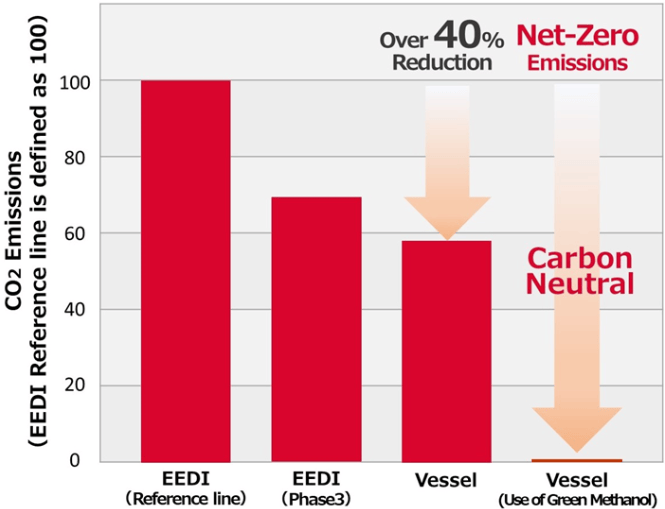
As the maritime sector seeks viable alternatives to fossil fuels, methanol emerges as one of the most promising options. Liquid at room temperature, easy to store, and with expanding refueling infrastructure, it offers a practical and less polluting solution.
According to NYK Line, the new ship could emit up to 40% less CO₂ compared to ships powered exclusively by fuel oil.
Partnership Between Maritime and Energy Industry Giants
The construction of the sustainable VLCC is the result of a strategic collaboration between NYK Line, Idemitsu Tanker, IINO Kaiun Kaisha, and Nihon Shipyard. The initiative reinforces Japan’s position as a leader in eco-friendly maritime transport, integrating private sector goals with international climate policies, such as the Paris Agreement and the IMO (International Maritime Organization) objectives.
A New Horizon for Global Oil Transport Powered by Methanol
Even though it is an oil tanker, a classic symbol of the fossil fuel era, the new vessel signals that the energy transition is possible within the very paradigms of the sector. By adopting clean technologies in large vessels, companies like NYK demonstrate that it is feasible to keep global logistics moving without increasing environmental impact.
The ship is expected to be delivered in 2028, with expectations that it will become the reference model for future sustainable VLCCs. NYK claims that the project will serve as a floating laboratory for testing and enhancing green technologies, contributing to the advancement of alternative engines across the international fleet.