Portuguese
  Spanish


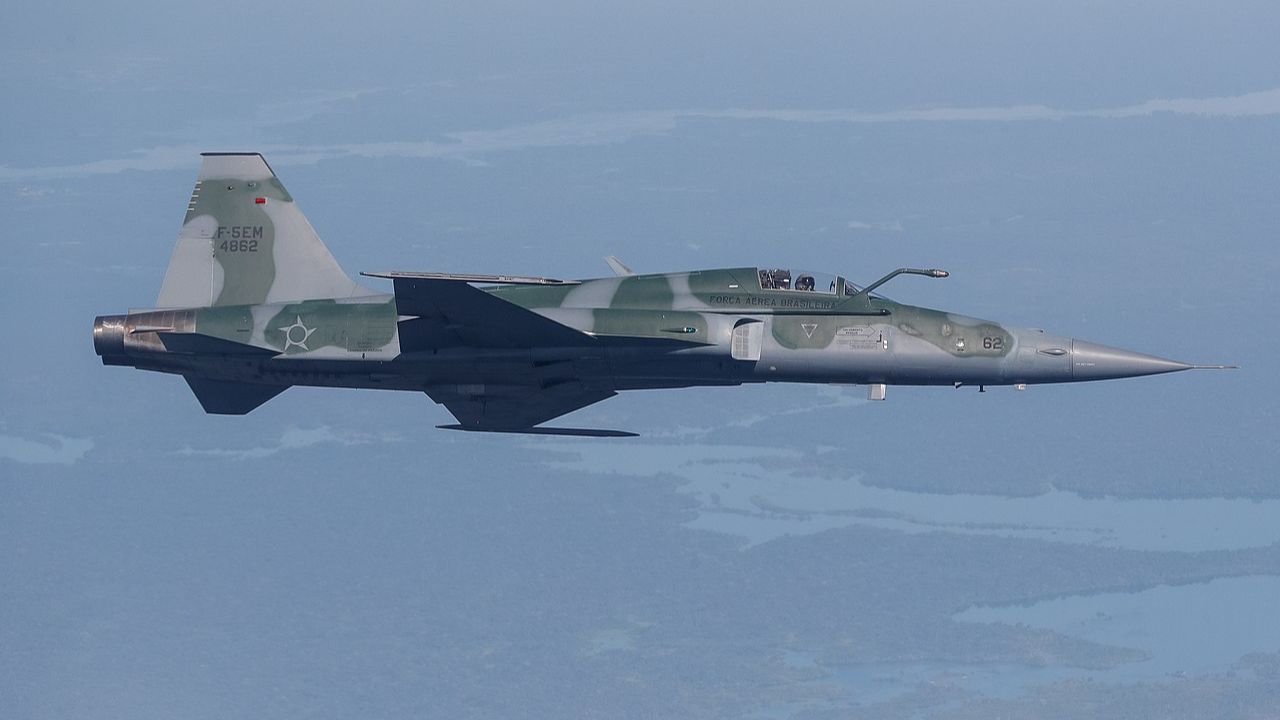


Private Flight Between São Paulo and Anápolis Is Intercepted by F-5 Fighter Jet from Brazilian Air Force in Routine Air Blitz, Startles Passengers, and Exposes That Any Airplane Can Be Approached and Even Shot Down in Case of Suspicion
The private flight that was heading from São Paulo to Anápolis was intercepted by an F-5 fighter jet from the Brazilian Air Force and turned an ordinary trip into a scene worthy of a movie. The doctor on board looked out the window and saw the fighter approaching, flying side by side with the jet and maneuvering very close to the civilian aircraft, enough to provoke scares and screams among the passengers.
While the pilot followed communication procedures with air defense, the jet intercepted by the F-5 fighter jet from the Brazilian Air Force had its information checked, and only after confirming that everything was in order did the military aircraft move away. The Air Force explained that this type of interception is a kind of blitz in the air and that any aircraft in Brazilian airspace is subject to this type of approach.
Video Records Jet Intercepted by F-5 Fighter Jet from Brazilian Air Force
The video was recorded from inside the private jet and shows the exact moment when the jet is intercepted by the F-5 fighter jet from the Brazilian Air Force. The doctor filming reacts loudly when she sees the fighter approaching from the side in an accompanying position.
-
U.S. Navy’s Ticonderoga-class Cruiser Becomes a 9,800-Ton Missile Fortress with Advanced Aegis System Capable of Tracking Hundreds of Targets

-
France’s Charles de Gaulle: The Sole Nuclear-Powered Aircraft Carrier Outside the US, Weighing 42,500 Tons and Equipped with Two Atomic Reactors

-
The military spaceplane that almost took the Cold War into orbit: Boeing X-20 Dyna-Soar was designed to re-enter above Mach 20, fly for up to 40 hours, land like a plane, and transform Titan rockets into a gateway to a new era of orbital warfare.
-
FAB bets on national drones and increases investments to strengthen the Brazilian aerospace industry





Then, the military aircraft comes even closer, flying side by side and making it clear to those on board that this was not a casual passage in the sky, but a real interception in progress. After checking the information with the pilot, the fighter performs a maneuver, moves away, and continues on its path, concluding the action.
Brazilian Air Force Says Interception Is Routine Air Blitz
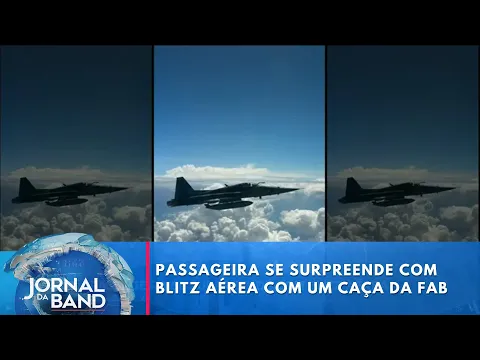

In a statement, the Brazilian Air Force explained that this type of action is provided for in airspace policing. In other words, it works like a traffic blitz, but in the sky. Any aircraft flying in national airspace can be approached if there is a need to verify flight data, origin, submitted plan, or any suspicion.
According to official protocol, any aircraft can be intercepted by an F-5 fighter jet from the Brazilian Air Force or other air defense vectors whenever the control system identifies something out of the norm. The action that took place on Tuesday afternoon with the jet between São Paulo and Anápolis follows exactly this logic.
Pilot Explains How He Reacted to Being Intercepted
The pilot of the private jet, with 14 years of aviation experience, reported that he noticed the fighter’s approach just as he was preparing to begin the descent. As soon as he identified that he was being intercepted by the F-5 fighter jet from the Brazilian Air Force, he began to follow the procedures he had learned since his training phase.
He emphasized that there is a well-defined script: maintain course and attitude, listen for radio contact, respond clearly, and follow the air defense’s instructions. This is not a time to improvise; it is time to show that the airplane is legitimate, that there is communication, and that there is no hostile intent.
Air Blitz Is Not Rare and Can Involve Trafficking and Other Crimes

The scene of the jet being intercepted by the F-5 fighter jet from the Brazilian Air Force attracts attention because it was filmed and went viral, but interceptations of this type are much more common than they seem. The Brazilian Air Force frequently conducts this type of approach, mainly in sensitive areas for combating air trafficking of drugs and other crimes.
In border regions between Brazil, Bolivia, and Paraguay, for example, suspicious aircraft transporting drugs have already been intercepted, forced to land, or even abandoned by criminals after forced landings and aircraft fires. It is the same air defense protocol that, in extreme situations, can lead to shooting down.
From Radar to Warning Shot: How Interception Works
The process starts well before the pilot sees a fighter through the window. First, the radars of the Air Force identify the aircraft on a suspicious route or with some discrepancy in the flight plan. From there, a fighter is dispatched and takes off to make the approach.
In the air, the military aircraft positions itself next to the civilian aircraft and initiates radio contact. If there is a response and the explanations are deemed adequate, the action tends to end in verification, as occurred with the jet between São Paulo and Anápolis.
If there is no response, or if the response is not convincing, a warning shot may be fired, visible to the intercepted pilot, as a clear order for a change of attitude or immediate landing.
When the Brazilian Air Force Can Reach a Shootdown of an Aircraft

As a last resort, when an aircraft intercepted by the F-5 fighter jet from the Brazilian Air Force remains unresponsive, does not follow orders, enters a risky route, or threatens national airspace, the protocol provides for the possibility of shootdown. This extreme measure is used to neutralize serious risks, such as illegal transport on a suspicious route or threats to the territory.
The rule is clear: the shootdown is the last step of an escalation that begins at radar, passes through communication, visual interception, warning shot, and only reaches the extreme when no other action is effective.
What Lesson Remains for Those Flying in Private Aircraft
The case of the jet intercepted by the F-5 fighter jet from the Brazilian Air Force serves as a warning for any operator or passenger of general aviation. Even on routine flights, with everything in order, one must be ready for an air blitz. This means having a proper flight plan, documentation in order, and the pilot prepared to promptly respond to air defense.
For those in the passenger cabin, the scene can be frightening, but the presence of the fighter does not automatically mean that there is a crime or irregularity, and rather that the system is functioning to check who is crossing the country’s skies.
And you, if you were in a jet intercepted by the F-5 fighter jet from the Brazilian Air Force, would feel more at ease knowing that the airspace is being monitored, or would you find the experience too frightening to repeat?