






 Portuguese
  Spanish
  4 min of reading
  0 comments


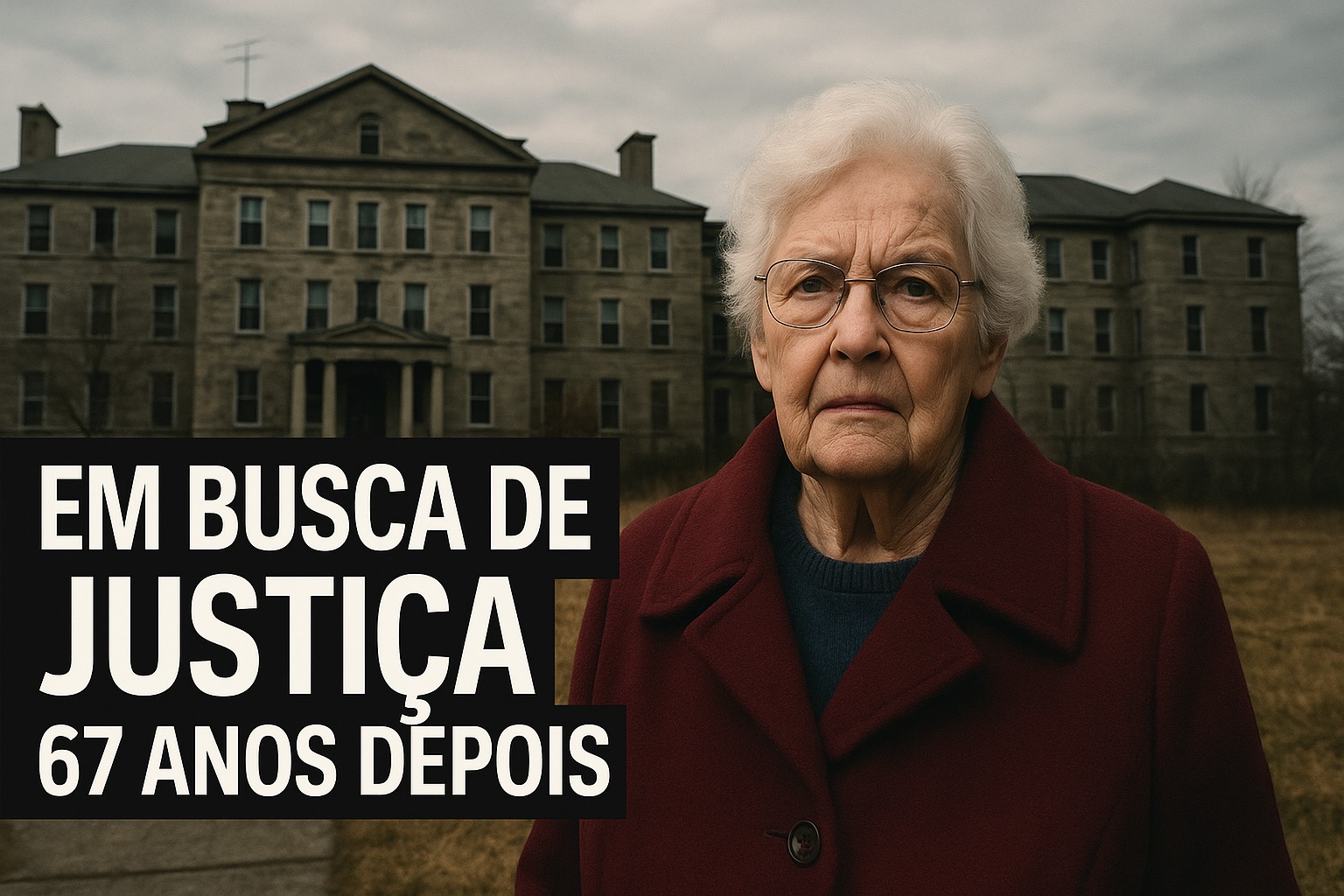
Decades After Being Committed by Force, Lana Ponting Files Class Action Against the Hospital and McGill University for Participation in Illegal Experiments of the MK-Ultra Project Funded by the CIA During the Cold War
The smell of the Allan Memorial Institute in Montreal still lingers in Lana Ponting’s memory. The place, which once belonged to a Scottish naval magnate, became her forced home for a month in 1958. At the time, a judge ordered that the only 16-year-old girl be committed for behavior deemed “disobedient.” The information is from the BBC.
Ponting hardly imagined she would be used as a guinea pig in secret experiments conducted under the CIA’s MK-Ultra project.
The research, created during the Cold War, tested psychedelic drugs, electroshock, and brainwashing techniques without the participants’ consent.
-
Helicopter Drops 180 Tons of Sand and Gravel on Swedish River to Revive Ecosystem Damaged by Decades of Exploitation

-
Brazilian Company Launches Retro Smartphone with 48 MP Camera, T9 Keyboard, and Privacy Features for Social Media-Free Use

-
Self-Taught Chinese Farmer Builds 5-Ton Submarine from Scrap, Launches It in Anhui River
-
Invisible Induction Technology Enables Wireless Power for Blenders, Coffee Makers, and Air Fryers, Reducing Countertop Cables





An Ordinary Young Woman Taken to Scientific Hell
According to recently obtained medical records, Ponting had begun to run away from home and socialize with friends her parents disapproved of. For the judges of the time, this was enough to consider her rebellious.
According to the BBC report, upon arriving at Allan, she was subjected to experimental sessions conducted by Ewen Cameron, a researcher at McGill University.
Cameron believed he could “reprogram” the human mind, destroying unwanted memories and behaviors through drugs, repetitive sounds, and sensory deprivation.
Ponting recalls hearing recordings non-stop, always with the same phrase: “You are a good girl, you are a bad girl.” This technique, called “psychic driving,” aimed to condition the subconscious.
Drugs, Electroshock, and Sensory Deprivation in the Experiment
The documents show that Ponting received doses of LSD, sodium amytal, desoxyn, and nitrous oxide. Cameron recorded that on April 30, 1958, she reacted violently to nitrous oxide, screaming and throwing herself off the bed.
Other patients were also subjected to long periods of induced coma and sensory deprivation while listening to repetitive recordings thousands of times.
According to researchers, the goal was to erase memories and rebuild personality from scratch.
More than a hundred institutions in the United States and Canada participated in the program. But the Allan Institute, under Cameron’s command, became the epicenter of horror.
Delayed Justice, but Not Forgotten
Now, more than six decades later, Ponting is one of the plaintiffs in a class action against the Royal Victoria Hospital and McGill University.
On Thursday, November 13, a judge rejected the hospital’s appeal, allowing the case to proceed.
Other victims had sought legal redress before. In the 1980s, nine of them received compensation of US$ 67,000 after a Canadian court’s ruling.
In 1992, the Canadian government paid CAD 100,000 to 77 people, citing “humanitarian” reasons, without admitting guilt.
Ponting was not included in those settlements because, at the time, she was still unaware of her involvement. She only discovered her participation years later when she accessed her own medical records.
The Mental Experiment: Marks That Never Disappeared
Today, living in Manitoba, married and with four grandchildren, Ponting claims she still suffers from the psychological consequences of what she experienced at Allan.
She has been taking medication since she was young and reports recurring nightmares about the days she was drugged and isolated.
“Sometimes I wake up screaming in the middle of the night because of what happened,” she says. She states that while she has managed to rebuild part of her life, she has never overcome the trauma.
The hospital and the university declined to comment on the case, citing the ongoing lawsuit. The Canadian government reiterated that the 1992 settlement did not represent an admission of guilt.
Ethical Responsibility and Dark Legacy
PhD student Jordan Torbay, who studies the history of Cameron’s experiments, asserts that the victims seek more than money: they want recognition.
According to her, there is no doubt that the practices were unethical, even if Cameron did not know that the funding came from the CIA.
The researcher’s work ended in 1964, and he died in 1967. But for Torbay, that does not lessen his responsibility. “He knew he was manipulating vulnerable people, and that alone was unacceptable,” she states.
Ponting sees the process as a chance to close a chapter. “Sometimes I sit in my room and think about everything that happened. Every time I see a picture of Cameron, I get very angry,” she confides.
Torbay believes that while justice will not return what has been lost, it can prevent similar stories from happening again. “Their suffering cannot have been in vain. The world needs to learn from this,” she concludes.
With information from BBC.




-

1 person reacted to this.