






 Portuguese
  Spanish


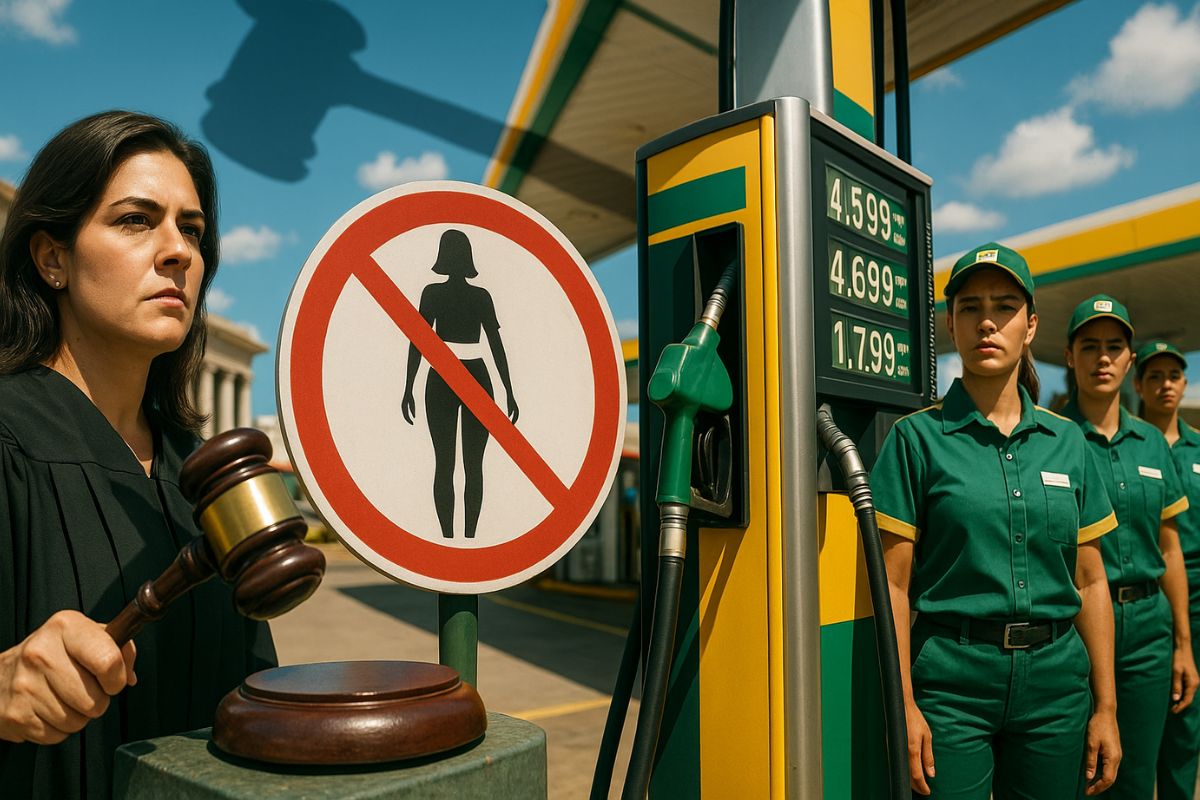


Labor Judge Prohibits Leggings and Cropped Tops After Union Action and Requires New Uniforms Appropriate for the Environment and the Role of Gas Station Attendants.
According to the portal Migalhas, a gas station in Recife was ordered by the Labor Court to stop the use of leggings and cropped shirts as uniforms for gas station attendants, after Judge Ana Isabel Guerra Barbosa Koury, from the 10th Labor Court of Recife, accepted the union’s action and prohibits leggings and cropped tops on the grounds that the clothing violates the dignity of the workers and increases the risk of harassment. The decision mandated that the gas station provide new items compatible with the work environment and the activities performed.
In the urgent injunction granted, the judge concluded that the imposed uniform was inappropriate for the context of a gas station, a place of high traffic predominantly male, unnecessarily exposing the bodies of the employees. For the judge, maintaining the current model would mean prolonging situations of embarrassment and vulnerability, which justified the immediate measure that prohibits leggings and cropped tops and imposes the replacement of the items within a short timeframe.
Union Takes Legal Action and Questions the Exposure of Gas Station Attendants
The action was presented by the union representing the category, which alleged noncompliance with the Collective Labor Agreement due to the requirement for uniforms deemed inappropriate for the work environment.
-
Seniors Over 60 Can Travel for Free Across Brazil: Elderly Statute Ensures Two Free Bus Seats and 50% Discount When Full for Low-Income Passengers

-
Detran RJ starts requiring a toxicological test for those obtaining their first driver’s license in the car and motorcycle category starting June 29; see who will be affected.

-
Florida takes TikTok to court and accuses the Chinese giant ByteDance of ignoring the law that bars minors under 14, while parents and authorities demand more protection for children on social networks.
-
Chamber approves constitutional amendment reducing the age of criminal responsibility from 18 to 16 years; what now?




According to the organization, the items were tight and short, unnecessarily accentuating the female body in an area of intense customer flow and male predominance.
Images attached to the case showed gas station attendants wearing leggings and cropped tops, reinforcing the argument that the uniform, instead of providing protection, accentuated exposure and facilitated situations of embarrassment and potential harassment.
These elements were decisive in concluding that the company’s measure exceeded the limits of reasonableness and respect for workers.
Foundational Arguments Cite Dignity, Safety, and Urgent Legal Protection
In the decision that prohibits leggings and cropped tops, the judge pointed to the fulfillment of the requirements of Article 300 of the Code of Civil Procedure, which deals with the granting of urgent protection.
For her, the evidence presented indicates the likelihood of the union’s right and the danger of continuous harm to the psychological and moral integrity of the employees if the uniform were to be maintained.
The judge emphasized that the Collective Agreement guarantees the free provision of uniforms, and that, even without specifying models, this obligation must be interpreted in light of principles such as safety, hygiene, and respect for human dignity.
A uniform must not turn the worker’s body into the central element of the activity, nor expose her to greater risks than those already inherent to the environment of a gas station.
New Uniform Must Be Appropriate for the Role and the Environment
In defining the measure, the judge determined that the gas station immediately cease the provision and requirement of using the items deemed inappropriate, consolidating the order that prohibits leggings and cropped tops as the standard attire for gas station attendants.
Within five days, the company must offer new uniforms compatible with the role and the workplace, such as straight-cut pants and standard-length shirts, which ensure greater protection and reduce body exposure.
The change seeks to align the clothing with the protective purpose of the uniform, preventing the appearance of the workers from becoming a focal point of attention in an environment already sensitive in terms of safety and harassment.
Daily Fines Pressure Compliance with the Court Decision
To ensure compliance with the order, the decision set a daily fine of R$ 500 for each worker found in noncompliance, an amount that may be directed to the employee herself or to the Workers’ Support Fund, depending on what is defined in the execution phase.
The fine provision serves as a pressure mechanism for the company to align effectively, not just formally.
The case, registered under number 0001149-37.2025.5.06.0010, indicates that court decisions can directly intervene in uniform policies when there is a violation of dignity, safety, or unnecessary exposure of the worker’s body.
By prohibiting leggings and cropped tops at the gas station, the ruling reinforces that business freedom in choosing clothing finds its limits in the fundamental rights of the people who wear them.
For you, uniforms that emphasize the body in public-facing workplaces should be broadly prohibited by law, or are case-by-case decisions like this sufficient to change practices in companies?


