






 Portuguese
  Spanish
 2 min of reading


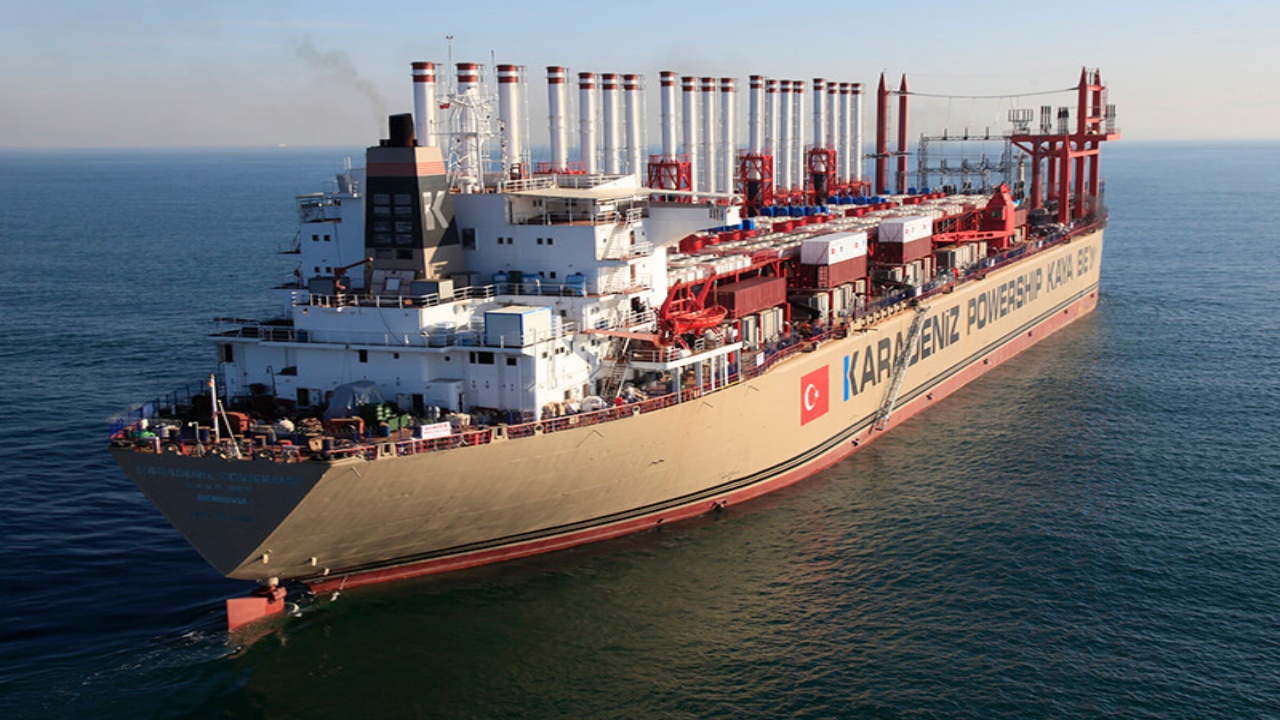
Rio Justice Suspends Installation of Floating Thermal Power Plants (UTEs) by Karpowership in Sepetiba Bay Due to Lack of Environmental Impact Documentation
The first arrival of the four floating natural gas power ships from Karpowership, called powerships, that were to be installed in the port area of Sepetiba Bay, occurred last Saturday, July 23, at the port of Itaguaí (RJ). However, not everything is smooth sailing, as the Rio de Janeiro Justice has determined the immediate suspension of the installation and operation of the floating thermal power plants (UTEs). The decision may be appealed.
The commissioning tests for the transmission lines are practically completed, meaning that with the ships’ presence, the Turkish company Karpowership expects the operation of 560 MW (enough to supply 2 million people) to start in the coming days.
The project details focused on the environment considering that the fuel for the ships, supplied by a Floating Storage and Regasification Unit, consists of 40% natural gas, reducing the amount of diesel or coal.
-
Neighboring Balneário Camboriú will receive a R$ 1 billion airport with 225 hangars, an area of 2.2 million m², a technology park, and an export zone that promises to transform the economy and generate thousands of jobs.

-
After investing R$ 5,000 in fried chicken in his backyard, a Brazilian transformed two fryers and a freezer into a network with 115 sales points, presence in up to 17 states, and revenue exceeding R$ 115 million per year.
-
Not even Trump convinces the market: U.S. companies state that Brazil has no substitute, pressure Washington against the 25% tariff, and warn that the measure could raise prices, cause layoffs, delay projects, and harm sectors that depend on stones, wood, seeds, and other Brazilian products.

-
It’s not just Bolsa Família: CadÚnico can provide access to seven little-known benefits, including cheaper electricity bills, free interstate travel, microcredit, cisterns, popular phone service, and exemption from fees in public exams and the Enem.




Additionally, the natural gas floating power plants also have energy efficiency, and due to the project duration of only 44 months, the structures are easily movable.
Suspension of the Floating Thermal Power Plants
In the decision, the judge of the 2nd Public Finance Court of Rio de Janeiro, Georgia Vasconcellos da Cruz, questions the deliberation of the State Environmental Control Commission that exempted the company from presenting environmental studies to obtain licenses from Inea, the state environmental agency.
“The case also serves as a warning regarding the investment risks in thermal power plants powered by fossil fuels — with high socio-environmental impact, expensive energy, and risk of legal disputes”, evaluates Juliano Bueno de Araújo, technical director of the Oil and Gas Observatory.
“Brazil needs low and clean energy tariffs. Unfortunately, the management of Brazilian energy policy is heading towards an excessive acceleration of a fossil and expensive energy matrix, making our tariff one of the highest in the world,” comments Juliano.
“The project has complied with all procedures of the environmental agency and all necessary environmental impact studies have been submitted. The company emphasizes that the project has a low environmental impact, especially when compared to other thermal plants, is quickly mobilized and demobilized, and uses natural gas for power generation, which is cleaner and considered a transitional fuel,” says Karpowership.
“The project will be allocated in a port area suitable for this type of operation and close to the Furnas substation, facilitating its connection to the system,” the company adds.








Be the first to react!