






 Portuguese
  Spanish
  5 min of reading
  0 comments


Considered depleted by many who had already buried their oil fields, Alaska is experiencing an unexpected oil renaissance and reigniting the race of major oil companies for the Arctic ice, in a return that mixes economic promise and environmental controversy.
For years, the conversation about Alaska‘s oil was one of decline. The old fields of the North Slope, at the northernmost part of the state, seemed doomed to slowly dry up, and many already treated the region as a closed chapter in the history of American oil. But the script has changed. In 2026, production in that region is rising again, and excitement has returned to the industry.
The numbers explain the enthusiasm. Production in the North Slope is growing about 13% this year, driven by new projects coming online, such as ConocoPhillips’ Nuna and Pikka, operated by Santos with Repsol. Instead of a dying field, what is seen is a frontier being reopened, with companies investing heavily to extract oil from one of the most hostile places on the planet.
Drilling where everything is frozen
Extracting oil in the Arctic is an engineering challenge on another level. We’re talking about operating in temperatures that plummet well below zero, with darkness during much of the winter and frozen ground that needs to be handled carefully to avoid melting and destabilizing structures. Every piece of equipment, every platform, and every pipeline needs to be designed to withstand conditions that would destroy a regular operation.
-
FIRJAN’s mega plan of R$ 526.3 billion for Rio de Janeiro aims to revive Brazil’s largest industry, with two-thirds of the investments going to oil and gas.

-
China signals an increase in beef imports, Brazil has already consumed 70% of the 1.106 million ton quota and seeks to renegotiate the tariff that jumps from 12% to 55%, while demand from the US also skyrockets.
-
Food inflation rose 302% in 20 years in Brazil, but the supermarket changed: purchasing power yielded 87% more mortadella and 31% less fruit, and ultra-processed foods took over the cart.
-
Petrobras sells the first batch of 3,800 m³ of aviation fuel made with certified soy, capable of reducing emissions by up to 70%, in an unprecedented project that anticipates the aviation sector’s requirements expected for 2027.
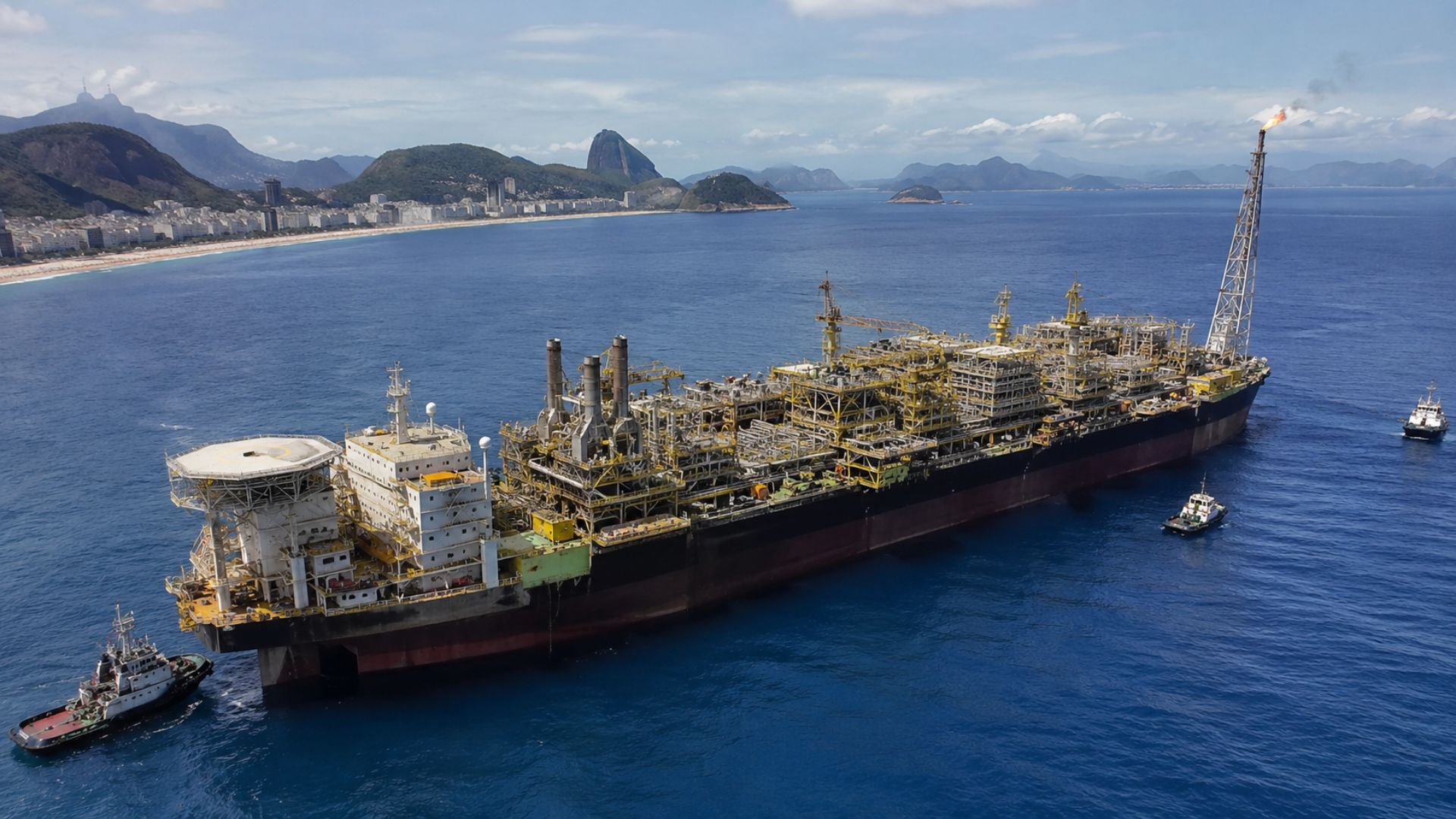


I confess there is something impressive about human stubbornness to seek oil precisely where nature has placed all possible barriers. Engineers have learned to build on permafrost, to keep the oil heated so it doesn’t freeze in the pipelines, and to work in short windows of favorable weather. It’s a constant battle against the cold, fought in the name of what lies hidden beneath the frozen tundra.

Why Alaska is coveted again
The renaissance is not a result of chance, but a combination of factors. New drilling technologies have made it feasible to reach reserves that were previously not worthwhile, and recent discoveries have shown that the Alaska subsurface still holds much more oil than previously thought. Add to that a political environment more favorable to exploration, which has unlocked licenses and attracted investment back to the region.
For oil companies, reopening a known frontier is usually more attractive than betting on entirely new territories because there is already infrastructure, specialized labor, and the famous pipeline that crosses the state. Alaska offers this middle ground, a place with history, structure, and now the prospect of larger reserves than previously thought, which explains why so many have rushed back to the ice.
A large part of this advantage has a name, the Trans-Alaska pipeline. Built in the 1970s, this 1,300-kilometer pipeline crosses the state from north to south, carrying oil from the icy North Slope to a port where it is loaded onto ships. For decades it operated well below its capacity as production declined, and there was even fear that the flow would become so low that the oil would freeze inside the pipes. The production renaissance changes this scenario, bringing movement back to a billion-dollar infrastructure that was already there, ready, just waiting for more oil to justify its existence. It is this inherited structure that makes Alaska so attractive compared to opening a frontier from scratch in a remote place with nothing built nearby.

The ongoing debate
No conversation about oil in the Arctic escapes the environmental issue, and it would be dishonest to pretend otherwise. The region is one of the most fragile and important ecosystems on the planet, home to species living on the edge and a delicate climate balance that global warming is already threatening. Every new oil project there raises protests and legal actions, in a constant tug-of-war between economic development and preservation.
There is an irony that hangs over all this. It is precisely the warming, fueled in part by the burning of fossil fuels, that is melting the Arctic and, in doing so, facilitating access to more oil. The more the ice recedes, the more areas open up for exploration, in a cycle that many consider dangerous. Alaska’s renaissance, as profitable as it may be, carries this contradiction in its very essence.

A frontier that refuses to close
I wonder how many times Alaska’s oil has been declared dead and how many times it has surprised again. The region seems to have a stubborn capacity to reinvent itself, finding new reserves just when everyone thought the party was over. It’s a reminder that the oil era, as much as there is talk of its end, still has a lot of hidden breath.
What comes now is a dispute that goes far beyond engineering, involving money, politics, and the future of one of the most sensitive places on Earth. Alaska is reborn as a protagonist in this story, offering wealth on one side and deep dilemmas on the other, in a balance that the whole world will have to closely follow in the coming years, because what is decided in the ice of Alaska says a lot about the type of energy future humanity is still willing to choose. And Alaska, stubborn as always, continues to put this choice on the table.
Is it worth reopening the oil race in the Arctic, or is this a place that should remain untouched?





Be the first to react!