






 Portuguese
  Spanish
  5 min of reading
  0 comments


An artificial intelligence combed through years of data accumulated by NASA and unearthed over a hundred planets outside the Solar System that had gone unnoticed by human eyes, including worlds so extreme that no one expected to find them there.
Imagine a mountain of data so large that no team of scientists could review it all by hand. This is roughly the size of what NASA’s TESS space telescope has been producing by observing the brightness of millions of stars. Hidden in this avalanche of information, there could be entire planets, and it was precisely these that an artificial intelligence called RAVEN set out to find.
The result is impressive. The tool confirmed more than one hundred exoplanets, dozens of which are entirely new, that were there in the data without anyone noticing. It’s as if the machine reread a book everyone thought they knew and pointed out entire chapters that had been overlooked. The sky, even the already photographed one, still held secrets waiting for the right gaze.
How a machine sees what humans don’t
The technique for finding distant planets is ingenious. When a planet passes in front of its star, it blocks a tiny fraction of the light, causing an almost imperceptible drop in brightness. Detecting this small dimming amid the noise of millions of stars is an exhausting task and prone to human error. It’s precisely in this type of task, repetitive and full of subtleties, that an artificial intelligence shines.
-
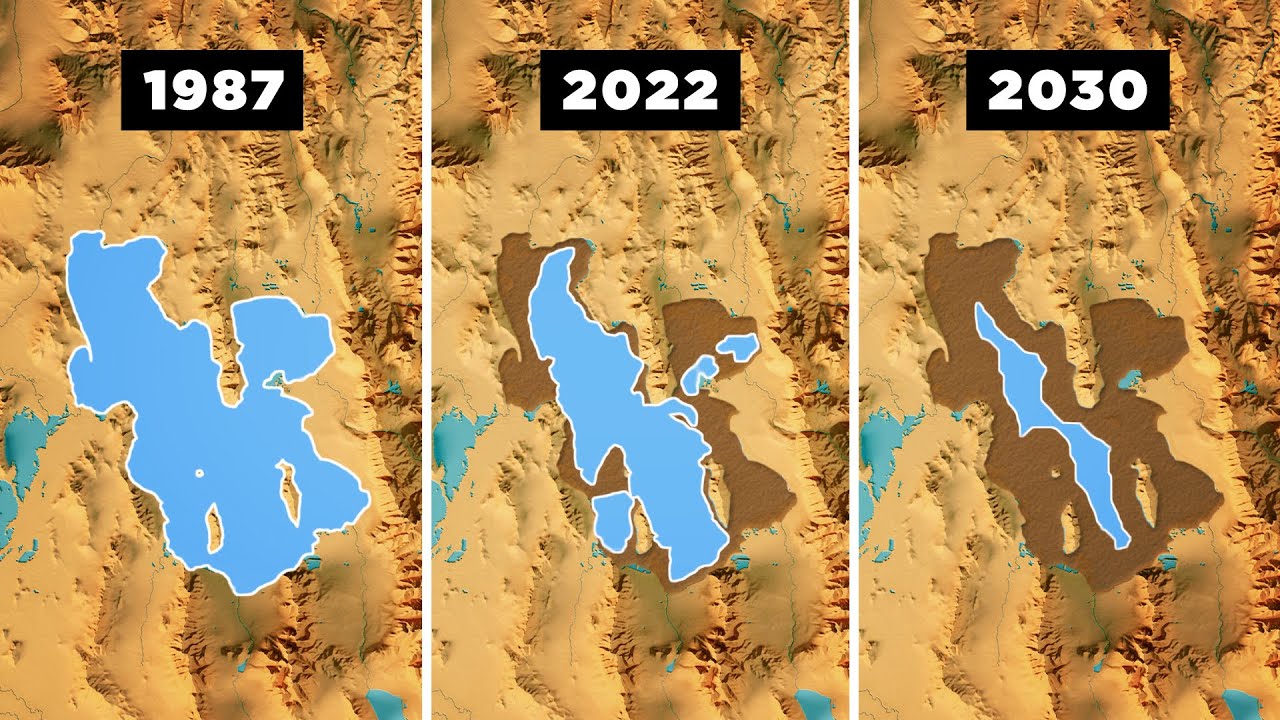
More than half of the Earth’s largest lakes are shrinking simultaneously: satellites reveal that 53% of the largest lakes and reservoirs have lost water over three decades, in a collapse equivalent to 17 times the largest reservoir in the United States.

-
Goodbye to the microwave: the appliance present in 96% of Brazilian kitchens is starting to lose space to a single device capable of heating, baking, broiling, and preparing recipes like a microwave, electric oven, and air fryer, occupying practically the same spot on the counter.

-
13-year-old Indian girl impresses the world by leading the planting of 200,000 trees in over 120 locations and gaining international recognition while still in childhood.

-
Coral reefs gain new hope after scientists identify 165,000 km² with potential to resist heat in 71 countries, serve as living recovery banks, and protect food, jobs, and coastlines of nearly 1 billion people under climate threat.

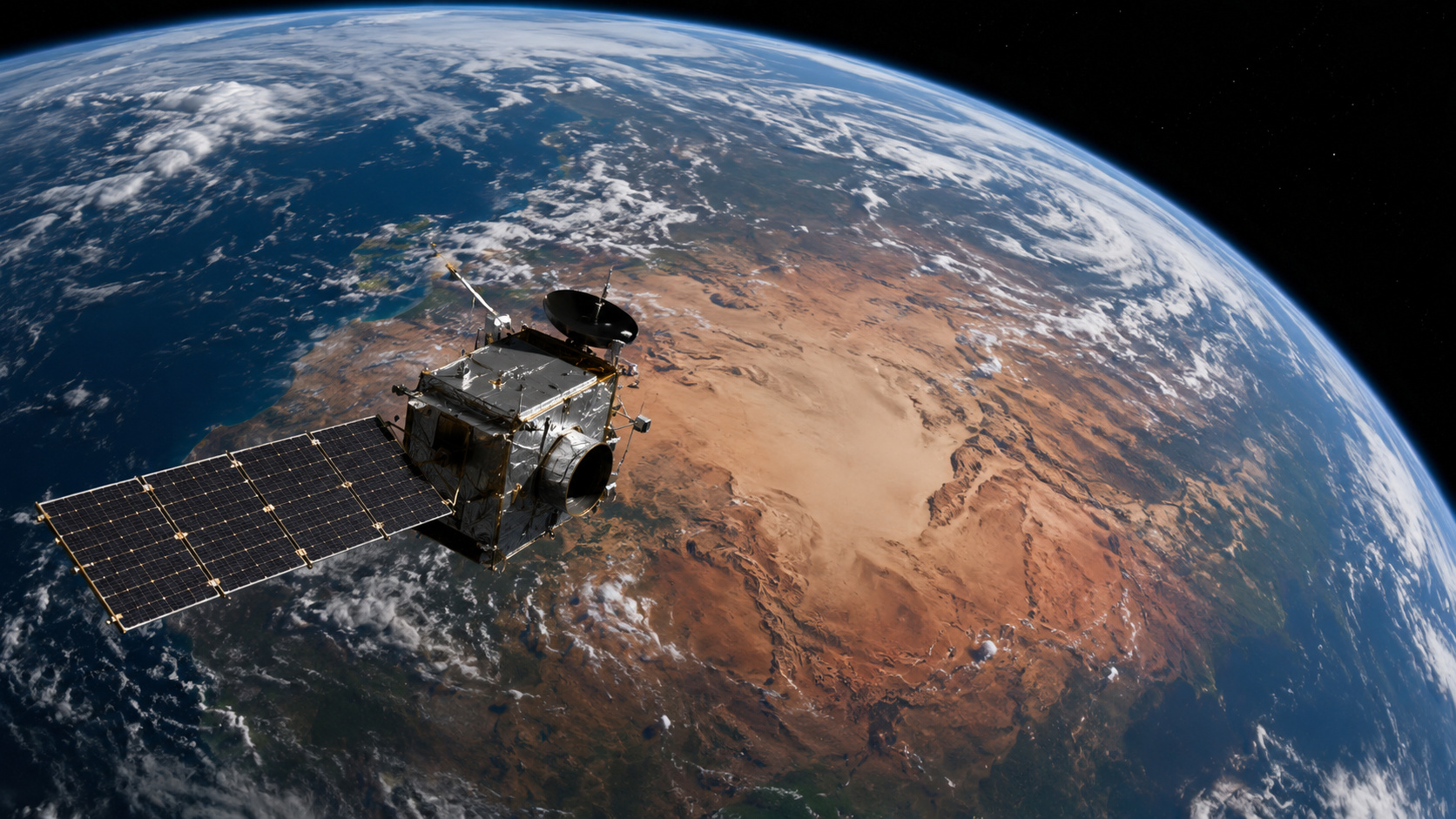



I confess I find this partnership between machine and scientist fascinating. AI doesn’t replace the astronomer; it does the heavy lifting of sifting through absurd amounts of data and separating the most promising candidates, leaving humans to confirm and interpret. It’s technology functioning as a giant magnifying glass, capable of sweeping the entire sky for that tiny detail that would escape any tired eye.
It’s worth understanding the size of the challenge the machine faced. The TESS doesn’t look at one star at a time; it monitors entire sectors of the sky simultaneously, recording the brightness of hundreds of thousands of stars for weeks on end. The signal of a planet passing in front of its star is such a small drop in light, sometimes less than one percent, that it can easily be mistaken for the star’s natural flicker or equipment failures. Training an artificial intelligence to distinguish a real transit from this sea of noise is a remarkable feat because it needs to learn what is a real planet and what is just cosmic noise, and do this millions of times without getting tired and without missing what really matters, separating the few candidates that deserve a second human look from the countless false alarms that always appear.

Extreme worlds where they shouldn’t exist
Among the unearthed planets, some are breathtakingly strange. There are worlds that orbit so close to their star that they complete an entire orbit in less than a day, with surfaces likely scorching and molten. And there are those that appear in the so-called Neptunian desert, a zone where astronomers hardly expected to find planets because the star’s radiation usually strips away the atmosphere of any such world.
Finding planets precisely where theory says they should be rare is the kind of surprise that advances science. Each of these peculiar worlds is a piece that forces scientists to rethink how planetary systems form and evolve. The universe, once again, shows that it is more creative and chaotic than our models would like it to be.

The new era of automated discovery
This episode is a snapshot of where science is heading. As increasingly powerful telescopes pour out gigantic volumes of data, it becomes humanly impossible to analyze everything at the necessary pace. Artificial intelligence ceases to be a luxury and becomes an indispensable tool, capable of transforming forgotten files into concrete discoveries, reusing information that was already paid for and collected.
The most exciting thing is to think about what still lies dormant in these databases. If a single tool found more than a hundred planets that were hidden in plain sight, how many other worlds, and perhaps phenomena we can’t even imagine, are still waiting for the right algorithm? We are on the brink of a frontier where the next big discovery might not require a new telescope, but rather a smarter machine combing through what we already have.

The sky reanalyzed by silicon eyes
I imagine how many discoveries are, at this very moment, paused inside some server, just waiting for someone to point the right artificial intelligence to the right place. The story of these hundred planets shows that seeing further doesn’t always depend on building a bigger instrument; sometimes it depends on looking better at what is already stored.
It’s a silent but profound change in the way humanity explores the universe. Machines are becoming companions to astronomers in the hunt for distant worlds, and each planet they reveal brings us a little closer to the age-old question of whether, in any of these points of light, there is someone looking back at us, driven by the same ancestral curiosity that has made us, for millennia, raise our eyes to the night sky in search of company in the universe. Each new world found makes this search a little less lonely.
Could it be that, on any of these newly discovered hundred planets, there is someone looking at our sky too?




-

1 person reacted to this.