






 Portuguese
  Spanish


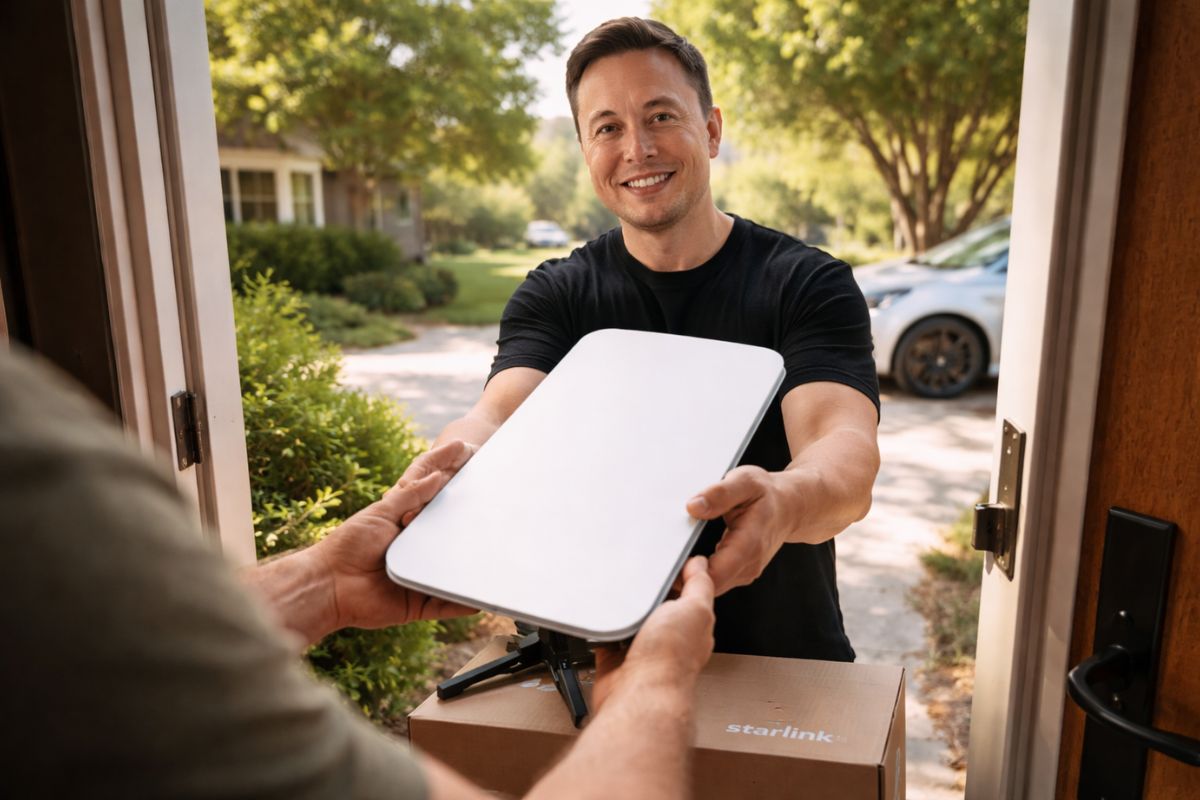

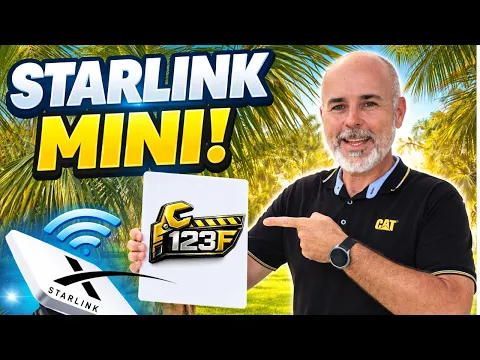
Rural resident who ran out of fiber optic on a Tuesday at work took the Starlink Mini out of the box, installed it in less than an hour, and tested download, streaming, Wi-Fi coverage throughout the house, and video upload to YouTube with results that surprise at both ends.
The Starlink Mini costs R$ 999 at full price, but recent promotions have dropped the price to the range of R$ 700 to R$ 800. The most basic residential plan costs R$ 149 for the first six months and then goes to R$ 179 per month, limited to 100 Mbps download. The Residential Max plan, which channel 123 Fernando signed up for the test, costs R$ 235.52 per month and promises higher speeds. The channel, with 610 thousand subscribers, published the video on April 14, 2026, and has already accumulated over 76 thousand views.
The context is real. The presenter moved to the rural area and depends on fiber optic that frequently goes down. On the day of the test, the fiber was out, the 5G on the phone barely loaded the Starlink app, and the video needed to go live at 6:45 PM.
What does the Starlink Mini deliver well in rural day-to-day?

The installation took less than an hour, counting the time lost with the slow 5G to download the app.
-
Tesla injected an additional $250 million into the German factory, doubled the battery cell target, and opened its own production line for startups.

-
No more TV stuck on the wall: Samsung The Freestyle+, the new projector with over 400 lumens projects on walls, floors, and ceilings, bringing cinema to any corner of the house.

-
A Japanese governor single-handedly stalled the construction of the world’s fastest train for nine years, and only now has he agreed to allow a tunnel excavated at a depth of 1,400 meters.
-
Almost 1 billion euros, two gigafactories, and a million-dollar public investment, Chinese company aims to turn Spanish city into Europe’s new battery hub.



The kit includes an antenna with a built-in router, a 60 W dual-voltage power supply with IP66 protection, a single cable sealed with rubber rings, and an aluminum support with an option for fixing to a 50 mm tube. Once assembled, the antenna was temporarily placed on the roof and started working immediately.
The browsing test was immediate. Pages loaded quickly, YouTube videos played without stuttering even when skipping forward and backward, and Netflix opened normally with two devices connected at the same time.
The Wi-Fi signal reached all rooms in the house, including the closet and hallway, with only a one-bar drop in the most distant points. For download, streaming, and browsing, the Starlink Mini performed like a good quality urban fixed internet.
Where the numbers don’t add up: the upload of 8.9 Mbps

The speed test recorded an upload of 8.9 Mbps. For those who browse, watch, and make video calls, this number is not a hindrance. But for those who need to send large files, the limitation becomes apparent quickly.
A 30-minute video took over 1 hour to upload to YouTube. The upload stayed at 0% for several minutes before starting to move, and YouTube’s estimate fluctuated between 50 minutes and 1 hour throughout the process.
Changing the antenna position to the roof (recommended position, with an open view of the sky) did not noticeably improve the upload.
The presenter concluded that the Starlink Mini serves as a reliable backup for sending heavy files, but it does not replace fiber optics for those who depend on upload for work. This limitation is known in the technology. The Starlink network prioritizes download because most users consume more than they send.
How much does it cost to keep the Starlink Mini running per month in Brazil?

Starlink offers three tiers of residential plans in Brazil as of April 2026. The Residential 100 Mbps costs R$ 179 per month (R$ 149 for the first six months, available only for the Mini antenna). The Residential Family maintains special conditions for those who purchase two Minis.
The Residential Max, which accepts both the Mini and the standard antenna, costs R$ 235 per month and delivers speeds of up to 400 Mbps on the standard antenna, although the Mini reaches between 170 and 200 Mbps due to hardware limitations.
For travelers, the Travel plan starts at R$ 315 (50 GB) and goes up to R$ 576 (unlimited). Commercial starts at R$ 329 and maritime at R$ 1,907.
No plan requires a contract, and Starlink offers a refund within 30 days. The equipment consumes between 20 and 40 watts, compatible with 65 W power banks for portable use of 4 to 5 hours.
The Starlink Mini solves the problem for those living in rural areas who need reliable internet for daily use. For download, it is excellent. For heavy upload, it is a declared burden.
And you, do you live in a rural area and depend on satellite or radio internet? Have you tested Starlink or do you still think the monthly price does not justify your reality? Comment below.


