Portuguese
  Spanish


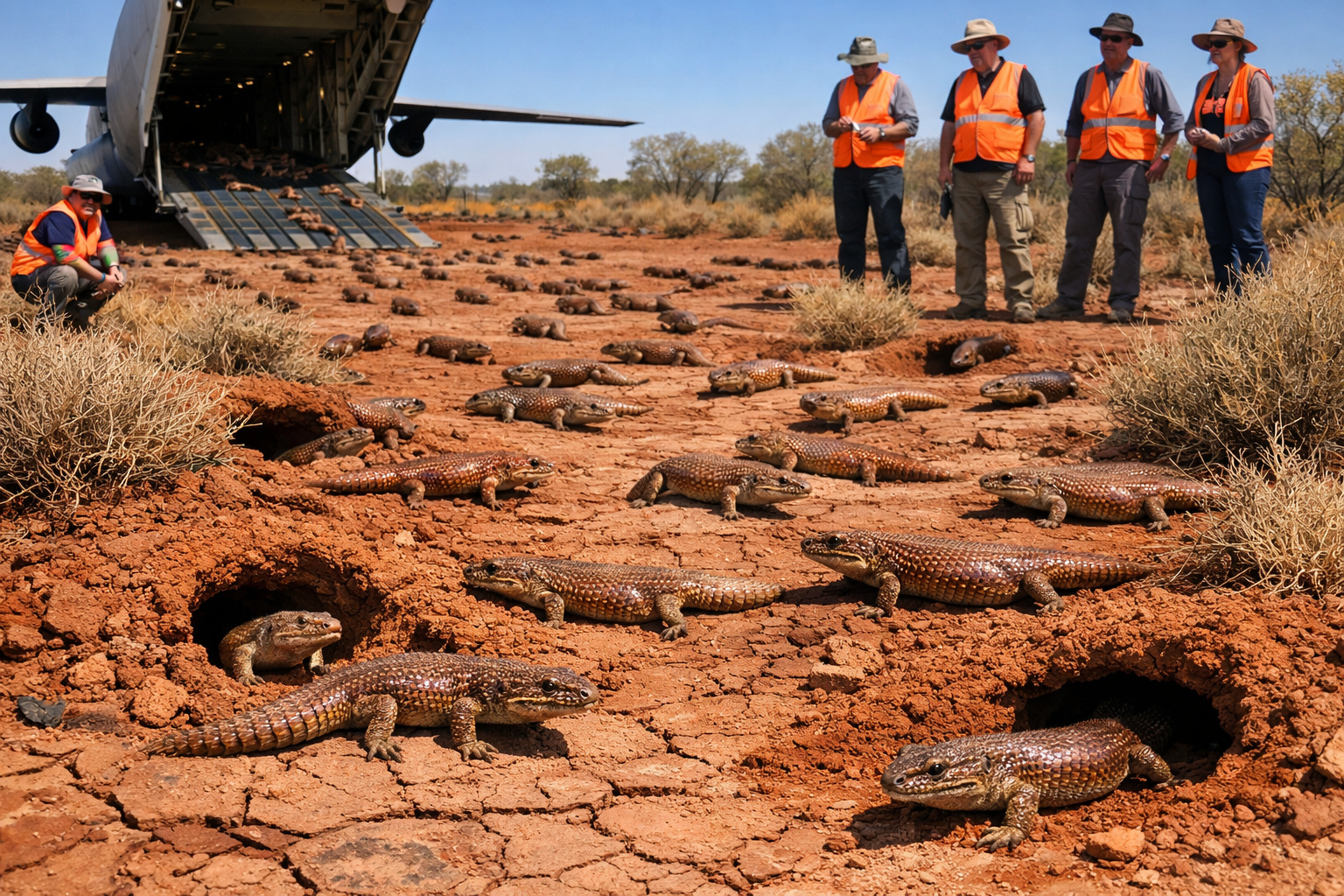


Little-Known Species Capable of Living in Complex Social Structures and Excavating True Underground Cities Proved Essential for Soil Oxygenation, Water Retention, and the Survival of Dozens of Other Species in the Desert
The Earth’s ecosystem is not sustained only by the larger, stronger, or more visible species. On the contrary, it depends on a complex network of organisms, many of them discreet, that perform fundamental functions for maintaining life. Beavers, for example, build dams that retain water and reduce the risk of wildfires by up to three to ten times in California and the western United States. In the African savannas, termites create mounds that increase plant productivity by up to three times. In the Great Plains of North America, prairie dogs keep the soil alive with their tunnels, while earthworms restore farmland after each harvest.
However, this logic applies not only to temperate or fertile environments. In Australia, a continent that warms faster than the global average, a small reptile nearly invisible to most eyes has proven to be a key piece for desert survival. This is the Great Desert Skink, known to indigenous peoples as Tjakura, a species that, despite its modest size, has an disproportionately large environmental impact.
The information was released by field studies conducted by Australian ecological research institutions, including surveys by CSIRO and recent analyses associated with the National Recovery Plan for Australia, published starting in 2022 and consolidated in reports from 2023.
-
How to Prevent Brown Recluse Spider Bites: Common Hiding Spots and Free Tips to Reduce Risks

-
Natto: The Unusual Japanese Superfood Gaining Popularity on Social Media and Driving Record Exports
-
Brazilian Mayor Goes Undercover as Homeless for 24 Hours to Assess Public Services

-
15-Year-Old Entrepreneur Malu Lira Publishes 20 Children’s Books on Financial Education, Earns $500,000, and Expands Her Project to the Amazon Rainforest




An Extreme Desert and an Unlikely Engineer

The Australian desert is among the most hostile environments on the planet. Hot winds lift sand to tens of meters high, the soil temperature can exceed 50 °C, and annual precipitation in some regions is less than 20 millimeters. When it rains, the water evaporates in just 10 to 20 minutes. The soil is low in nutrients, vegetation is scarce, and nights can be extremely cold.
Still, it was in this setting that the Tjakura evolved over millions of years. At first glance, it looks like a common lizard: it measures between 35 and 45 centimeters long and weighs less than 350 grams, roughly the equivalent of a water bottle. However, as researcher Nate Worthington stated, “there is no reptile so small that has such a profound impact on the environment as the Tjakura.”
Unlike most lizards, which follow a logic of rapid growth and high reproduction, this species lives between 20 and 25 years and produces only one or two offspring per year. Its robust body, thick scales, and bulky tail allow for energy storage during long periods of scarcity. Even more surprising is its social behavior: the Tjakura lives in multigenerational family structures, with parents, offspring, and even adult descendants coexisting and cooperating.
Underground Cities That Keep the Soil Alive
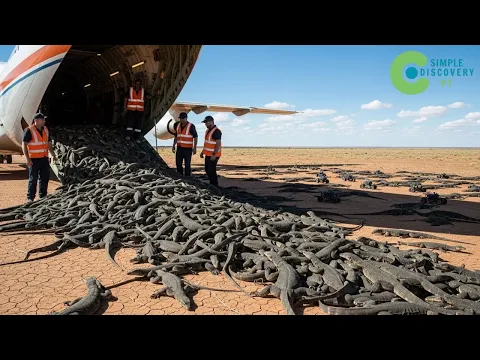

The home of these lizards is not a simple burrow, but true underground cities. A single group can excavate between 12 and 20 meters of tunnels, the equivalent of a four to six-story building. These structures have multiple entrances, resting chambers, areas for laying eggs, and even specific spaces for waste disposal. Scientists have begun to call this system the “reptile metropolis”.
More important than the architectural complexity, however, is the ecological function of these underground networks. By digging deep, the Tjakura brings oxygen to layers of soil that plant roots would never reach. This reactivates soil microorganisms responsible for decomposing organic matter and producing humus.
Surveys show that areas without skink burrows have soil oxygen levels between 25% and 40% lower than regions where they are present. This difference is crucial in determining whether vegetation can establish itself in such an arid environment.
Moreover, the tunnels function as natural infiltration channels. While rainwater typically evaporates quickly, in areas with underground systems it reaches deeper layers, forming pockets of moisture that can retain water for weeks or even months. A 2022 CSIRO study revealed that regions with Tjakura burrows can retain 30% to 50% more water than areas without the species.
Micro-Oases, Biodiversity, and Cascading Effects
Another less visible but equally important effect comes from the waste and food remains left by the lizards. Their feces are rich in nitrogen, phosphorus, and potassium, three nutrients that are rare in the Australian desert soil. These spots become the first places where vegetation begins to grow again, attracting insects, small reptiles, and other animals.
Researchers have found that these micro-oases can last for decades, even after the animal disappears. Additionally, abandoned burrows become shelters for at least 45 other species, including small mammals and even snakes like the Woma python.
Despite this fundamental role, the population of the Greater Sandy Desert Skink has sharply declined in recent decades. The main cause is not natural but a direct result of human activity.
Modern Threats and the Risk of Desert Collapse
Feral cats and red foxes, introduced by Europeans in the 18th and 19th centuries, have become the primary predators of native wildlife. Estimates suggest that feral cats kill between 1 and 2 billion native animals each year, equivalent to up to 3 million per day. Reptiles make up a significant portion of these losses.
After wildfires, the scenario becomes even more dangerous. With vegetation destroyed, the tunnels become exposed. Foxes dig directly into the underground systems, while cats wait at the entrances. Research in the Western Desert showed that after major fires, 92% of the burrows ceased to function. In unburned areas, over 84% remained active.
Invasive plants, such as buffel grass, exacerbate the problem by turning small natural fires into mega-fires. Extreme heat can cause tunnels to collapse, destroy food sources, and isolate entire groups of lizards. This is compounded by the impact of overgrazing and off-road tourism, which have already led to the collapse of 20% to 40% of tunnel entrances in some monitored regions.
Indigenous Knowledge, Technology, and Recovery
Naturally, the desert collapse is not inevitable. The front line of recovery involves Indigenous Australian peoples, who have coexisted with the Tjakura for over 40,000 years. For them, the animal is a guardian of the Earth, a figure present in Dreamtime stories and traditional art.
Programs led by Indigenous communities combine ancestral knowledge with modern technology, such as GPS, thermal drones, and automatic cameras. This data has informed the National Recovery Plan of 2023, which includes predator-proof fencing, traditional fire management, and controlled reintroduction of the species.
The success of similar strategies has already been proven with the Western Swamp Tortoise, considered extinct in the wild and recovered after three decades of efforts, with over 1,500 individuals reintroduced by 2021.
Today, projects like Wild Deserts, 10 Deserts Project, and Predator Free Australia show that restoring the Tjakura means rebuilding the very infrastructure of the desert itself. Their tunnels are not just shelters but the foundation for water retention, soil fertility, fire control, and the return of biodiversity.
The story of this small lizard reinforces a powerful lesson: sometimes, it is not the largest animals that sustain an entire ecosystem, but those that work silently beneath our feet.