Portuguese
  Spanish


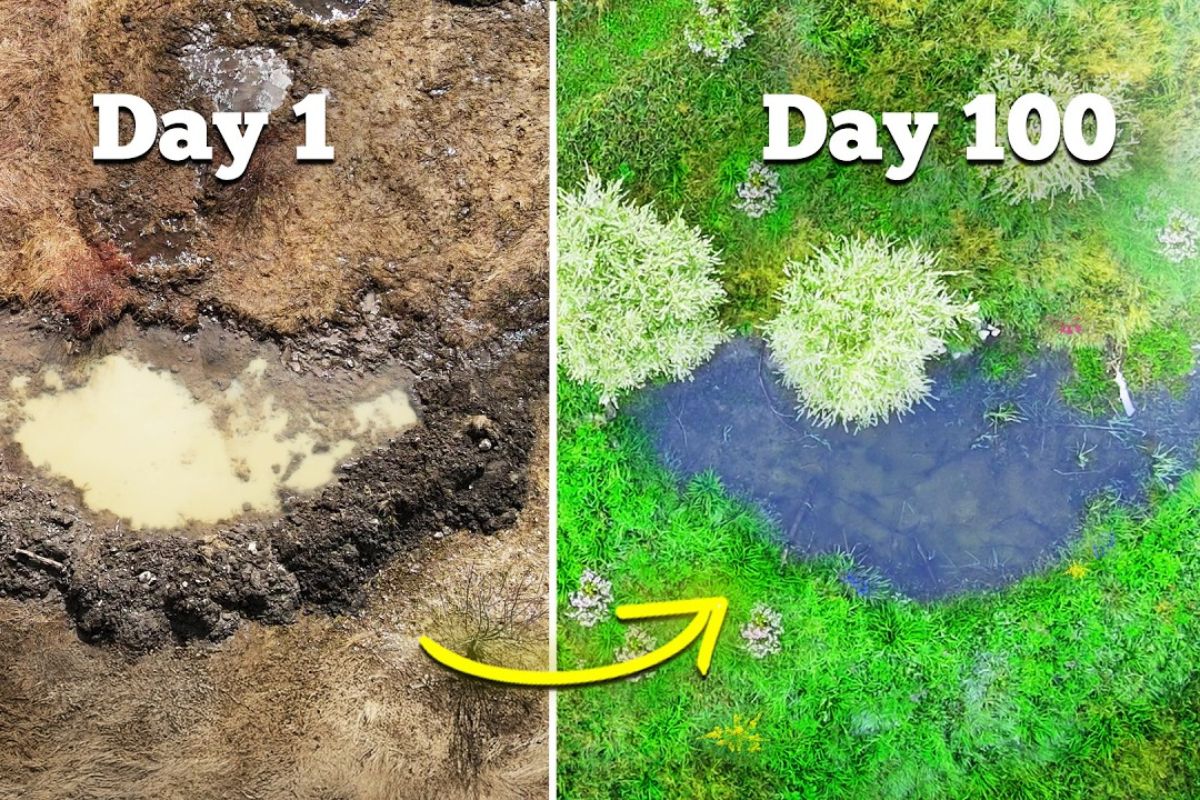


Understand How a Simple Pond, Designed as a Temporary Pond and a Pond Without Fish, Turned Into a Pond for Amphibians, a Wildlife Pond, and a Magnet for Biodiversity.
A small pond, dug in mud and without any fish, seems insignificant compared to a large reservoir. But it took just a year for this temporary pond, designed for amphibians, to become a meeting point for toads, frogs, dragonflies, rare birds, and even foxes, while the water insists on not completely drying up.
It all started as a simple experiment: to create a shallow, seasonal pond just below a trout lake, to provide a safe breeding location for species that avoid living with fish. Throughout the first growing season, the pond demonstrated why small, well-planned environments can attract an entire chain of wildlife in no time.
Why a Pond Without Fish Can Explode with Life
At the front of the property, there was already a sizable trout lake, but with a clear ecological problem: the only amphibians that actually reproduced there were green frogs.
-
Brazilian Construction Worker Moves to France, Earns Up to €2,500 Monthly with Home Renovations, Gains Social Media Attention

-
US Navy Sinks USS Oriskany with 230 kg of C-4, Creating World’s Largest Artificial Reef in 37 Minutes

-
U.S. Dumped Tanks, Jeeps, and Coca-Cola into the Pacific in 1945 After British and French Lowball Offer, Creating “Million Dollar Point”
-
WHO Warns of Unnecessary Interventions in Natural Births Worldwide, Advocates for More Human-Centered Care, Reigniting Debate on Medicalization




The majority of early spring breeders avoided the fish-filled lake, such as wood frogs and salamanders of different species, precisely because fish feed on eggs and tadpoles.
To solve this, the idea was to create, further down, a smaller pond without fish, designed as a vernal pool: shallow, seasonal, able to hold water just long enough for amphibians and invertebrates to complete their life cycles, in two or three months.
Shallow ponds of this type are champions in productivity, because light penetrates easily, warms the water quickly, and accelerates the development of plants, algae, and microfauna.
At the same time, having a site that gets flooded part of the year and dries out the rest creates ideal conditions for species that depend on this alternation of water and exposed soil. That’s how the plan went from paper to reality, and the pond began to take shape in the mud.
Digging the Pond in Mud: Simple, Cheap, and Efficient
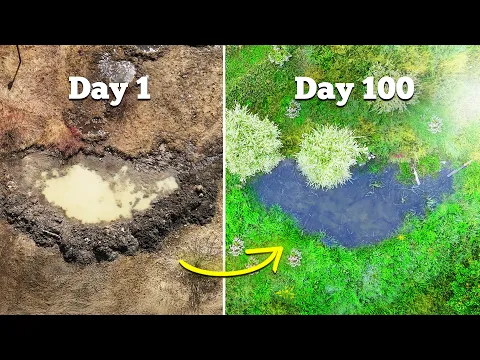

In early spring, work began in an area below the trout lake, where meltwater, rain, and a bit of excess from the lake were already flowing.
There was a perfect spot: deep clay soil, exactly the type of base that helps the pond retain water without the need for tarps or concrete.
First, small shallow pools were opened along the natural water path, like funnels, to slow the flow when the snow melts and heavy rain comes down the hill. These pools help to gently direct water to the main pond, reducing erosion and capturing nutrients.
Next, the main pond was excavated with the backhoe. The clay removed was piled at the back to form a small dike.
The idea was never to create a permanent reservoir, just a seasonal pond sufficiently sealed to hold water for a few months. On the opposite side of the dike, a gentle slope was made, allowing animals to enter and exit with ease.
The deepest part measured about 60 centimeters, which may seem small, but is well within the standard of natural ephemeral ponds, to which many amphibian species are already adapted.
In just a few hours of work, the pond was dug. The next day, the sediment had settled, and the water was becoming clearer.
The dike was leveled and seeded with native grasses and wildflowers. Branches were positioned as supports for amphibian eggs and perches for dragonflies, while a bucket of dry leaves was spread on the bottom to create shelter.
Right behind the pond, a bat shelter was installed, in the hopes that, in the future, these nocturnal hunters would also become part of the system.
First Colonizers: The Invisible Foundation of the Pond

With the trout lake overflowing into the newly created pond, the first colonizers arrived almost immediately.
Thousands of tiny crustaceans, such as daphnias, were swept by the flowing water into the new environment. These tiny filter feeders are the foundation of a powerful food chain.
Feeding mainly on algae and bacteria, daphnias reduce the chance of harmful blooms and keep the water more stable.
At the same time, they are perfect food for larger invertebrates. Soon after, diving beetles and surface insects like “backswimmers” appeared, finding an easy and constant banquet in the pond.
With the surroundings still sparsely vegetated, it was impressive to see how quickly the pond began to receive visitors.
Birds like phoebes and American robins started visiting the area, both to hunt and to collect mud for their nests. The still young pond was already functioning as a market, restaurant, and construction site all at once.
Amphibians in the Pond: Frogs, Toads, and Salamanders Find Refuge

Among the targeted species, one of the first important visitors was the wood frog. It appeared in early spring to breed, taking advantage of the fish-free pond with relatively warm water.
The expectation is that in the coming years, more wood frogs, other frogs, and salamanders will start using this environment as plants grow and provide more shelter.
In terms of cover, amphibians do not require as much structure as one might think. In another shallow water experiment on the same property, an area designed as a “bird spa,” with small waterfalls and rocks, ended up being taken over by spring peepers that used every crevice between the stones as shelter and breeding spots. There, the simple fact of having standing water and micro-refuges was enough to transform the space.
In the clay pond, the logic is similar. As the vegetation grows and the bank becomes messier and more natural, amphibians gain spaces to hide, hunt, and lay eggs.
Some green frogs, initially linked to the trout lake, began exploring the seasonal pond, mainly to take advantage of the abundance of insects.
Amphibians are extremely sensitive to water quality, thanks to their thin, permeable skin. The fact that they choose the pond as a breeding and feeding area is a clear sign that the environment is functioning well, not just for them, but for several other groups of species.
Dragonflies, Insects, and a Moving Sky Over the Pond

With the arrival of summer heat, the pond undergoes the most significant transformation. The water level begins to fluctuate, parts of the bottom become exposed, and new seeds germinate quickly around.
Almost overnight, the edge of the pond fills with green, with a mix of planted species and those already in the seed bank, waiting for the right condition.
In this setting, dragonflies and damselflies become the rulers of the airspace. They cross the water’s surface incessantly, landing on the branches placed as perches and patrolling both the pond and the neighboring trout lake. The variety of species and behaviors is almost hypnotic.
The males defend territories, fly in circles, chase competitors, and wait for females to approach.
When they manage to initiate courtship, they use special structures at the tip of their abdomen to grasp onto the female’s neck area. With some maneuvering, she bends her own abdomen towards the male, forming the classic “heart-shaped mating wheel.”
After that, each touch of her abdomen on the water represents an egg laid. In other cases, the female uses the ovipositor to cut plant stems and place the eggs directly into the plant tissue.
Without vegetation around the pond, this cycle simply does not happen, highlighting the importance of allowing nature to occupy the margins and shallow areas.
Within the water, another group catches attention: the larvae of caddisflies. From tiny gelatinous eggs emerge larvae capable of constructing “houses” with small stones, twigs, or plant remnants, glued with an extremely adhesive silk. These structures function as mobile armor, camouflaging and protecting the soft bodies of the larvae.
Each species explores a type of food: decomposing plant remnants, suspended organic particles, algae, and even live prey.
The presence of caddisflies in the pond is an excellent indicator of clean, well-oxygenated water, as their delicate gills cannot tolerate polluted environments.
Rare Birds and Foxes: The Pond Becomes a Meeting Point

As the pond gains vegetation and invertebrates, the influx of birds increases. Young robins that hatched in nearby buildings start visiting the pond with their parents, using the water to bathe and the surrounding area to learn to hunt.
Larger predators also appear. A large great blue heron visits the pond, followed by a solitary sandpiper, both using the shallow edges as a hunting spot.
Perhaps the most special sighting of the year was the visit of a young American bittern, a discreet species that usually prefers large wet areas with tall grass. The fact that an individual stopped at this small vernal pond shows the attraction potential of the new environment.
On solid ground, foxes began using the pond area as a hunting route and a point of curiosity. In a particularly tough year for the local group, with cubs in delicate situations and even needing to rescue an injured cub, it was striking to see these animals moving more confidently in the surroundings, hunting and exploring the fields next to the water.
A small pond does not solve all the challenges of wildlife, but it creates a real support point for animals struggling to survive.
When the Water Rises, Falls, and the Pond Insists on Staying

The original plan was simple: to let the pond dry up after about three months, like many natural vernal ponds.
Indeed, there were times when the level dropped so much that it seemed like the water would disappear completely. But, just when it was getting close, a series of heavy rains filled everything again.
In the end, the pond proved to be more watertight than expected for a seasonal environment without a tarp, holding water for much longer in its first year.
In drier seasons, it is likely to dry up completely; in wetter years, it can maintain a residual water level until the fall. Either way, it continues to fulfill the ecological function for which it was created.
With the arrival of autumn, the first flowers began to appear on the pond’s dike. Seeded species, which in theory would only bloom in the second year, took advantage of favorable conditions and brought the show forward: splashes of blue, yellow, and purple flowers dotted the surroundings.
Iris seedlings, brought from another wet area, were also planted on the edge, promising an even more colorful outline in the coming years and attracting hummingbirds as flowering intensifies.
What This Small Pond Teaches Those Who Have a Piece of Land
After a year, the balance of the experience is clear: a small, well-positioned pond without fish can concentrate an impressive amount of life in a short time. From micro to macro, the succession was evident: microcrustaceans, aquatic insects, dragonflies, amphibians, birds, mammals.
All of this happened with simple work, intelligent use of the clay from the land itself, utilizing available water, and planting a few native species. The rest came on its own, with nature occupying every available niche.
For anyone who has a piece of land, even a small one, the message is clear: there is no need to build a large artificial lake to create a positive impact; sometimes a shallow clay pond is enough to change the map of local wildlife.
From here, the expectation is to observe how the pond will behave in drier years, how the vegetation will consolidate, and how many new species will discover this refuge. The experiment continues, and with each season, the pond gains a new chapter in the story of environmental recovery.
And you, after seeing what happened with this temporary pond, would you have the courage to dig a simple pond on your land to see what kind of life would appear?