






 Portuguese
  Spanish


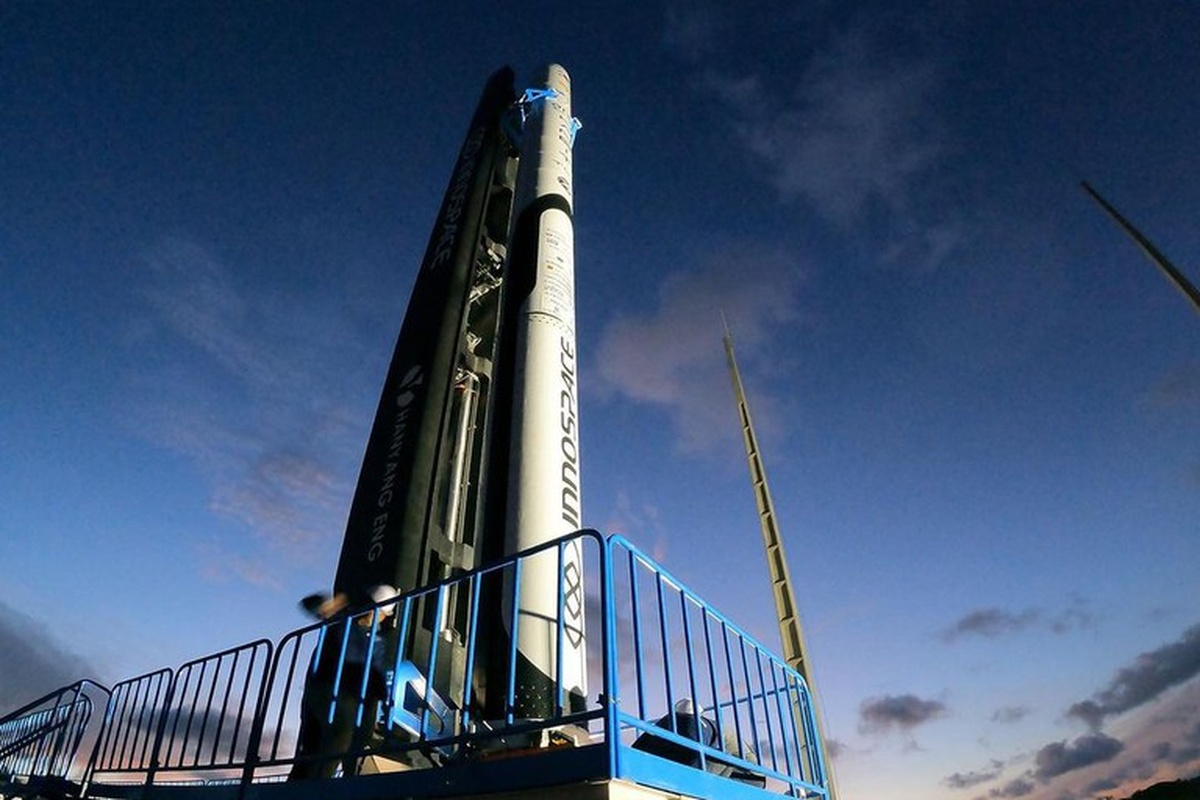

South Korean Startup Innospace Reschedules Mission in Maranhão After Technical Adjustments to Propulsion System
The South Korean company Innospace announced, on June 2, 2025, the postponement of the launch of the rocket Hanbit-Nano at the Alcântara Launch Center (CLA) in Maranhão. Initially scheduled for July, the launch has been rescheduled for the second half of the year.
The decision followed the identification of technical issues related to the electric pump and the hybrid propulsion system of the vehicle’s first stage. These failures were detected during preparations for the qualification test, requiring a more rigorous technical analysis.
The measure aims to ensure technical integrity and the success of the mission. It was stated that the technical issues identified in recent tests could compromise the performance of the launcher and therefore need to be resolved in advance.
-
Scientists Uncover “Amazon Stonehenge” with 127 Giant Rocks, Shedding Light on Indigenous Solar Observations Before European Arrival

-
Six-Year-Old Uncovers 400-Million-Year-Old Coral Fossil in Backyard, Revealing a Pre-Dinosaur Ocean World

-
India Gains 2.1 Million Hectares of Dry Tropical Forest in a Decade, but Scientists Warn Much of It May Be Commercial Plantations, Not Genuine Biodiversity Recovery

-
Canada Builds World’s Largest Electric Car Battery Repurposing Plant in 6 Weeks, Aiming to Power Grids, Factories, Hospitals, and Data Centers Before Recycling Lithium, Nickel, and Cobalt




Hanbit-Nano: Innovation in Small Satellite Transport
The Hanbit-Nano is a small satellite launcher developed by Innospace. It has the capacity to carry payloads of up to 50 kg to polar orbits, at an altitude of about 500 km.
This rocket represents an evolution of the Hanbit-TLV. The suborbital test flight of the previous model was conducted in March 2023, also in Alcântara. The goal at that time was to validate the engine of the first stage that now integrates the Hanbit-Nano.
The launch of this new vehicle represents an important step toward establishing the CLA as a reference center for small rocket launches. This movement further boosts Brazil’s insertion into the competitive international space market.
Additionally, the project highlights South Korea’s technological advancement in cooperation with Brazil, promoting knowledge transfer and stimulating innovation in the aerospace sector.


Alcântara: Strategic Location for Space Launches
The Alcântara Launch Center is considered one of the most promising in the world for space launches. Located just 2°18′ from the Equator, it allows for up to 30% savings in fuel consumption, thanks to the Earth’s rotational speed.
Its geographical position favors launches into different types of orbits. Another positive point is the low population density of the region, which reduces operational risks and improves mission safety.
The CLA’s infrastructure has been continuously enhanced, aiming to make it an internationally competitive base. The center is strategic for Brazil and for foreign companies seeking more economical and efficient alternatives for orbital launches.
With the rescheduling of the Hanbit-Nano, the CLA reinforces its image as a viable and modern option for high-precision space missions.
International Partnerships Boost the Brazilian Space Program
In 2021, the Brazilian government released a list of companies authorized to operate orbital and suborbital launches from Alcântara. Innospace is one of the foreign companies involved in this project for the internationalization of Brazilian airspace.
These partnerships aim to strengthen the Brazilian Space Program. At the same time, they attract investments, foster innovation, and contribute to the country’s technological advancement.
The launch of the Hanbit-Nano is just one of the planned actions within this new cycle of cooperation. The success of the mission will be crucial for consolidating new business opportunities and industrial development in the region.
With more tests planned and adjustments being made, the mission represents a milestone for the national aerospace sector. It also demonstrates the country’s ability to work together with global high-tech companies.
Positive Outlook for the Aerospace Sector in Brazil
Despite the postponement of the Hanbit-Nano launch, Innospace reaffirms its commitment to safety and, in addition, to technical excellence. The rescheduling, therefore, demonstrates responsibility and alignment with the best practices of the space sector.
Thus, this strategic move further strengthens Alcântara’s image as an international launch center. Moreover, it stimulates the confidence of new investors interested in exploring the region’s potential.
With a launch still expected in 2025, the mission, therefore, could represent a turning point for Brazil in the aerospace landscape. In addition, the expectation is that the country will increase its relevance in the global market and consequently advance in the development of its own technologies.
In this context, cooperation with companies like Innospace, in turn, reinforces Brazil’s vocation as a strategic player in space launches. Therefore, the future of missions from Alcântara remains promising, even though there is a need for adjustments to the schedule.


