Portuguese
  Spanish


A find made during backyard play helps reveal how traces of ancient oceans can still appear in common places, far from museums, laboratories, and areas famous for fossils.
The discovery of a fossil in a residential backyard in Walsall, central England, has resurfaced as an example of how geological traces can appear outside museums, laboratories, or areas famous for excavations.
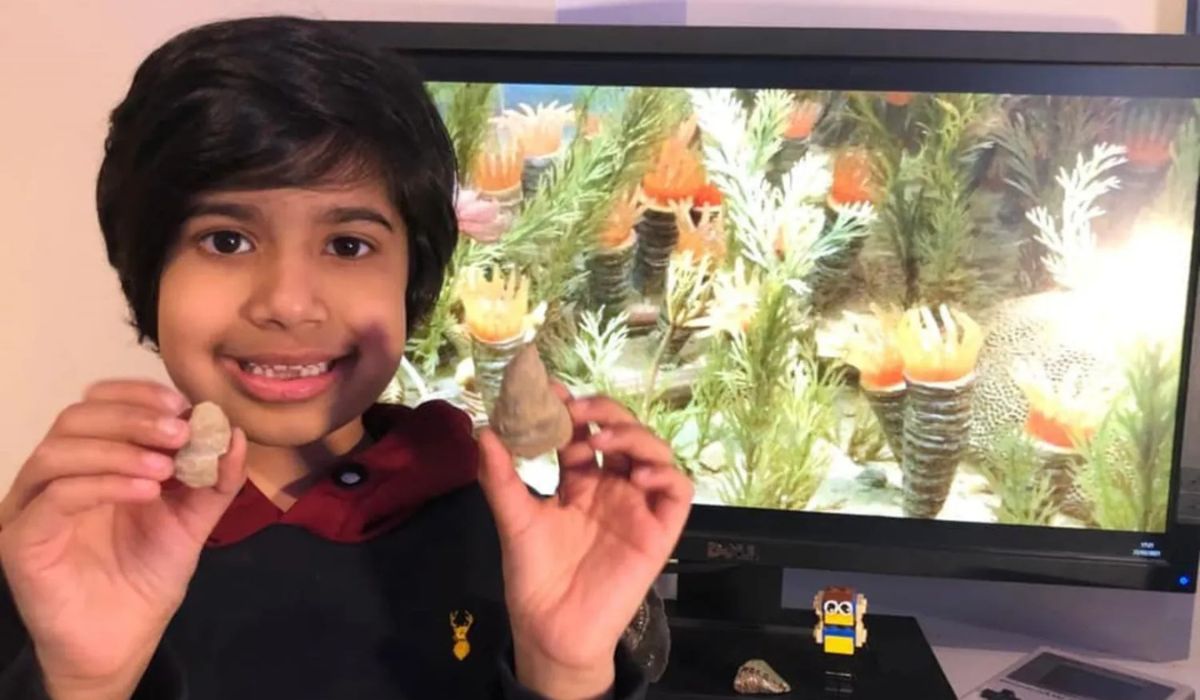
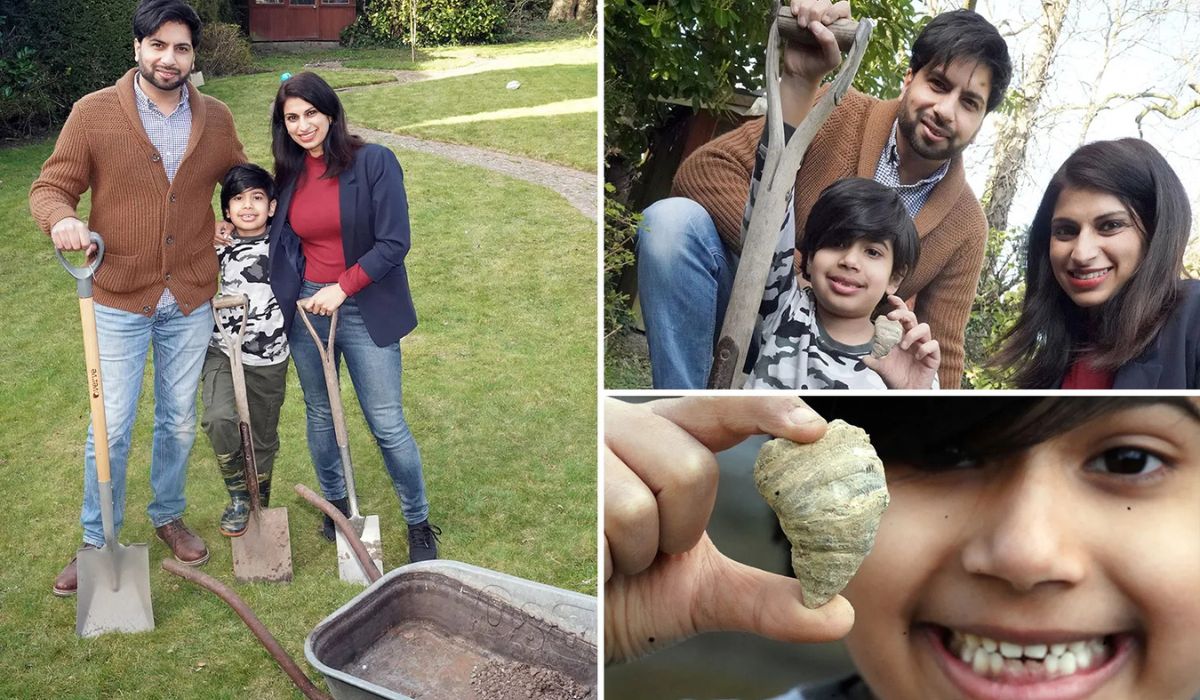
The case involves Siddak Singh Jhamat, known as Sid, who was 6 years old when he found a fossilized rock while playing in the family garden in 2021.
The find was initially reported as a fossil up to 500 million years old.
-
India Gains 2.1 Million Hectares of Dry Tropical Forest in a Decade, but Scientists Warn Much of It May Be Commercial Plantations, Not Genuine Biodiversity Recovery

-
Canada Builds World’s Largest Electric Car Battery Repurposing Plant in 6 Weeks, Aiming to Power Grids, Factories, Hospitals, and Data Centers Before Recycling Lithium, Nickel, and Cobalt

-
Scientists Discover Ancient Life Marks in 180-Million-Year-Old Moroccan Ocean Rocks
-
Students from Brazil’s Paraíba develop low-cost reusable rocket with 3D-printed engine and Arduino-controlled parachute to disperse seeds for reforestation in remote drylands.





In later reports, the age was treated with more precision, in an estimated range between 415 million and 480 million years, according to information published by the British newspaper The Guardian based on experts consulted by the family.
The estimate places the fossil in a period long before the dinosaurs.
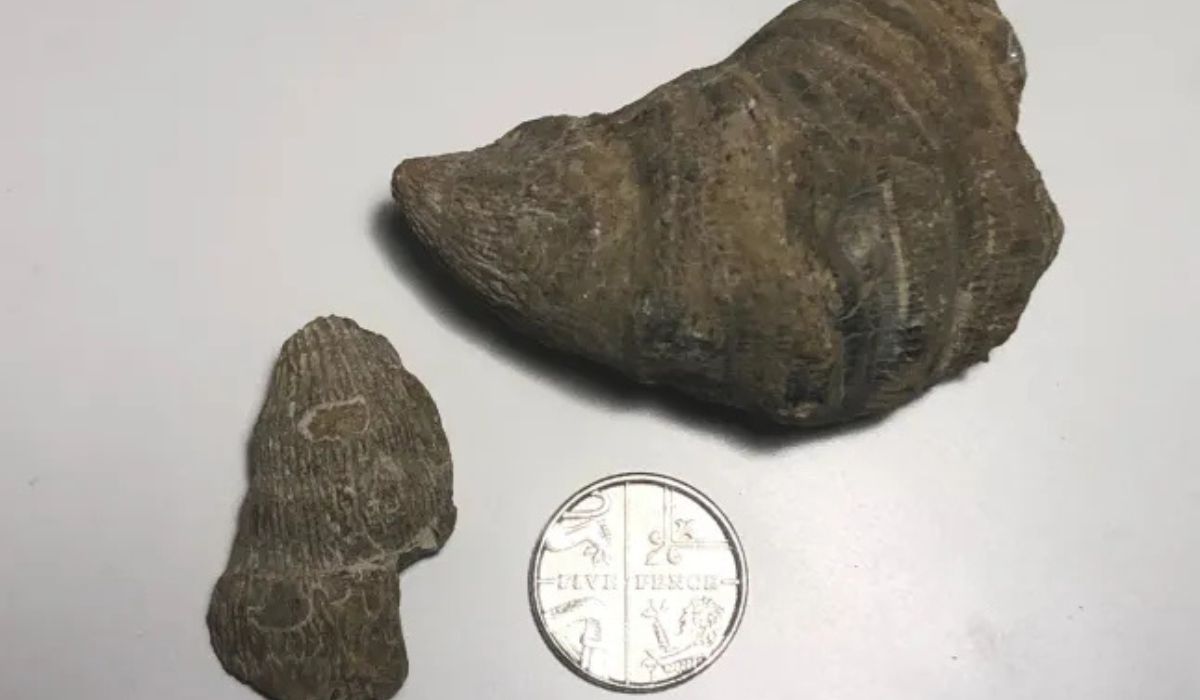
According to the identification released at the time, the material would be from a rugose coral, a group of extinct marine animals that lived during the Paleozoic Era.
The piece drew attention because it was found in a domestic environment, during a child’s play, and not in a scientific expedition.
How the play led to the fossil in the backyard
Sid was using a fossil hunting kit he had received for Christmas when he started digging in the backyard.
The initial intention, according to the family’s account to The Guardian, was to look for small objects and common signs in the soil, such as worms, pieces of pottery, and brick fragments.
In the middle of the soil, the boy found a stone with an unusual shape.
Upon observing the object, the family noticed wavy and irregular marks on the surface, characteristics that prompted a search for identification in specialized groups on the internet.
When recounting the discovery, Sid said he was looking for “worms” and “pottery and bricks” when he found the piece.
At first, the shape led the family to consider that it might be a tooth, a claw, or a horn, before receiving the indication that it was an ancient coral.
Vish Singh, the boy’s father, posted images of the fossil in a themed group on Facebook.
Based on the responses received, the family began to associate the object’s marks with a coral from the Rugosa group, also called in English “horn coral”, or horn coral.
According to reports published by the British press, the family intended to contact the geology museum at the University of Birmingham to report the find and seek more information about the material.
What is an ancient horn coral
The horn coral does not correspond to modern corals associated with current tropical reefs.
According to the Digital Atlas of Ancient Life, maintained by the Paleontological Research Institution, the Rugosa formed an extinct group of corals that appeared in the Ordovician and disappeared at the end of the Permian.
These animals lived in marine environments and could form mineral skeletons.
In some solitary forms, the elongated and curved structure resembled a horn, which explains the nickname used for this type of fossil in English.
Fossilization occurs when remains of organisms are preserved in rocks over very long periods.
In the case of corals, mineral parts of the skeleton can remain recorded in sedimentary layers, especially when environmental conditions favor preservation.
Internal and external marks help specialists differentiate groups of fossils, but definitive identification depends on technical analysis.
Therefore, initial reports made by collectors or online groups usually serve as a first guide, not as a substitute for formal scientific evaluation.
Why a marine fossil appeared in a backyard
Walsall is located in the center of England, in a region that today does not correspond to a marine environment.
The presence of a fossil associated with marine organisms is explained by the geological history of the territory, which underwent profound changes over hundreds of millions of years.
During phases of the Paleozoic Era, areas that are now part of the United Kingdom had environmental conditions different from the current ones.
Regions that are now land were once covered by ancient seas or close to environments capable of housing corals, mollusks, crinoids, and other marine organisms.
The family’s account indicates that Sid and his father continued examining the terrain after the first find.
The next day, they found a hardened block with marks associated with small mollusks, shells, and crinoids, marine animals commonly known as sea lilies.
In a later interview with The Guardian, the family stated that they consulted the Lapworth Museum of Geology in Birmingham and researched data from the British Geological Survey about the type of soil and rock beneath the residence.
The interpretation presented in the account was that the area had an ancient substrate, with the presence of clay and limestone.
The family also stated that they did not live in a region popularly known for fossil hunting, like the Jurassic Coast in southern England.
This information helps contextualize the case’s repercussion, as the discovery occurred in a residential garden, without planned scientific excavation.
Discovery of 2021 remains relevant for understanding fossils
The episode was first reported in March 2021 and received new details in May of the same year.
Therefore, the discovery should not be treated as a recent event, but as a case that continues to spark interest by bringing the public closer to topics related to geology, fossils, and the planet’s history.
After the first fossil, Sid and his father reported finding other pieces on the terrain.
In a text published by The Guardian, the family said they had gathered blocks with small impressions of corals and crinoids, totaling 11 finds.
The horn-shaped coral remained the most prominent piece in the family account.
Cases like this help to concretely explain how the current surface of the Earth holds records of environments very different from those that exist today.
A place occupied by houses, streets, and gardens may be over layers formed when the region had another geological configuration.
The discovery also highlights the importance of verification.
The object was not treated merely as a curious stone: the family sought comparison with people interested in paleontology, consulted geological information, and mentioned the intention to contact a university institution.
In the scientific field, this process is relevant because appearance and estimated age need to be evaluated with caution.
A fossil can suggest clues about the past of a region, but classification, dating, and interpretation of the context depend on specialized analysis and comparison with already known geological records.
Sid’s story shows how a domestic find can lead to questions about ancient oceans, extinct animals, and transformations of the territory over time.