






 Portuguese
  Spanish
  5 min of reading
  0 comments


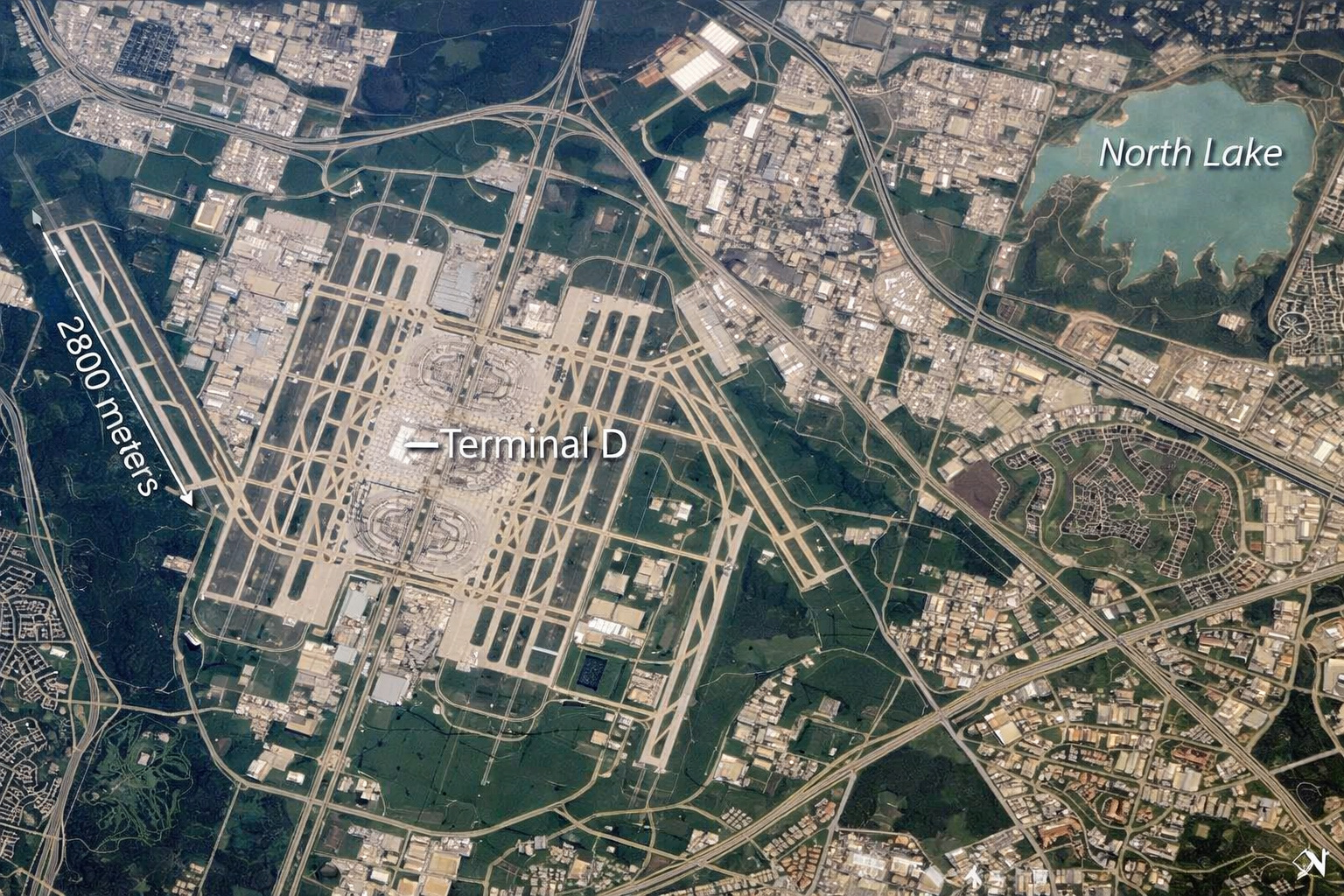
With colossal infrastructure and global-scale operation, the Dallas Fort Worth connects continents, moves millions of passengers per year, and exemplifies the logistical engineering that sustains modern world aviation.
In 2005, images released by the NASA Earth Observatory clearly showed one of the largest structures ever built by modern engineering: the Dallas/Fort Worth International Airport (DFW), located in the state of Texas, in the United States. The analysis highlighted a fact that completely repositions the perception of the size of airport infrastructure: the complex occupies an area larger than that of Manhattan Island in New York.
With approximately 69 square kilometers, the airport is not just a transportation hub, but a true territorial mega-infrastructure, with runways, terminals, logistical systems, and internal roads that spread over an area comparable to that of a medium-sized city. NASA itself emphasized that the airport was large enough to be captured almost entirely in a single orbital image, something unusual even for large urban centers.
Structure with 7 parallel runways allows simultaneous operations on a massive scale
One of the pillars that support the operation of DFW is its runway system. The airport has 7 runways, organized in a way that allows simultaneous landing and takeoff operations, reducing congestion and increasing operational efficiency.
-
Sailor sails alone from Panama to Cuba carrying just over US$ 7,000 in food, medicine, and baby formula, spends hours at Santiago de Cuba customs, and delivers everything to Cáritas, linked to the Catholic Church, to distribute to the population.

-
In the middle of a forest in the USA, a couple transforms over 1,500 recycled tires, bottles, cans, and clay into an ecological mansion, builds 90% of the house with their own hands, and puts the nearly 7-acre self-sustaining refuge up for sale for $1.3 million.

-
Cutting board created in the Netherlands uses material made by microorganisms, measures 30 x 20 cm, and aims to eliminate microplastics that can end up in food during daily preparation.

-
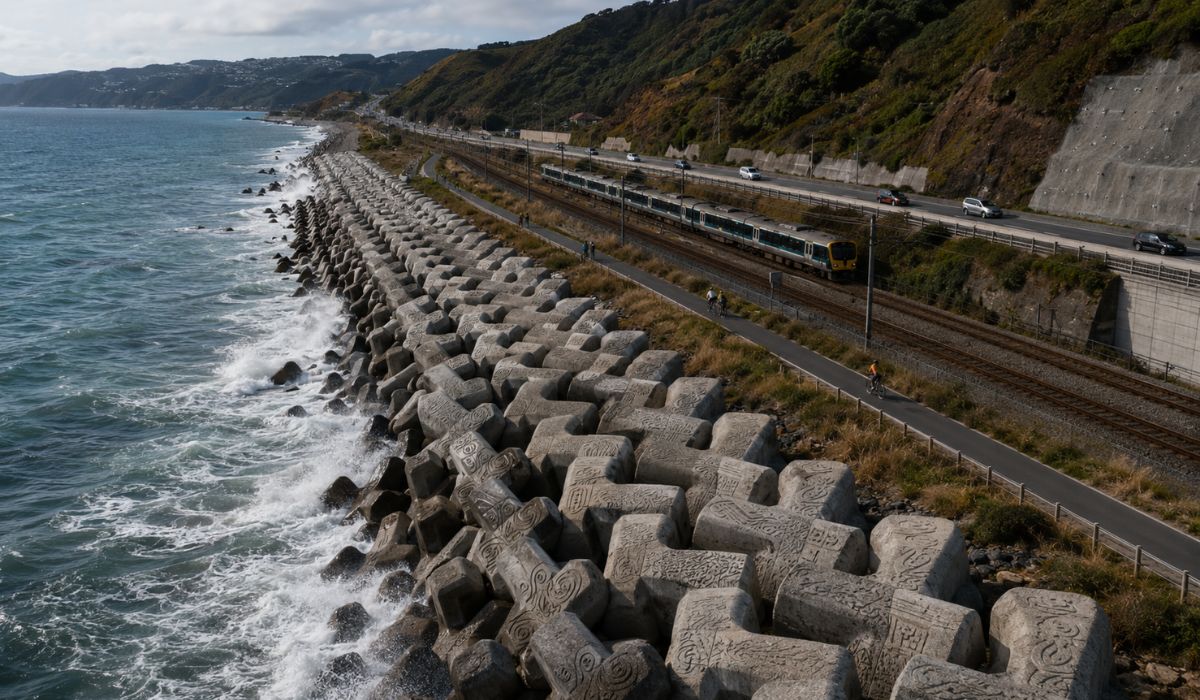
New Zealand aligns nearly 7,000 X-shaped concrete blocks like puzzle pieces to protect railway, highway, and cycle path against waves, erosion, and earthquakes on one of Wellington’s most sensitive coasts.





This arrangement is essential to handle the volume of air traffic that passes through the site daily. Unlike more compact airports, where operations need to be sequenced with greater intervals, DFW was designed to operate at high continuous capacity.
The parallel arrangement of the runways also allows for greater flexibility in adverse weather conditions, increasing the safety and predictability of operations.
Network of taxiways and internal roads forms a complex logistical system
In addition to the runways, the airport has an extensive network of taxiways, which are the roads used by aircraft to move between runways and terminals. These structures extend for dozens of kilometers and are organized to minimize ground travel time.
The system also includes internal roads for vehicles, maintenance areas, hangars, and logistics support zones. This complexity transforms the airport into a highly organized environment, where different flows operate simultaneously.
The scale of this network is one of the factors that contribute to the visibility of the complex in satellite images, as the geometric lines of the runways and taxiways form easily identifiable patterns from space.
Central terminal exceeds 1.5 km and connects multiple operational areas
The DFW has a set of terminals organized in a semicircular shape, interconnected by internal transportation systems. One of the main terminals exceeds 1.5 kilometers in length, reflecting the need to accommodate a large number of passengers and simultaneous operations.
These terminals were designed to allow efficient access to the aircraft, with multiple gates distributed along the structure. The integration between the terminals is facilitated by an automated transportation system, which connects different areas of the airport without the need for external movement.
Annual traffic exceeds tens of millions of passengers and tonnes of cargo
The volume of operations at DFW reinforces its position as one of the largest airport infrastructures in the world. By the mid-2000s, the airport handled more than 59 million passengers per year, as well as approximately 800 thousand tonnes of cargo.

This continuous flow demands a robust structure, capable of operating without significant interruptions. The ability to handle this volume is a direct result of the large-scale planning that guided the construction of the airport.
Strategic location connects the country in a centralized way
The geographical position of the airport also contributes to its relevance. Located between the cities of Dallas and Fort Worth, DFW serves as a central connection point within the United States.
This location allows the airport to function as a logistics hub, connecting domestic and international routes. The centrality reduces average flight distances and facilitates the redistribution of passengers and cargo.
Large-scale construction required integrated urban and territorial planning
The creation of an airport of this magnitude required not only engineering but also territorial planning. The area was chosen to allow for future expansion, something that has proven essential with the continuous growth of air traffic.
The project considered factors such as road access, environmental impact, and integration with nearby urban areas. This allowed the airport to develop without severe space limitations, unlike other major airports that face expansion restrictions.
Structure appears from space as an easily identifiable geometric pattern
One of the most striking aspects of DFW is its visibility in orbital images. The long, parallel, and well-defined runways create a geometric pattern that stands out in the landscape.
The combination of size, organization, and contrast with the surroundings makes the airport easily recognizable from space, even in moderately resolved images. This factor reinforces its classification as one of the most extensive human constructions ever recorded by satellite.

Comparison with Manhattan highlights unintuitive scale
The comparison with Manhattan helps to contextualize the airport’s size. While the New York island is globally known for its urban density and economic importance, DFW occupies an even larger area.
This equivalence makes the scale of the infrastructure more tangible, which is often underestimated when analyzed only in absolute numbers.
Mega-infrastructure redefines the limits of modern airport engineering
The Dallas Fort Worth International Airport represents a milestone in airport engineering, showing how far it is possible to expand air transport infrastructure when there are no severe space limitations.
The combination of extensive area, multiple runways, and complex logistical systems creates a model that influences projects in other parts of the world.
Do you believe that airports of this size represent the future of aviation, or do more compact and distributed structures tend to become more efficient?




Be the first to react!