Portuguese
  Spanish


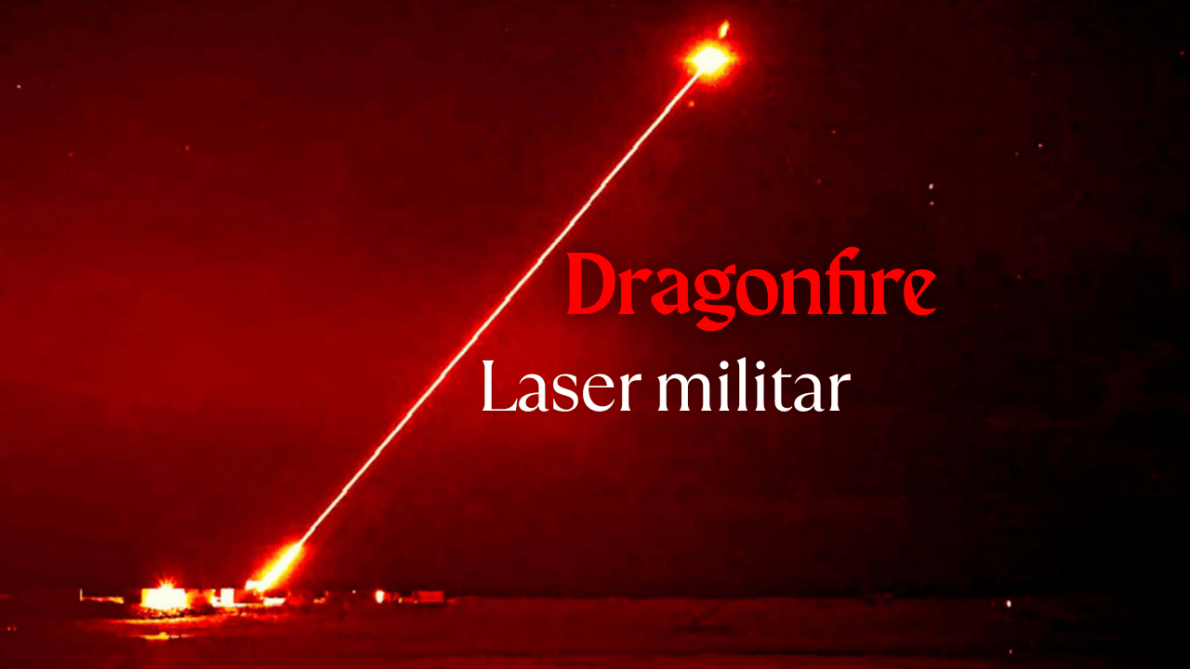


United Kingdom Anticipates 2027 The Use Of Military Laser Dragonfire On Its Warships.
The United Kingdom has announced that it will advance the deployment schedule of Dragonfire, its revolutionary military laser weapon, by five years.
The new armament, which was initially set to reach the Armed Forces in 2032, will be installed on four British warships by 2027.
The announcement comes amid rising geopolitical tensions in Europe, particularly following the escalation of the conflict between Russia and Ukraine.
-
North Korean Fiasco: Launch of the Largest Warship Ends in Sinking

-
While giant ships still burn heavy fuel and the maritime sector races against climate targets, Maersk and Vale are starting to bet on ethanol as a new route to reduce emissions at sea.

-
China begins construction of the world’s largest LNG ship, a 344-meter giant capable of supplying 4.7 million homes for a month, carrying 271,000 m³ of gas, and placing QatarEnergy in the largest naval order ever recorded in world history.
-
China is designing a container ship with a thorium nuclear reactor that will operate for 40 years without refueling, and the 25,000-container giant from Jiangnan Shipyard will cross oceans without emitting carbon in an industry that burns 300 million tons of fuel per year.




The information was confirmed by the UK’s Defence Procurement Minister, Maria Eagle, in an interview released by the portal Interesting Engineering.
The laser technology will be available about five years earlier than previously planned, Eagle stated, emphasizing that Dragonfire “will protect our Armed Forces and allow us to learn by doing.”
How The Dragonfire Military Laser Works? Cutting-Edge Technology At The Service Of The Royal Navy
The Dragonfire system uses highly concentrated beams of light to neutralize aerial and naval threats. It is a solid-state weapon with a power of 50 kW, based on fiber optic beams, capable of hitting targets at speeds close to that of light.
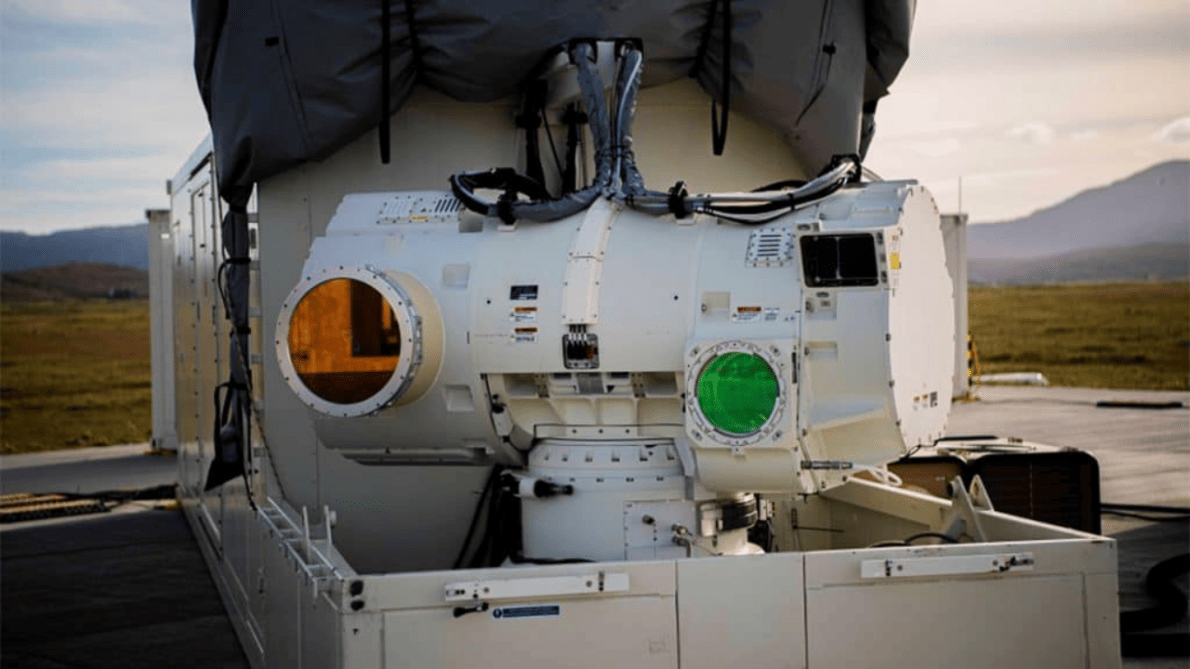
During tests conducted in January 2024, the equipment demonstrated its effectiveness by destroying an aerial target with a high-power shot — a historic milestone in the program’s development.
Accuracy is another highlight: according to the developers, the weapon can hit a coin at a distance of one kilometer.
In addition, Dragonfire includes an electro-optical camera and a secondary laser, used for accurate target acquisition and focusing.
More technical details of the system, however, remain classified for national security reasons.
Low Cost And High Efficiency: The Promise Of A New Era In Combat
One of the most significant differentiators of Dragonfire compared to conventional weaponry is its operational cost. While a traditional missile can cost thousands of euros per shot, the new British laser weapon has a cost of less than 10 euros per shot — approximately R$ 62.
In comparative terms, ten seconds of firing is equivalent to the energy consumption of a household heater running for one hour.
The UK Defence Secretary, Grant Shapps, highlighted the strategic importance of the system: “This type of cutting-edge weaponry has the potential to revolutionize the battlefield, reducing reliance on expensive munitions while also minimizing the risk of collateral damage.”
Billion-Pound Investment From The United Kingdom
The Dragonfire project is led by the Defence Science and Technology Laboratory (Dstl), an organization linked to the UK Ministry of Defence.
In total, around £100 million has been invested — approximately R$ 632 million — in the development of the system, marking a new era for the UK’s naval defense.
The decision to accelerate its installation on warships demonstrates the UK government’s confidence in the effectiveness and strategic potential of the technology.
With Dragonfire, the United Kingdom positions itself at the forefront of military innovation, investing in modern, sustainable, and highly lethal solutions to protect its interests in an increasingly volatile global environment.