Portuguese
  Spanish


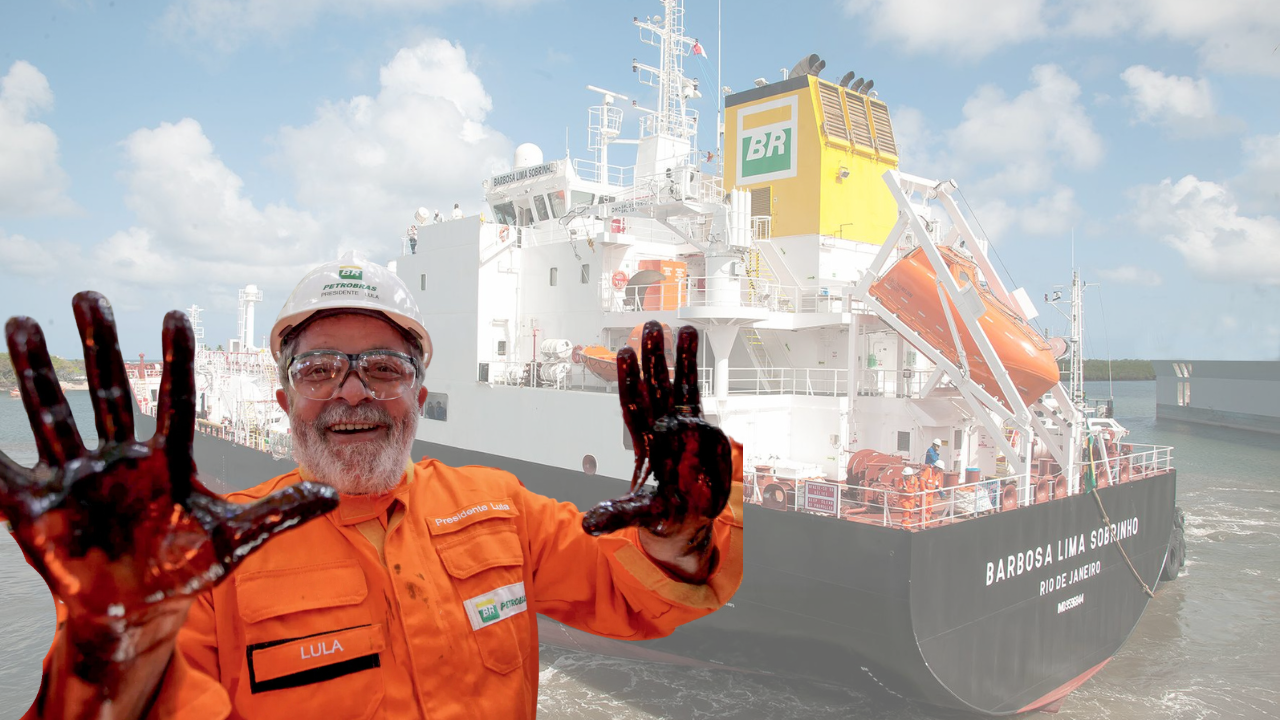

The Creation of New Job Openings Reinforces Lula and Petrobras’ Commitment to Making Changes in Brazil’s Social and Economic Landscape.
President Luiz Inácio Lula da Silva participates, this Monday (17), in an event in Angra dos Reis (RJ), at the Transpetro Terminal, marking a new chapter for the Brazilian naval industry. During the ceremony, important initiatives aimed at expanding Petrobras’ fleet and creating job openings in the sector were announced.
The launch of the second bidding round for the Fleet Renovation and Expansion Program of the Petrobras System and the signing of Letter of Intent for the repurposing of decommissioned Petrobras platforms promise a positive impact on the country’s economy, focusing on creating new job opportunities and strengthening the national offshore industry.
Boosting the Naval Industry: A Growth and Sustainability Strategy with Support from President Lula
The expansion and renewal of Transpetro’s gas carrier fleet, a subsidiary of Petrobras, was one of the main topics addressed at the event.
-
The U.S. Navy Conducts Submarine Tests in Idaho Lake to Detect Underwater Noises Hidden by the Ocean

-
Nuclear Submarine USS Alexandria Retired After 35 Years, Having Completed Over 1 Million Miles in Missions

-
MODEC Introduces New Hull Design for FPSO Gato do Mato to Produce Up to 120,000 Barrels of Oil Per Day in Brazil’s Pre-Salt Region
-
This Massive 12-Meter, 21-Ton Underwater Drone Can Operate Autonomously for Up to Five Days


With the launch of the second bidding round of the renovation program, Transpetro is preparing to significantly expand its fleet, which is expected to generate a substantial increase in job openings.
The president of Transpetro, Sérgio Bacci, highlighted that the number of gas carriers will be increased from six to 14, tripling the capacity for transporting LPG (Liquefied Petroleum Gas) and its derivatives.
With the fleet expansion, the capacity for transporting natural gas will increase from 36,000 to up to 108,000 cubic meters.
Bacci stated that this expansion positions Transpetro on the path to consolidating itself as the largest Brazilian shipping company in gas transport, an essential segment for the Petrobras System and for Brazil as a whole.
The project envisions the acquisition of eight new gas carriers, divided into two lots.
The first lot includes five vessels for transporting LPG, with capacities of 7,000, 10,000, and 14,000 cubic meters.
The second lot includes the acquisition of three semi-refrigerated ships, with a capacity of 10,000 cubic meters, capable of transporting, for the first time, ammonia, a product that is currently not transported by Transpetro.
Sustainable Investments and Job Creation
Petrobras and Transpetro have been heavily investing in more efficient and sustainable technologies.
The new gas carriers to be acquired will have up to 20% more fuel efficiency, in addition to promoting a 30% reduction in greenhouse gas emissions.
These ships will also be equipped to operate in electrified ports, aligning with best environmental and sustainability practices.
This advancement is not limited to fleet renewal. The event also marked the launch of the “Brazilian Naval and Offshore Industry Business Fair,” which will bring together sector representatives and aims to foster new partnerships and opportunities in the segment.
This initiative is part of the Federal Government and Petrobras System’s commitment to generating more jobs, stimulating the industry, and promoting a virtuous cycle of new investments and economic growth.
Expansion of Gas and Ammonia Transport
The expansion of the gas carrier fleet will enable Transpetro to transport not only LPG but also ammonia, a substance that has become increasingly important for the Brazilian industry.
With the increase in natural gas production in the country, this project meets a growing demand from Petrobras, especially along the Brazilian coast and in river navigation in regions such as Northern Brazil and Lagoa dos Patos in Rio Grande do Sul.
The bidding for the new ships follows a well-defined schedule, with the winning companies having 90 days to present their proposals.
The first ship is expected to be delivered within 30 months after the contract is formalized, with subsequent deliveries every six months.