Portuguese
  Spanish


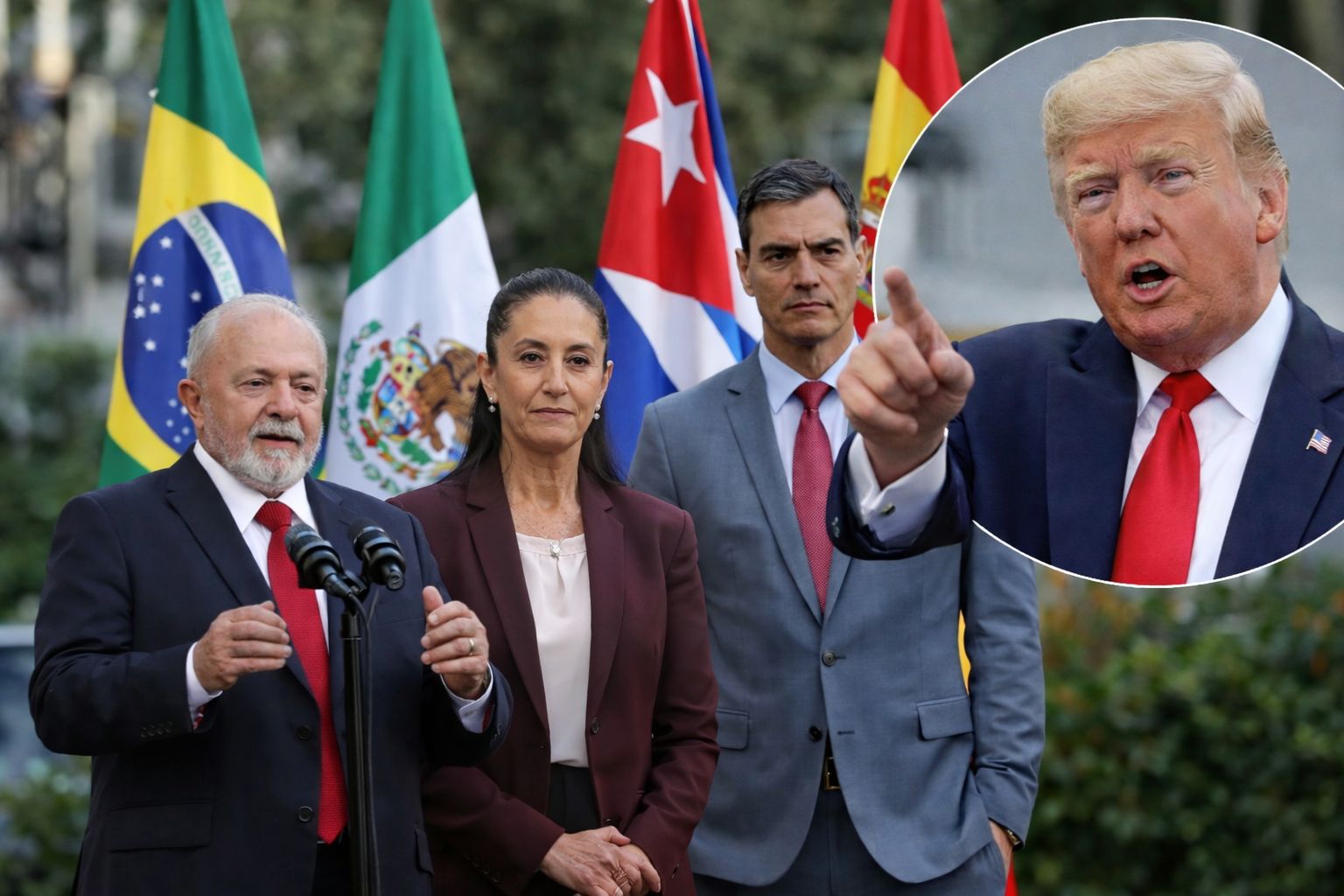

Brazil, Mexico, and Spain issued a joint statement demanding respect for Cuba’s sovereignty and announcing that they will intensify the sending of humanitarian aid to the island. The statement does not directly mention Trump but responds to the American president’s statements that “Cuba is next” after military actions in Venezuela and Iran. Lula criticized leaders who threaten wars daily.
The government of President Lula issued a joint statement on Saturday (18) with Mexico and Spain demanding respect for the sovereignty of Cuba and informing that the three countries will “intensify” the sending of humanitarian aid to the island. The statement, published by the Ministry of Foreign Affairs, does not directly mention President Donald Trump but unequivocally responds to the recent statements of the American leader. After citing military actions in Venezuela, which led to the arrest of Nicolás Maduro, and in Iran, which resulted in the death of Ayatollah Ali Khamenei, Trump has said that “Cuba is next”, a threat that has placed the Caribbean island at the center of a geopolitical crisis that has mobilized Brazil, Mexico, and Spain in defense of international law.
The joint declaration reinforces principles of the United Nations Charter and calls for Cuba to be treated with respect for territorial integrity, sovereign equality, and peaceful resolution of disputes. Meanwhile, Lula spoke at an event in Barcelona about democracy and directly criticized leaders who threaten other countries: “We cannot wake up every morning and go to sleep every night with a tweet from a president of the Republic threatening the world, making war,” he said, without mentioning Trump by name but leaving no doubt about whom he was referring to. For Cuba, which is facing the worst humanitarian crisis in decades, the alliance between Brazil, Mexico, and Spain is both a diplomatic shield and a promise of concrete aid.
What the joint statement from Brazil, Mexico, and Spain says about Cuba
According to information from the G1 portal, the text released by Itamaraty is carefully worded to defend Cuba without provoking a direct confrontation with the United States. The three countries “reiterate the need to respect, at all times, international law and the principles of territorial integrity, sovereign equality, and peaceful resolution of disputes, enshrined in the United Nations Charter”, a formulation that applies both to the situation in Cuba and to any other conflict where a more powerful country threatens a weaker one.
-
Brazil to Issue “Panda Bonds” in China, Aiming to Raise Up to 5 Billion Yuan at Lower Interest Rates Than Dollar Debt
-
NATO Faces Internal Tensions as U.S. Pushes for Increased Defense Spending, Targeting 5% of GDP by 2035, with Warnings for Countries Near 2% Level

-
Brazil to Introduce B16 Diesel with Increased Soybean Oil Content for Trucks by 2026
-
Brazil’s July Bolsa Família Payments May Include Extra $150 and $50 for Families with Children, Pregnant Women, and Updated CadÚnico Registration


In addition to diplomatic defense, the statement has a practical component. Brazil, Mexico, and Spain committed to “intensify the coordinated humanitarian response, aiming to alleviate the suffering of the Cuban people”, recognizing that the island is facing an increasingly intense energy crisis with recurring blackouts, fuel shortages, and food scarcity. The statement also advocates for a “sincere, respectful dialogue in accordance with international law” for Cuba to overcome the crisis, with the aim of “creating the conditions for the Cuban people to decide their future in total freedom.”
Why Trump said Cuba is next
Trump’s statements about Cuba did not arise in a vacuum. The American president has adopted an assertive military posture in Latin America and the Middle East, with actions that resulted in the arrest of Nicolás Maduro in Venezuela and the death of Ayatollah Ali Khamenei in Iran. By citing these operations as examples of success, Trump began to publicly state that “Cuba is next,” a statement that can be interpreted both as a military threat and as maximum diplomatic pressure on the Cuban regime.
For Cuba, the threat comes at a time of extreme vulnerability. The island is already facing the effects of decades of American embargo, exacerbated by an energy crisis that causes daily blackouts and by the scarcity of fuel and food that directly affects the lives of millions of Cubans. The possibility of American military action, even if unlikely in practice, intensifies the pressure on a country that has few allies with the real capacity to offer protection.
What Lula said about war and leaders who threaten other countries
Lula’s speech in Barcelona went beyond the issue of Cuba and directly attacked the behavior of world leaders who seek to resolve conflicts by force. “We cannot wake up every morning and go to sleep every night with a tweet from a president of the Republic threatening the world, waging war”, declared the Brazilian president at an event on democracy, without naming Trump but making it clear who the target of the criticism was.
Lula also directed criticism at the UN Security Council, which he considers paralyzed and unable to fulfill its role of ensuring peace. “The beloved United Nations, which was created after World War II, with five permanent members, to care for peace, has turned into five warlords”, he said, referring to the fact that permanent members like the United States and Russia are directly involved in armed conflicts while they should be mediating them. For Lula, a historical ally of Cuba and a critic of the American embargo, the defense of the Caribbean island is consistent with a diplomatic trajectory of decades.
The humanitarian crisis Cuba faces while the world debates
Regardless of geopolitics, the situation on the ground in Cuba is serious. The island is facing an energy crisis that causes recurring blackouts, a lack of fuel for transportation and productive activities, and a widespread food shortage affecting the population. Residents report basic survival difficulties in a context where the country’s infrastructure has deteriorated after decades of embargo and insufficient investment.
The humanitarian aid promised by Brazil, Mexico, and Spain may alleviate some immediate suffering, but it does not address the structural causes of Cuba’s crisis. The American embargo, which Lula publicly criticizes, restricts trade and access to international financing, limiting the Cuban government’s ability to import fuel, medicines, and food even when it has the resources to do so. For embargo supporters, economic pressure is necessary to force political changes in Cuba. For critics, like Lula, the embargo punishes the Cuban people for their government’s decisions.
What the alliance between Brazil, Mexico, and Spain means for Cuba
The formation of a diplomatic bloc between Brazil, Mexico, and Spain in defense of Cuba has implications that go beyond immediate humanitarian aid. The three countries represent significant political weight: Brazil is the largest economy in Latin America, Mexico is a direct neighbor of the United States, and Spain is a member of the European Union, which gives the joint statement a resonance that Cuba alone could not achieve.
For Cuban leader Miguel Díaz-Canel, who according to the statement has already initiated negotiations with the U.S. government, the declaration from Brazil, Mexico, and Spain strengthens Cuba’s position in negotiations by demonstrating that the island has international support to demand respect for its sovereignty. If Trump intends to pressure Cuba, he now knows he is doing so against the public opposition of three democratic countries representing hundreds of millions of people. The question is whether this diplomatic support will be enough to contain the ambitions of an American president who has already shown a willingness to act militarily when he decides to do so.
Lula, Mexico, and Spain defend Cuba and criticize threats of war. Do you agree with Brazil’s position? Should the American embargo end? Leave your opinion in the comments.