Portuguese
  Spanish


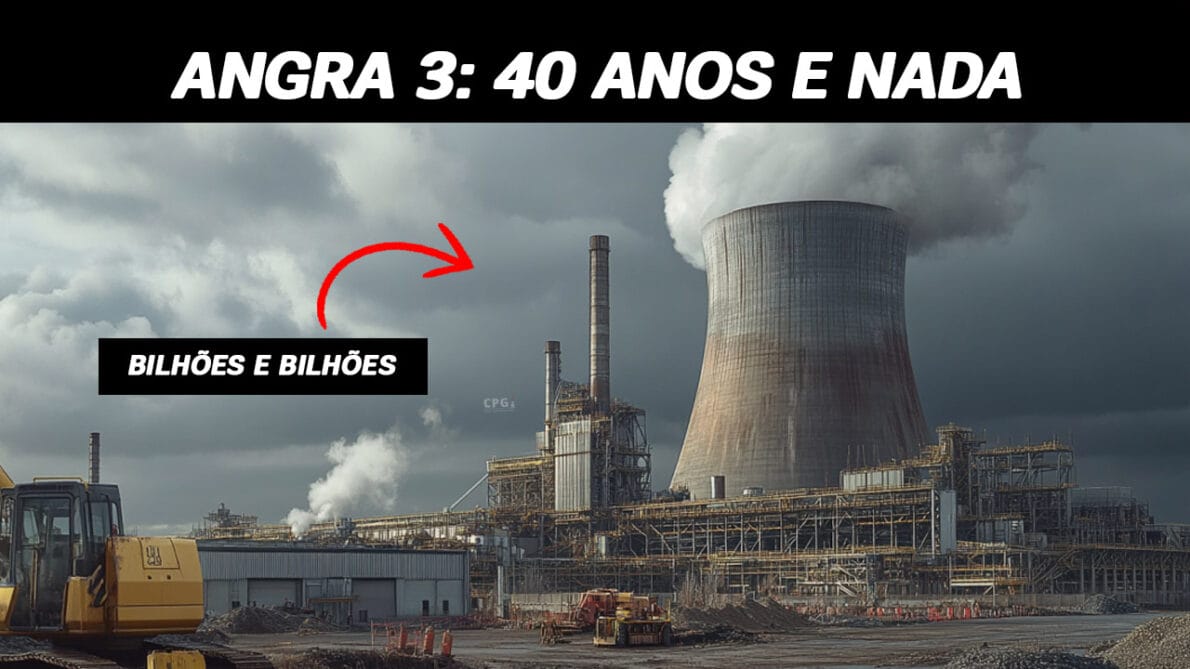


After Decades of Paralysis and Scandals, the Resumption of Angra 3 Promises to Mark the Brazilian Nuclear Sector. Lula Leads Moves That Could Transform the Country’s Energy Scenario. Is the Billion-Dollar Investment Worth It?
The Brazilian nuclear sector may be on the verge of experiencing a historic moment.
After more than four decades of interruptions, scandals, and uncertainties, the completion of the Angra 3 Nuclear Power Plant seems to finally gain new momentum. But what lies behind this monumental project?
Amid billion-dollar figures and political maneuvering, the much-anticipated announcement this Tuesday (10) promises to reignite the debate about the importance of nuclear energy in the country.
-
Clarification and Right of Reply Notice

-
Elon Musk Becomes World’s First Trillionaire with $1.1 Trillion Fortune; Could This End Global Hunger?

-
Brazilian Executive Takes Helm of Heineken Amid Decline in Sales: 51-Year-Old Has Led Operations Across Four Continents and Managed a $7 Billion Empire
-
Brazilian Actress Turns Waxing Clinic into 400-Unit Chain with $50 Million Revenue, Sells Stake After 13 Years




According to information obtained by the sector, President Luiz Inácio Lula da Silva is expected to officially announce the resumption of construction on Angra 3, a project that began in 1981 and faced successive interruptions.
According to Petronotícias, sources close to the government indicate that the announcement will be made after the meeting of the National Energy Policy Council (CNPE).
This decision is the result of months of negotiations that involved not only Lula but also Minister Rui Costa (Civil House), Alexandre Silveira (Mines and Energy), and the Mayor of Rio de Janeiro, Eduardo Paes.
A Project Marked by Paralysis and Corruption
The construction of Angra 3 carries a troubled history. Since it began more than 40 years ago, the plant has suffered from high costs, lack of planning, and allegations of corruption.
One of the most critical episodes came to light during Operation Car Wash, which revealed a scheme involving companies, businessmen, and politicians linked to the project.
So far, the project has consumed around R$ 8 billion and reached a physical progress of 65%. However, to be completed, an additional investment of approximately R$ 20 billion will be needed.
This amount will largely be borne by consumers through energy commercialization tariffs.
Is the Angra 3 Tariff Viable?
The National Bank for Economic and Social Development (BNDES) prepared a study in September proposing a commercialization tariff of R$ 653.31 per megawatt-hour (MWh) for the plant.
According to Eletronuclear, this amount is lower than the operating cost of other thermal plants, measured by the Unit Variable Costs (UVC).
The tariff was presented to the Ministry of Mines and Energy, Eletronuclear, and the CNPE, which should approve the proposal in the meeting this Tuesday.
According to the president of Eletronuclear, Raul Lycurgo, the next step will be to conduct an international bidding process to select the consortium responsible for completing the project.
This process is expected to occur in the first half of 2025, with the contract signing scheduled for the second half of the same year. The delivery of the plant is estimated to be in early 2031.
Nuclear Energy in Brazil: Necessity or Risky Bet?
The reactivation of Angra 3 reignites the debate about the role of nuclear energy in a country with vast hydropower resources and growth in the renewable energy sector.
According to Minister Alexandre Silveira, “in a continental country like Brazil, there is no clean and renewable energy without this energy source.”
The statement reflects the government’s effort to diversify the energy matrix, even in the face of criticism and doubts about the costs and environmental impacts of this type of project.
The decision to resume Angra 3 represents a bold bet in a sector that, although strategic, still faces resistance from various segments of society.
Is Brazil ready to cope with the financial and operational challenges of this undertaking? In any case, it is evident that the resumption of Angra 3 symbolizes both a milestone and a challenge for the Brazilian energy sector.
The promise of large-scale nuclear energy generation comes with a high cost, which will be felt by consumers over the coming decades.
While the government prepares to greenlight the project, many still wonder if the benefits will outweigh the costs.
And you, do you believe Brazil should continue investing in nuclear energy, even with the high costs and controversies involved?