






 Portuguese
  Spanish


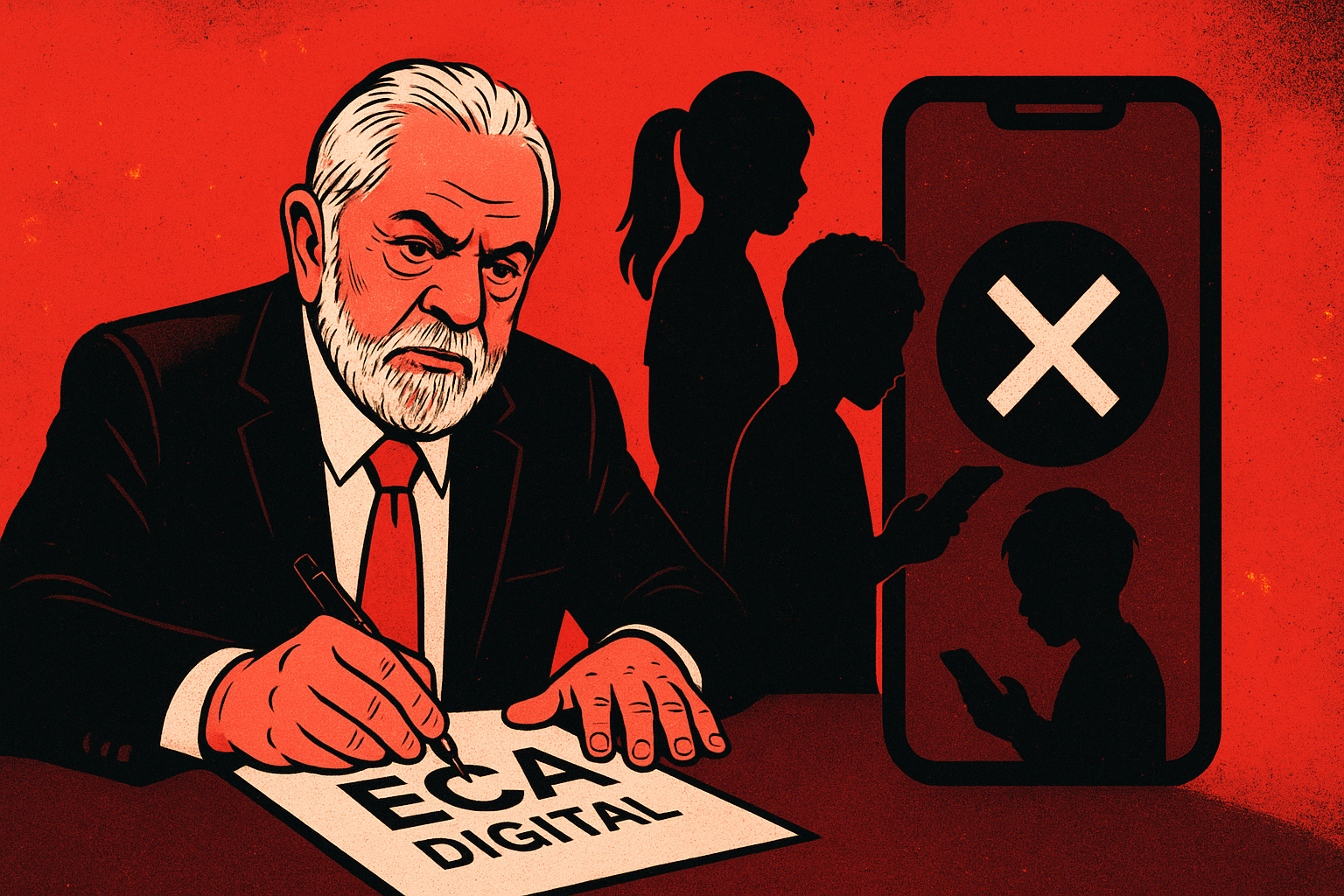

Lula Signs the Digital Child Statute and Requires Big Techs to Protect Children and Adolescents in the Digital Environment with Unprecedented Rules
Lula Signs Digital Protection Law at the Planalto Palace
President Luiz Inácio Lula da Silva signed, this Wednesday (17), at the Planalto Palace, the law that strengthens digital protection for children and adolescents. Now, social networks, apps, and electronic games must adapt to the changes of the new digital rule.
The National Congress had already approved the proposal at the end of last month, and since then it has been known as the Digital Child Statute, in reference to the Statute of the Child and Adolescent.
Government Transforms ANPD into a Digital Regulatory Agency
In addition, Lula signed a Provisional Measure (MP) that transforms the National Data Protection Authority (ANPD) into a digital regulatory agency. With this, the new entity will have more autonomy to supervise, issue regulations, and apply penalties against technology companies that violate the digital law.
-
Seniors Over 60 Can Travel for Free Across Brazil: Elderly Statute Ensures Two Free Bus Seats and 50% Discount When Full for Low-Income Passengers

-
Detran RJ starts requiring a toxicological test for those obtaining their first driver’s license in the car and motorcycle category starting June 29; see who will be affected.

-
Florida takes TikTok to court and accuses the Chinese giant ByteDance of ignoring the law that bars minors under 14, while parents and authorities demand more protection for children on social networks.
-
Chamber approves constitutional amendment reducing the age of criminal responsibility from 18 to 16 years; what now?




In his speech, Lula emphasized:
“One of the MP’s we are sending to Congress transforms the National Data Protection Authority into the National Agency for Data Protection, with autonomy to protect children and adolescents on the internet.”
Reinforced Digital Structure and Defined Deadlines
The government increased the budget of the new digital regulatory agency and created an administrative structure with positions for higher-level analysts, which will be filled through public competition.
The MP took effect immediately but will need to be approved by Congress within 120 days to remain valid.
What the Digital Child Statute Changes in Practice
With the signing, the Digital Child Statute became Federal Law 15.211/2025. Now, digital platforms must adopt measures to prevent children and adolescents from accessing illegal or inappropriate content. Among these are sexual exploitation, violence, harassment, gambling, predatory and misleading advertising.
Furthermore, the law requires the implementation of safer age verification mechanisms, which must be supervised by parents and guardians. Also, the rule regulates the collection of personal data, controls advertising directed at minors, and prohibits exposure of children to gambling.
Lula Justifies the Modernization of the Law
Lula reminded that the Statute of the Child and Adolescent, created 35 years ago, no longer met the demands of the digital age.
“Thirty-five years after the signing of the original Statute of the Child and Adolescent, the world has changed a lot. It was necessary to modernize the legal and regulatory frameworks regarding the protection of children and adolescents,” he stated.
According to him, Brazil now joins a list of countries that have created advanced legislation for the protection of minors on the internet.
Big Techs Under Direct Pressure
The president emphasized that, although digital networks are essential for entrepreneurs and millions of people, they cannot be above the law.
“They cannot continue to be used to spread fake news and hate speech. They cannot allow the practice of crimes such as financial scams, sexual exploitation of children and adolescents, incitement to racism, and violence against women,” he said.
Lula also criticized the lack of self-regulation by big techs:
“It is a mistake to believe that big techs will take the initiative to self-regulate. This mistake has already cost the lives of several children and adolescents.”
Other Announcements Made at the Planalto Palace
At the same event, the government presented a Bill that regulates the economic and competitive operations of large technology companies.
Additionally, Lula signed an MP that created the Special Tax Regime for Data Center Services (Redata). The program offers R$ 5.2 billion in incentives as early as 2026, aiming to stimulate investments in cloud computing, artificial intelligence, the Internet of Things, and Industry 4.0.
Vetoes and Adjustments in the New Law
The president vetoed three points of the Digital Child Statute. First, he removed from the text the responsibility of Anatel to comply with judicial blocking orders and transferred this attribution to a decree.
Next, he vetoed the immediate allocation of fines to the Child and Adolescent Fund, deciding to respect the rules of the Budgetary Guidelines Law.
Finally, Lula reduced the deadline for the law to take effect from one year to six months by editing a new MP.
Now, Congress will analyze the vetoes and may either maintain or overturn them.
Source: Agência Brasil


