Portuguese
  Spanish


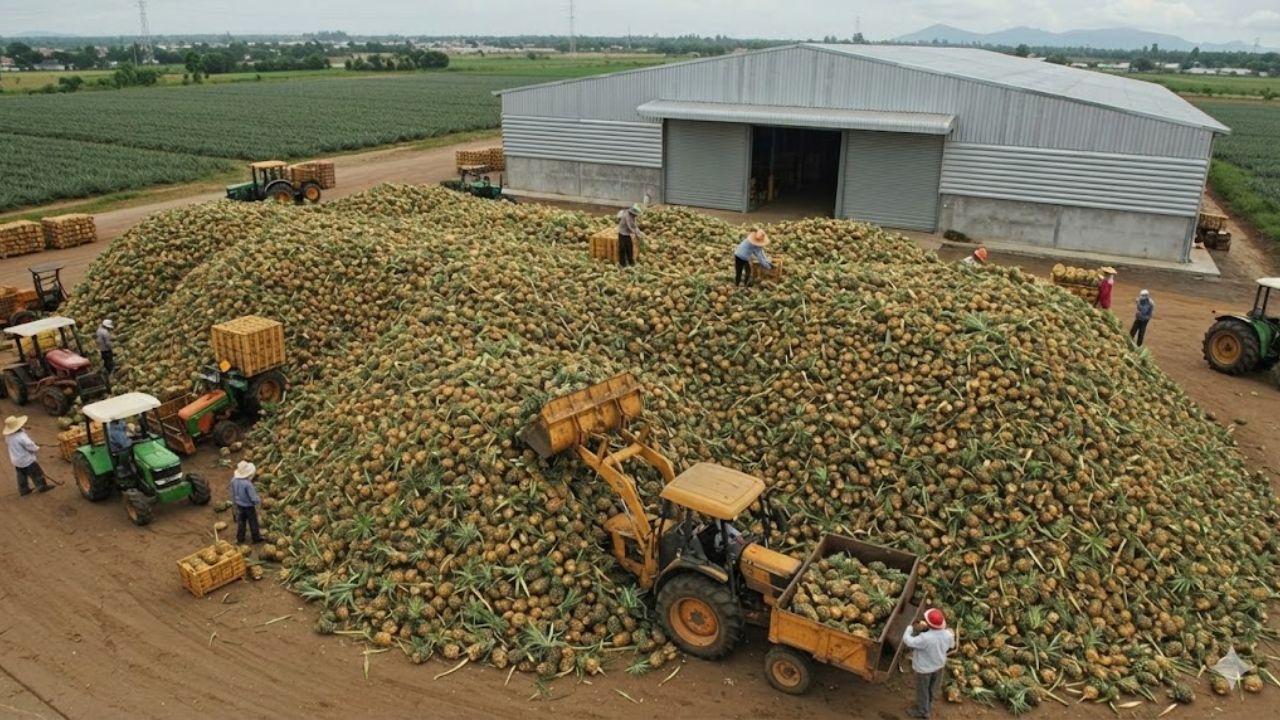


The Story of the Largest Pineapple Farm on the Planet Began with Dole in Hawaii, Which Once Accounted for 75% of Global Consumption and Now Finds an Unexpected Giant in Brazil That Harvests 258 Million Fruits Annually.
The largest pineapple farm on the planet seems like something out of a movie, but it really existed and changed the global fruit market for decades. When it comes to large-scale farming, few stories are as impressive as that of Hawaii, where a gigantic operation took pineapple production to a level that dominated the world.
And the most curious thing is that, while this empire was born in the Pacific, Brazil surprises with a municipality in southern Pará that has become a national powerhouse, with a huge planted area, an annual production that astounds, and an economic chain based on the fruit.
How the Largest Pineapple Farm on the Planet Was Born in Hawaii
The foundation of this story begins with James Drummond Dole. He was born in the United States in 1877, studied at Harvard, and decided to pursue a career in agriculture.
-
India’s Sugar Export Cuts and Ethanol Shift Amid El Niño Threat Could Impact Global Prices and Stocks

-
Quarantine Pest Threatening Palm Trees Puts Brazilian Authorities on Alert, Prompts Monitoring at University of Taubaté and Potential Control Measures Across São Paulo
-
Global Alert: Report Finds 159 Pesticides in Coffee Beans Sold in Europe, Posing Serious Risks to Millions of Farm Workers
-
Low-Demand Brazilian Beef Offal Gains Popularity Abroad: Indonesia Purchases $19.5 Million, Boosting Revenue and Reducing Waste



In 1899, at the age of 22, he went to Hawaii with an ambitious plan: to make pineapple a popular product in American homes.
Two years later, in 1901, he founded the Hawaiian Pineapple Company on the island of Oahu. The strategy was not to plant as it had always been done, but to build a mass production system aimed at export, combining technology and marketing.
The Machine That Changed the Game and Put Pineapple into Industrial Scale

A pivotal milestone came in 1911 when engineer Henry Ginaca created a machine capable of peeling, cutting, and removing the core of up to 100 pineapples per minute. Prior to this, preparation was manual, which limited the scale.
With this leap, the operation gained speed and consistency. Productivity began to depend on engineering and processes, rather than just human pace, opening the door for aggressive production growth.
Lanaí Island, 8,000 Hectares and the Peak of Global Domination
The boldest step occurred in 1922 when Dole purchased Lanaí Island for over 1 million dollars and transformed the place into a seemingly endless plantation.
The mentioned area reaches over 20,000 acres, or more than 8,000 hectares dedicated to cultivation.
To support the operation, a village was built with houses, schools, and facilities for more than 3,000 workers and their families.
For decades, Lanaí produced about 75% of the pineapple consumed worldwide, a level that explains why the term largest pineapple farm on the planet makes sense in this context.
The End of an Era and the Farm That Became a Tourist Attraction
Over time, competition from other countries increased, costs in Hawaii became higher, and the market changed. In 1992, pineapple production on Lanaí Island was halted, marking the end of an era.
However, the story did not disappear. The farm in Oahu began to operate as a tourist attraction, receiving over 1 million visitors a year, with tours, gardens, stores, and even a pineapple-themed maze.
What was once a symbol of global production became a living memory of a time when pineapple dominated the planet.
Araguaia Forest: The Brazil That Became a Pineapple Giant

After learning about the largest pineapple farm on the planet in Hawaii, Brazil enters as a surprise. In southern Pará, Araguaia Forest carries the title of the largest pineapple producer in the country based on the data presented.
The cited numbers are impressive: the municipality accounts for almost 16% of national production, has over 10,000 hectares planted, and exceeds 258 million fruits annually.
Moreover, it represents 75% of what is harvested in the state of Pará. This is the kind of scale that changes an entire local economy.
Why Does Pineapple Production Grow So Much There
The data points to a simple and decisive factor: the soil. The region has many small stones and pebbles, which improves drainage, reduces the risk of root rot, and contributes to the fruit being firmer and tastier.
Another point is the technical and institutional support. Producers receive assistance from the state of Pará, including guidance, courses, support for rural credit, and public policies.
In 2021, the Secretariat of Agricultural Development and Fisheries invested R$ 250,000 in equipment for the local agro-industry, designated for the Cooperativa dos Agricultores de São Francisco. This type of structure helps transform production into an organized chain.
The Social Impact: Thousands of Families and Impressive Daily Logistics
According to the data, Araguaia Forest has about 7,000 families that depend directly on the cultivation and sale of pineapple. The plant’s cycle lasts approximately 1 year and 9 months, with the peak harvest occurring between December and May.
During this period, logistics becomes a daily operation: around 60 loaded trucks leave the municipality every day to distribute the pineapple throughout Brazil. It is a pilgrimage of fruit that demonstrates the strength of the countryside when there is scale and coordination.
Industrialization and Export: Concentrated Juice for the World
The story doesn’t just revolve around fresh fruit. The data states that Araguaia Forest is home to the largest concentrated pineapple juice industry in Brazil, with the capacity to process up to 4,000 tons per month.
The destination is impressive as well: the production is exported to countries in the European Union, the United States, Mercosur, and even the Arab League. When industrialization comes into play, pineapple stops being just a harvest and becomes a global product.
Pineapple Festival and the Identity of an Entire City
Since 1995, the city has hosted a pineapple festival, featuring shows, horseback rides, contests, and cultural attractions. The event celebrates the fruit and honors rural producers, reinforcing the local identity built around pineapple culture.
This is when the economy also becomes tradition, and production stops being just numbers to become a symbol of belonging.
What the Largest Pineapple Farm on the Planet Teaches Us About Brazil
The story of Hawaii shows how technology and process created an era when pineapple dominated the world.
The story of Pará shows how natural conditions, technical assistance, and productive organization transformed a small town into a national powerhouse, with international presence through juice.
In the end, the largest pineapple farm on the planet and the phenomenon of Araguaia Forest tell the same lesson: when scale and method meet, a common fruit becomes an economic strategy.
Do you think Brazil benefits more by strengthening the export of fresh pineapple or by investing further in industrialization, such as concentrated juice and derivatives?