Portuguese
  Spanish


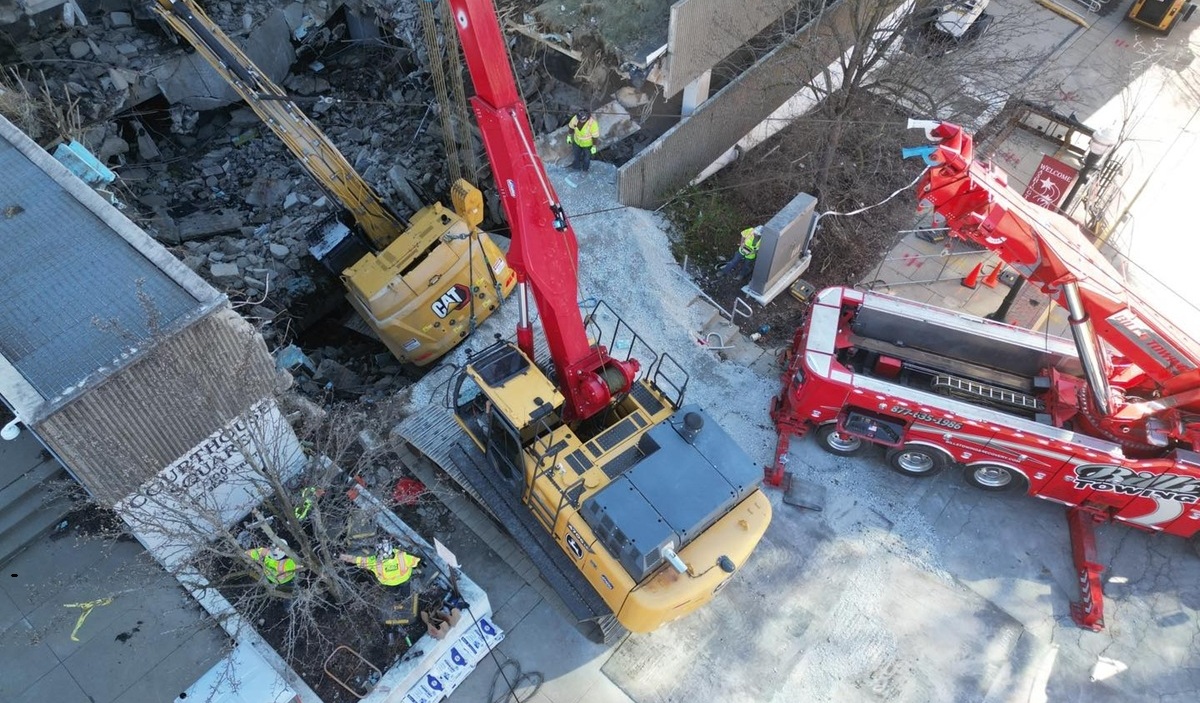


Accident During Demolition in Washington, Pennsylvania, Caused 61-Ton Caterpillar Excavator to Cross the Floor of a Garage and Fall 4.5 Meters. The Removal Required a Complex Operation with Heavy Rescue Equipment, Including the Largest Wrecker in the World and a Machine with Capacity Greater Than 68 Tons
A operation involving the largest wrecker in the world was mobilized in Washington, Pennsylvania, after a Caterpillar excavator weighing approximately 61 tons crossed the floor of a parking garage and fell 4.5 meters inside the structure during a demolition.
Accident During Demolition Mobilized Operation with the Largest Wrecker in the World
The incident occurred during a demolition considered routine in the city of Washington, in the state of Pennsylvania. During the work, the Caterpillar excavator crossed the floor of a parking garage and plummeted about 4.5 meters to the structure below.
The machine, weighing 135,000 pounds, equivalent to approximately 61 tons, fell on its side inside a concrete pit.
-
Brazilian Farmer Turns to Artisan Baked Goods After Poultry Venture Fails in Rural Bahia

-
Japanese Botanist Akira Miyawaki Plants 30,000 Trees on a Tennis Court-Sized Plot, Intentionally Sacrificing Many to Accelerate Forest Growth; Miyawaki Method Has Spread Over 40 Million Trees Across 15 Countries

-
Couple Converts Retired U.S. Navy Research Barge into Off-Grid Floating Home on Idaho Lake with DIY 3-Stage Water Filtration System Using UV Light
-
Brazilian Military Police Officer Turns Family Farm into Internationally Certified Guava Producer, Eyes Exports to UK, Portugal, and Canada After Cooperative Boosts Sales by 580%




Despite the seriousness of the situation, the operator was unharmed and was cleared by a medical team that attended the incident shortly afterward.
The complexity of the removal required the use of specialized heavy rescue equipment.
Among them was the largest wrecker in the world, a rotary wrecker truck used in operations involving extremely heavy loads and delicate structural situations.
Heavy Equipment Was Called to Remove the Excavator
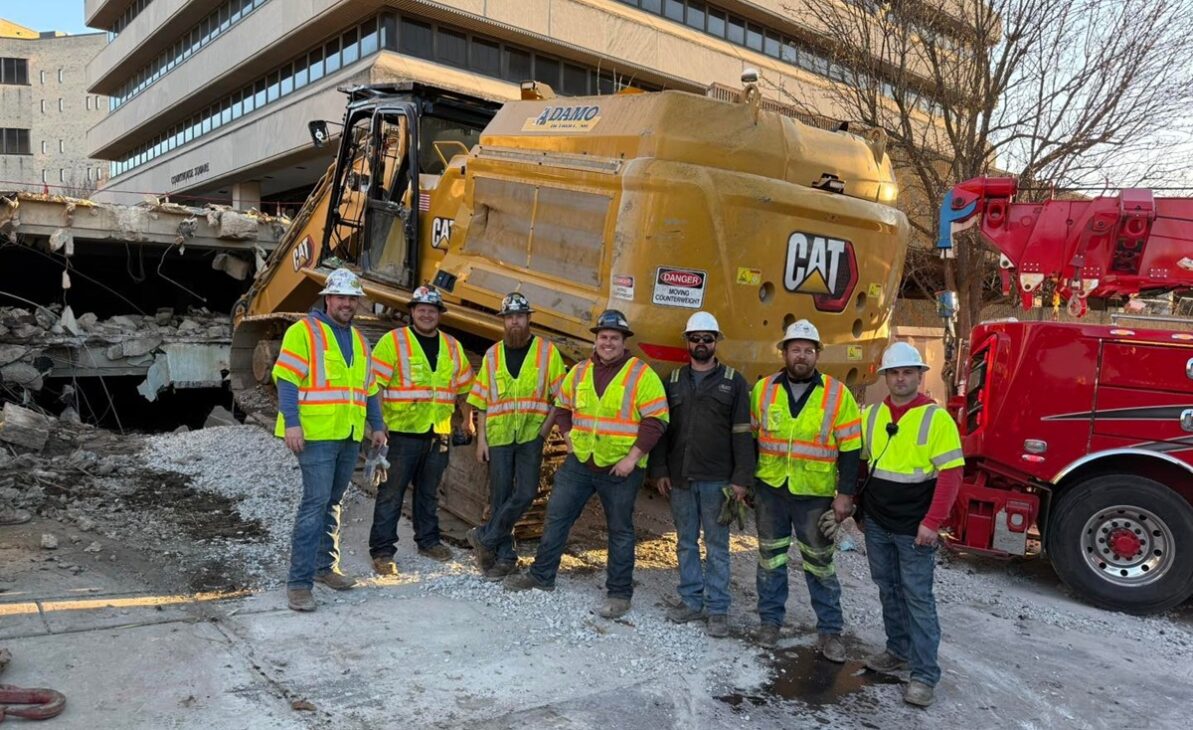
The company Bill’s Towing and Recovery was called in to conduct the rescue of the excavator. The team brought to the site two machines that are rarely used in conventional vehicle or equipment removal operations.
One of them was the Miller Industries Century M100, officially considered the largest rotary wrecker truck in the world. The equipment is designed for large-scale operations that require stabilization and lifting of extremely heavy loads.
The second machine mobilized was a John Deere 470RR. This specialized equipment was originally developed to right derailed train cars and has a lifting capacity of over 68 tons.
The John Deere 470RR took the lead in the recovery operation. Even with its high capacity, the machine could not handle an excavator lying on its side in a hole without the support of the largest wrecker in the world.
Operation Required Planning and Multiple Safety Meetings
Before starting any lifting attempts, the team needed to stabilize the situation inside the garage structure. Workers filled in the space under one of the excavator’s tracks to create a solid base and prevent unexpected movements.
Without this preparation, lifting the machine could cause sharp movements or loss of balance.
Before assembling the equipment, the responsible parties held a safety meeting to outline the operation procedures.
The initial plan called for the largest wrecker in the world, the Miller Industries Century M100, to be used to stabilize the excavator. At the same time, the John Deere 470RR would be responsible for rotating the machine and placing it back in the upright position.
The first lifting attempt did not go as planned. The excavator did not respond in the necessary manner for the repositioning to be completed, leading the team to halt the process and review their strategy.
Adjustment in the Strategy Allowed for the Recovery of the Excavator
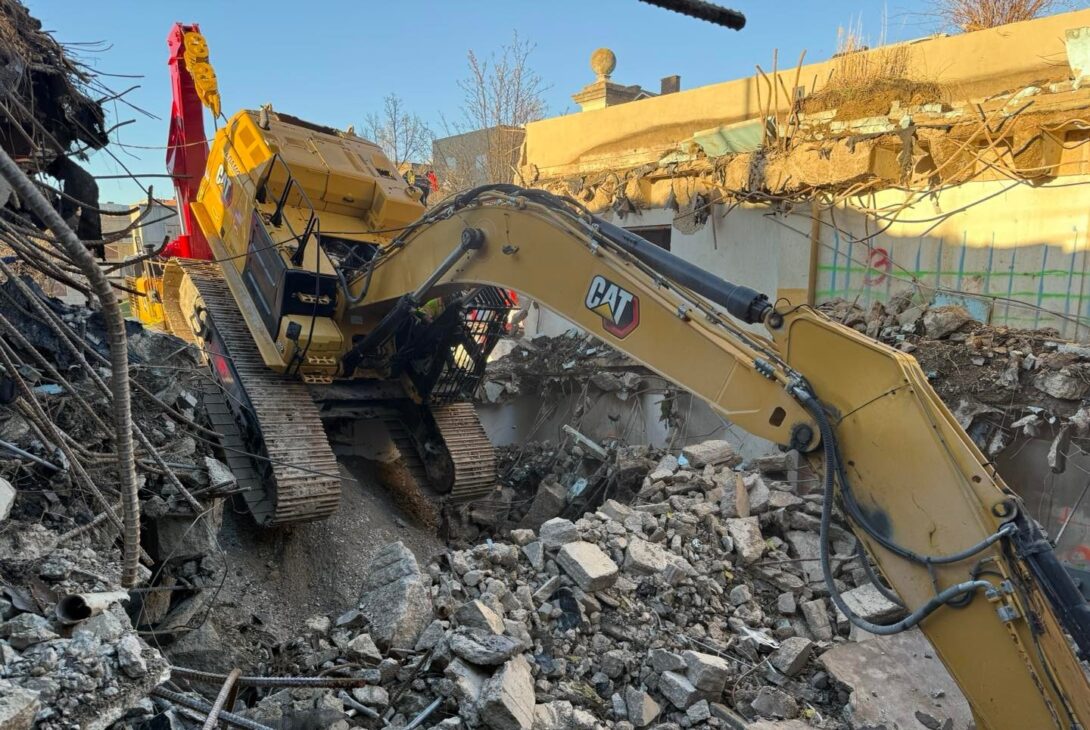
After a new safety meeting, the operators decided to modify the operation procedure. The team started the excavator’s engine and retracted the boom to redistribute the weight of the machine before a new lifting attempt.
With the weight redistributed, the lifting was repeated. The excavator began to slide back slowly until its tracks reached the outer wall of the pit, creating a more stable base for the continuation of the recovery.
From that point on, the John Deere 470RR began the removal process while the excavator also partially moved on its own. The procedure allowed for the machine to be removed from the structure with relative precision.
The final result was considered a clean recovery for equipment that had breached a reinforced concrete structure. The operation demonstrated the importance of rigorous protocols and the combined use of specialized machines, including the largest wrecker in the world.