Portuguese
  Spanish


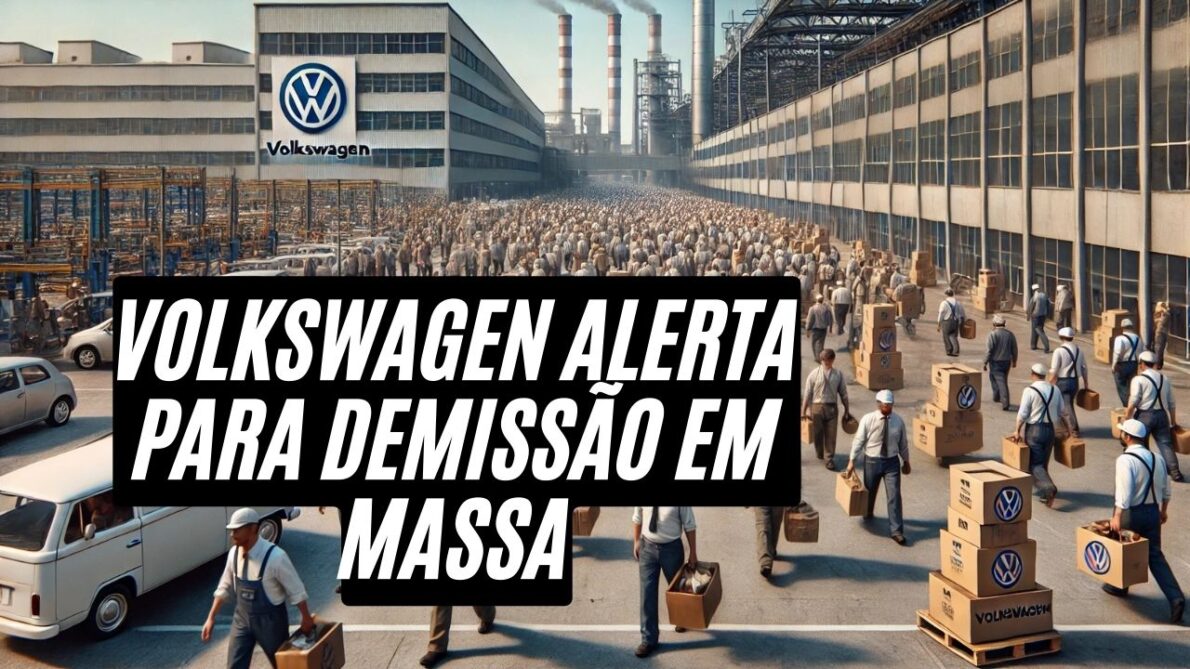

In a news story that seems like an earthquake for the automotive industry, Volkswagen, the largest car manufacturer in Europe, issued a warning about factory closures in Germany and mass layoffs. Executive Daniela Cavallo, head of the Volkswagen works council, shared the information with hundreds of employees at the Wolfsburg plant, informing them that management is taking the measures seriously and that there are plans to close up to three factories in the country.
For weeks, Volkswagen has been negotiating with unions about restructuring and cost reduction, facing increasing tension between management and workers. Cavallo warned that the decision to close factories and implement mass layoffs is a drastic and unprecedented move in the automaker’s history, emphasizing that the group did not specify which units would be closed or the exact number of workers affected among the approximately 300,000 employees in Germany.
Volkswagen’s plans are pressuring Olaf Scholz’s government to adopt a strategic plan for the national industry. The German economy, which is experiencing its second year of contraction, risks facing an even greater crisis. Scholz, under pressure for new federal elections, faces a complex battle between avoiding mass layoffs while simultaneously preserving the competitiveness of local industries.
Pressure for Electric Transition at Volkswagen and Competition with China
Cavallo mentioned that there is consensus among Volkswagen workers and management about the challenges faced by the company: the transition to electric vehicles is occurring more slowly than expected, and competition with Chinese automakers, which are gaining market share in Europe, is increasing. “We are not far off when it comes to analyzing the problems. But we are miles away when it comes to the answers,” said Cavallo.
-
2027 Toyota Corolla Cross Unveiled: New Design, Enhanced Fuel Efficiency, Reduced Maintenance Costs, Advanced Technology, Connected Services, and Up to 10-Year Warranty

-
Fiat Cronos Precision 2018: Affordable Sedan with Spacious Trunk and Reliable Maintenance
-
Volkswagen to Cut Production by 1 Million Cars by 2030, Reducing Jobs and Platforms, Focusing on More Profitable Models

-
Toyota Launches First 100% Electric Car in Brazil: bZ4X with 343 HP, All-Wheel Drive, 361 km Range, Priced at $419,990 BRL, Limited to 99 Units



This critical scenario is not only affecting Volkswagen. Other German automakers have also recently announced cost cuts. Mercedes-Benz, for example, had already communicated austerity measures after a significant decline in its profits. In addition, Porsche, controlled by Volkswagen, announced the reduction of its dealer network in China and cost cuts in billions of euros due to weak demand in the Asian market.
Government and Companies Seek Solution
The spokesperson for the German government reiterated that the government is aware of the crisis and maintains close dialogue with Volkswagen. In a statement, he asserted that Chancellor Scholz’s position is that any “wrong management decisions from the past should not disadvantage the employees” and that the focus now is to secure jobs.
With this alarming situation, Volkswagen and the government find themselves in a race against time to reverse the financial and operational issues. With the European market in recession and Asian demand declining, mass layoffs and factory closures are, unfortunately, a concrete possibility in the trajectory of one of the largest automakers in the world.