






 Portuguese
  Spanish


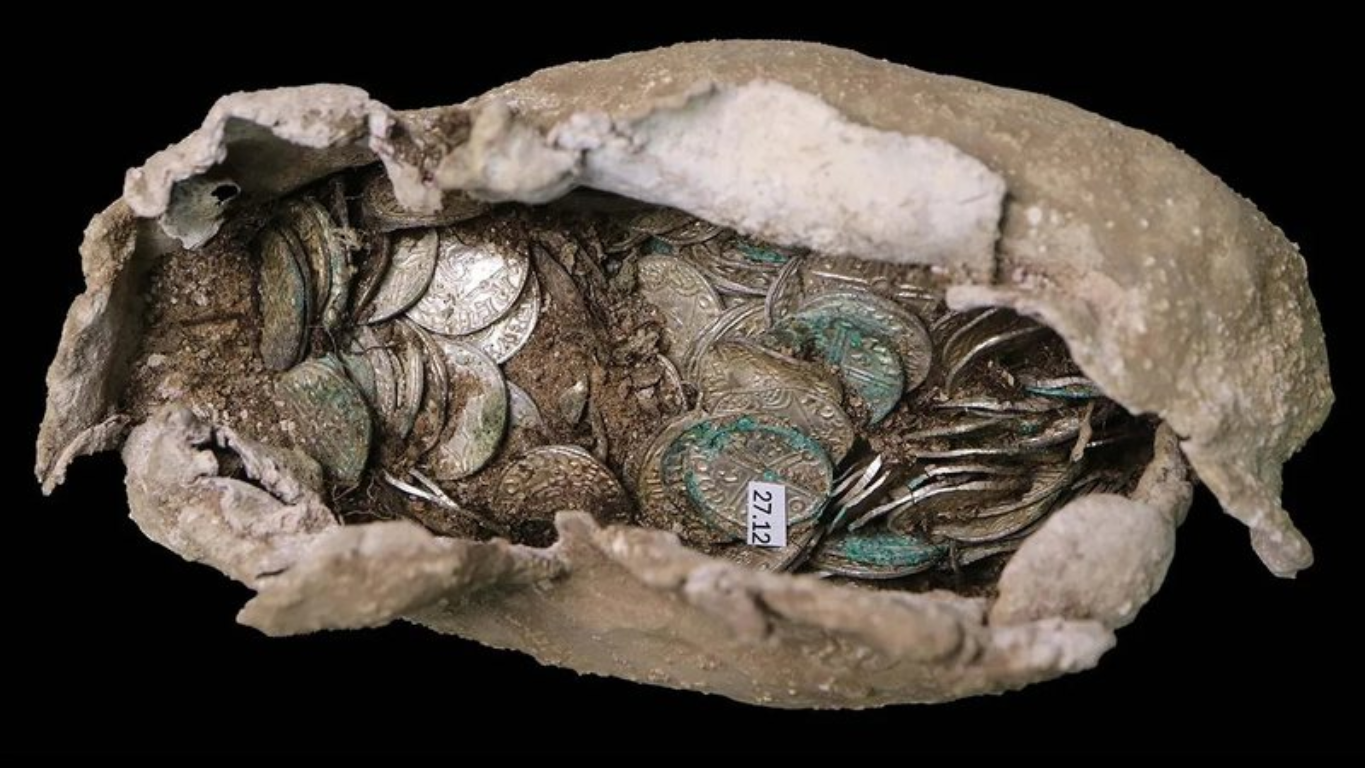


Archeologists Find Treasure of Rare Coins During Excavations in Suffolk, Offering New Insights into the History of England
During excavations carried out at the site of the Sizewell C nuclear power plant in Suffolk, England, archeologists discovered an impressive treasure consisting of 321 rare silver coins from the 11th century.
This remarkable find was wrapped in lead and cloth, creating a true “time capsule”, according to Andrew Pegg of Oxford Cotswold Archaeology (OCA), who is responsible for the excavation, as reported by the website aventurasnahistória.
Context and Importance of the Discovery
The rare coins, minted between 1036 and 1044, cover the reigns of Harold I, Hardacnut, and Edward the Confessor. Most of them were minted in London, but coins from regional mints such as Thetford, Norwich, Ipswich, and even from small locations in the southwest of England, such as Langport and Axbridge, were also found.
-
Antarctic Volcano Emits Microscopic Gold Particles That Travel Up to 1,000 Kilometers Across the Continent

-
Little-known Japanese factory is the world’s largest zipper manufacturer, producing 7 billion pieces annually and closing half the world’s pants.

-
Brazilian Factory Recycles One-Third of the Country’s Styrofoam Waste, Matching European Levels with 51,000 Tons Reused Since 2007
-
Brazilian Navy Conducts Major Military Exercise with 2,000 Troops, Amphibious Vehicles, and Drones on Lake Furnas in Minas Gerais


The treasure was likely buried during a time of great political upheaval following the coronation of Edward the Confessor in 1042.
Historical and Archaeological Impact
This discovery of rare coins is not the first associated with the Sizewell C project. Previously, artifacts from the Second World War and a wooden axle from the Iron Age were unearthed. Damian Leydon, site delivery director at Sizewell C, described the discovery as “extraordinary”, highlighting its contribution to understanding the rich history of Suffolk.
He stated that, in partnership with Oxford Cotswold Archaeology, they plan to make these discoveries accessible to the public.
Economic and Social Significance
The treasure, composed mainly of rare silver coins, offers new insights into the economic and social conditions of England in the 11th century.
At the time, the entire amount found would have been enough to purchase 16 cows, suggesting it likely belonged to a moderately wealthy individual, such as a farmer or successful merchant who never returned to recover it.
Alexander Bliss, a rare coin specialist at the OCA, noted that “this new treasure provides a valuable insight into the historical context of the period”, highlighting the social uncertainty during Edward the Confessor’s rise to the English throne.
Statements from the Archeologists
Andrew Pegg, the archeologist who led the discovery, shared his experience: “I was shaking when I first unearthed it, seeing a single coin edge peeking at me”.

He expressed pride in contributing to the history of Suffolk, emphasizing the value of the information being revealed.
This discovery of rare coins highlights the historical richness of England and offers a fascinating glimpse into the past, enhancing the understanding of society and economy in the 11th century.


Did you just watch the new season of digging for Britain?