






 Portuguese
  Spanish


Measure involves Union’s lands and public buildings in 44 municipalities and integrates a new stage of Minha Casa, Minha Vida aimed at low-income families.
The Government of Brazil will allocate 80 Union properties for the production of 11,025 social housing units in 44 municipalities across 21 states.
The measure was formalized by Ordinance MCID No. 698, published in the Official Gazette of the Union, and integrates Minha Casa, Minha Vida in the Entities modality.
The initiative involves unused or underutilized Union lands and public buildings, which will be repurposed in housing projects aimed at low-income families.
-
Brazilian Company Develops Wall Panels from Recycled Refrigerator Foam with Comparable Thermal and Acoustic Performance

-
Brazil’s São Paulo Region Unveils Latin America’s Largest Timber Shopping Mall, Built in 7 Months, Capturing Carbon and Preventing 900 Tons of Emissions
-
Danish Island Uses Seaweed for Durable, Centuries-Old Roofing Solution

-
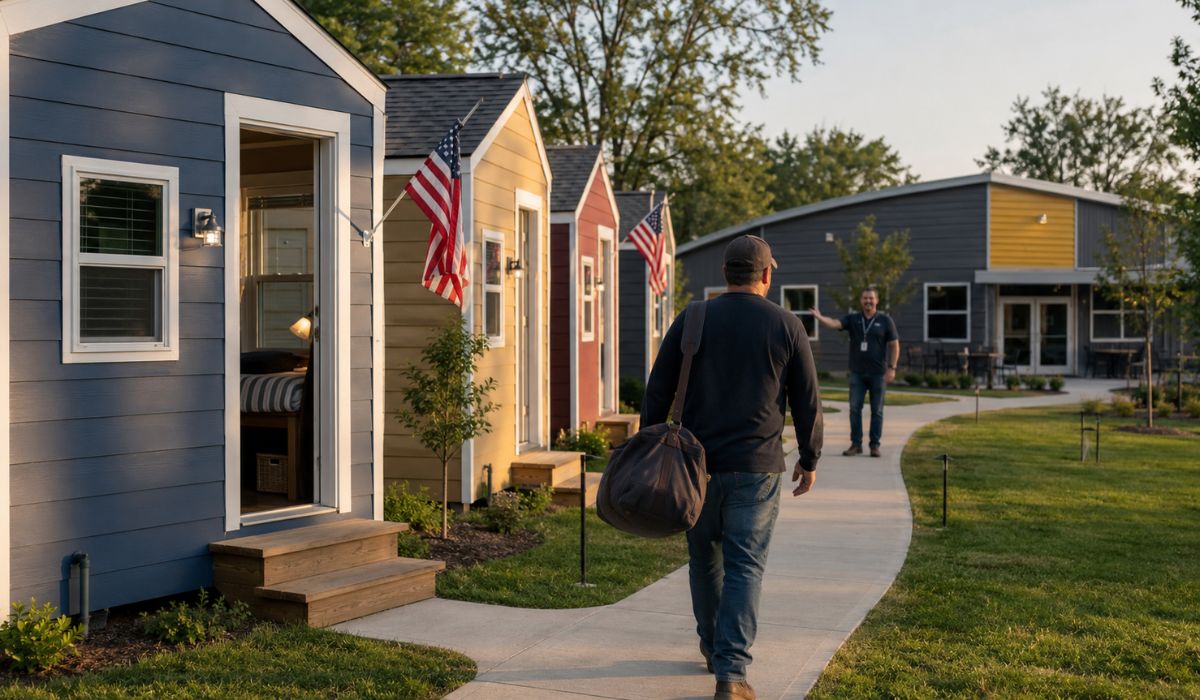
U.S. Organization Builds Sixth Micro-Home Village with Comprehensive Support to Aid Homeless Veterans


The allocation will be conducted by the Ministry of Management and Innovation in Public Services, through the Secretariat of Union Assets, in coordination with the Ministry of Cities.
In this stage, the technical team of the Secretariat of Union Assets will have 150 days to analyze documents and take the necessary steps for the contracting of the projects.
According to the federal government, the implementation will occur through free Concession of Real Right of Use.
The ordinance formalized the result of the Minha Casa, Minha Vida – Entities call for proposals.
According to the Ministry of Management and Innovation, the selection gathered the largest single offer of Union properties in the history of the program for this type of housing project.
Union properties will be used in social housing
The selected properties are distributed in 44 municipalities across 21 Brazilian states.
The list includes federal lands and unused public buildings, which should be used in construction, adaptation, or requalification of housing units.
Among the allocated assets are six buildings of the National Institute of Social Security, the INSS.
These buildings, according to the text released by the government, are occupied by low-income families and should undergo adaptation works to be transformed into housing.
The requalification of existing properties appears as one of the fronts of the measure.
Besides construction on public lands, the program foresees the use of buildings already belonging to the Union, provided they are approved in the technical and documentary stages.
This format allows public areas without active allocation to be directed to social housing projects.
The measure relates to the principle of the social function of public assets, provided as a guideline of the policy conducted by the Secretariat of Union Assets.
Notice of Minha Casa, Minha Vida began in 2025
The notice of Minha Casa, Minha Vida – Entities was launched by the Ministry of Cities in August 2025.
At the time, associations, housing cooperatives, and social movements were called to present proposals for the construction and recovery of housing units.
At the beginning of the process, 91 Union properties were made available for analysis.
After technical evaluation, 80 were approved to proceed in the program, as officially announced by the ordinance.
The selection was organized within the Entities modality, aimed at projects presented by qualified collective organizations.
The model provides for the participation of these entities in organizing the beneficiary families and monitoring the execution stages.
According to the structure indicated in the base text, the properties will be allocated through a free Concession of Real Right of Use.
This instrument authorizes the use of public property for a defined purpose, without transferring ownership of the area or building.
Entities Modality serves low-income families
The Entities modality serves low-income families organized by associations, housing cooperatives, and social movements.
In these projects, organizations are responsible for structuring the housing demand and monitoring the execution of the developments.
According to the information in the base text, the target audience generally consists of families with a monthly income of up to R$ 2,850.
Participating entities must act in organizing the beneficiaries and monitoring the project phases, from planning to the delivery of the units.
Unlike models where contracting occurs from developments conducted directly by companies or public agents, the Entities modality gives a formal role to social organizations.
They participate in the preparation of proposals and monitor the implementation of the housing.
The initiatives may involve new constructions or the recovery of existing properties, according to the characteristics of each selected area or building.
The continuation of each project depends on document analysis, technical conditions, and the program’s contracting rules.
Imóvel da Gente Program also integrates the measure
The allocation of the 80 properties is also part of the Imóvel da Gente Program, coordinated by the Ministry of Management and Innovation.
The initiative deals with the use of federal properties in public policies, including housing, social facilities, and other purposes provided by the government.
According to data provided by the federal government, since January 2023, more than 1,800 federal properties have been allocated to public policies in 638 municipalities, across all states and the Federal District.
The official estimate indicates the potential to serve approximately 400,000 families, in a total area exceeding 18,500 square kilometers.
In the case of housing, the proposal links the management of Union assets to the housing policy.
Land and public buildings are now being evaluated for use in projects aimed at low-income families, within the rules established by the responsible agencies.
The reuse of these properties may include vacant areas, land without a defined use, and buildings that need adaptation.
Execution, however, depends on technical approval, document regularity, and the contracting of the developments.
Contracting of housing depends on document analysis
With the publication of the ordinance, the selected projects enter the phase of document verification and preparation for contracting.
This stage serves to verify if the proposals meet the necessary requirements to advance within the Minha Casa, Minha Vida – Entidades program.
Contracting does not mean immediate delivery of the units.
Before that, the developments need to go through operational procedures, document presentation, and project, construction, or requalification stages, depending on the type of property.
The text released by the government does not provide a single deadline for the completion of the housing units.
It also does not detail the complete list of the 44 municipalities covered, although it indicates that the properties are distributed across 21 states.
The measure inserts federal public properties into a housing production policy aimed at low-income families.
Execution will depend on compliance with the technical and administrative stages provided by the federal government.


