





 Portuguese
  English
  Spanish
  5 min of reading
  0 comments


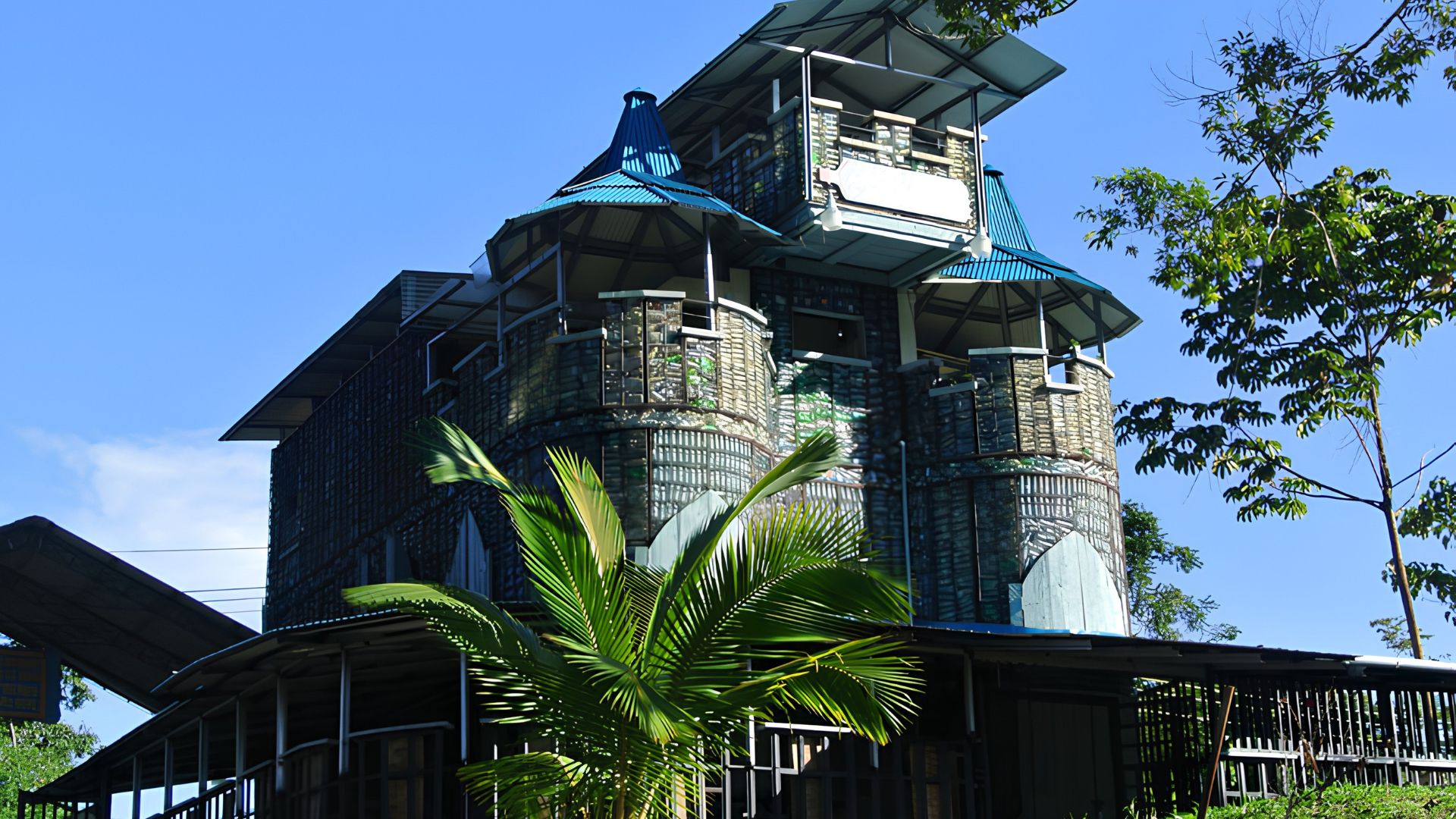
Robert Bezeau transformed over 1 million plastic bottles into houses in Panama and built a 14-meter castle that entered the Guinness.
According to Vice, Canadian Robert Bezeau moved from Montreal to Bocas del Toro, Panama, in 2009, tired of the cold and attracted by tropical life. What he found on the island, however, was not just a Caribbean paradise, but also a growing environmental problem: the rise in tourism had increased waste production, especially PET plastic bottles, at a faster pace than the local cleaning capacity. It was from this scenario that the idea emerged which would transform the place into a project known internationally.
Also according to Vice, Bezeau created in 2012 the Bocas Recycling Program, with a truck and team passing through the city twice a week to collect plastic bottles. In about a year and a half, he had already accumulated more than 1 million bottles. The problem then changed scale: it was no longer just about collecting the waste, but deciding what to do with it. It was from this impasse that the Plastic Bottle Village project was born, a village built from discarded bottles.
Plastic Bottle Village was born to transform plastic bottles into houses in Panama
According to Vice, the project was installed on an area of 83 acres of jungle on a hill in Isla Colón, in Bocas del Toro. Bezeau’s proposal was simple in idea but bold in execution: to use PET bottles as a structural part of houses and buildings instead of letting them end up in landfills, rivers, or the sea.
-
Concrete made with seawater and marine sand challenges one of the basic rules of civil construction, replacing common steel with corrosion-resistant reinforcements, and can turn islands and coastal works into laboratories of a new salty engineering.

-
New Pomerode bridge progresses after operation with 7 concrete beams of 31 meters and 82 tons each, lifted by 4 cranes, while the connection between Atiradores and XV de Novembro aims to alleviate congestion in the Center during days of intense tourism.

-
How much does a simple renovation cost per square meter in 2026? See the average labor costs and extra expenses that often turn a cheap project into a much larger bill.

-
Zac Efron swaps traditional mansion for a sustainable hemp house near Byron Bay, with 6 cabins, private bathrooms, rooftop gardens, and surrounding waterfalls, in a project that promises to become one of the most unusual ecological retreats ever built by a celebrity.



The technique adopted in the Plastic Bottle Village uses welded steel bars in the shape of cages with a square mesh. These cages are tightly filled with whole plastic bottles and then receive a layer of about 2.5 centimeters of cement.
The system transforms waste into walls and gives the project its own identity, far beyond a common recycling initiative.
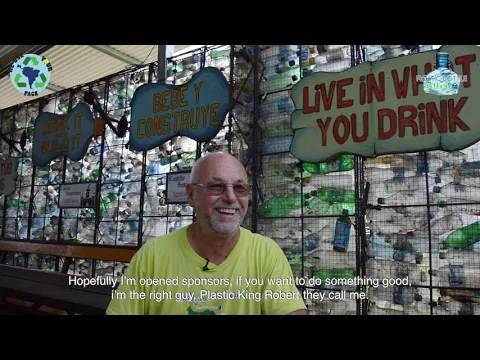

The concept attracted attention because it was not limited to ecological aesthetics. Bezeau’s proposal was to create a permanent structural use for a massively discarded material, converting the plastic problem into a constructive solution and, at the same time, a tourist attraction and educational tool.
Air inside bottles helps keep houses cooler in tropical heat
According to Vice, the central point of the technique is not just the use of plastic, but the air trapped inside the bottles. As they are used whole and filled with air, each unit functions as a small insulating pocket within the wall.
In practice, the wall filled with bottles hinders the transfer of heat between the outside and the interior of the house. In a tropical environment like Bocas del Toro, where external temperatures can reach 35°C, this creates an important effect of natural thermal comfort, reducing the need for artificial cooling.
This detail helps explain why the project gained traction beyond visual curiosity. In hot regions, a construction that can reuse plastic waste and at the same time improve thermal insulation ceases to be just an ecological symbol and also offers a concrete functional advantage.
Castillo Inspiración took the project to another level and became a world record
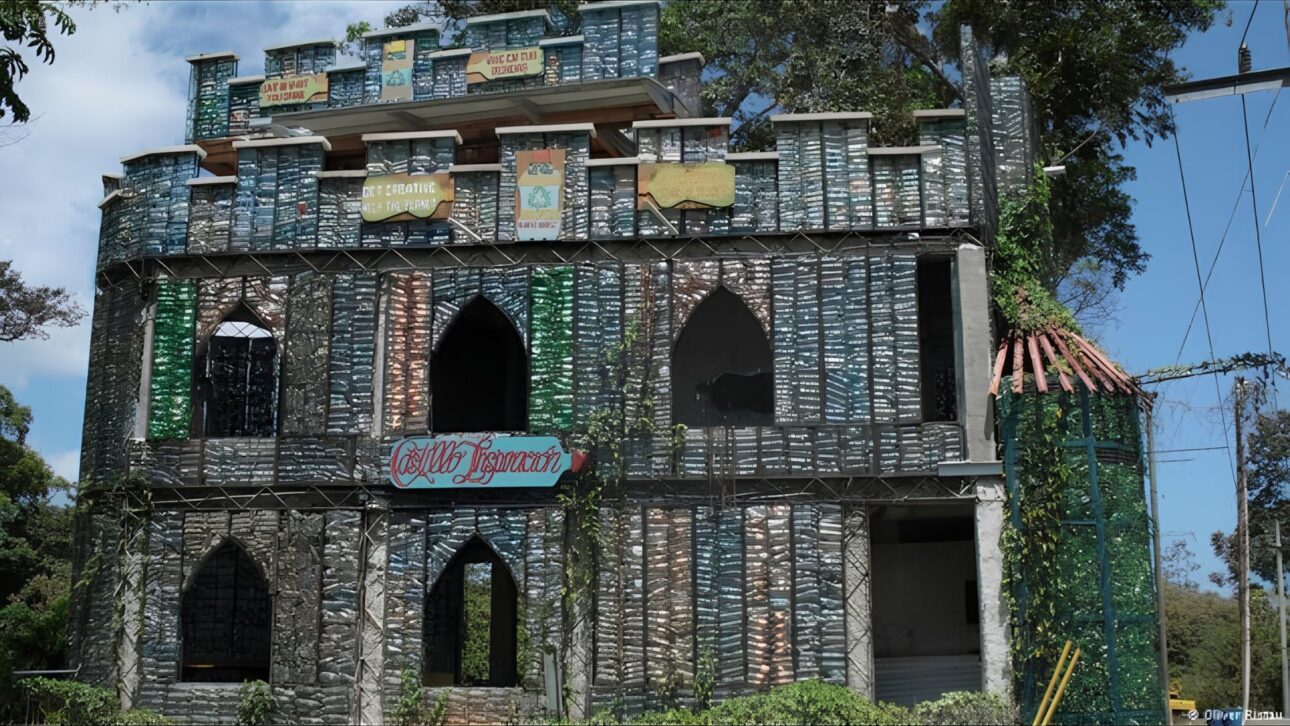
The moment the project gained global projection came with the construction of Castillo Inspiración. According to Guinness World Records, the castle built by Robert Bezeau in 2017 has four floors, about 14 meters high, and was made with approximately 40,000 plastic bottles.
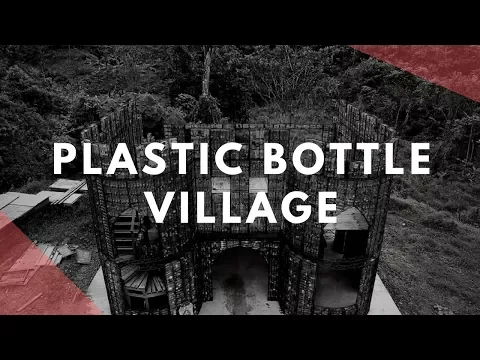
The building received the record for the largest castle built with plastic bottles. Also according to Guinness, the structure includes four guest rooms, a banquet area, and a rooftop observation platform, transforming the ecological proposal into a lodging and visitation point.
In 2021, Bezeau expanded the complex with a dungeon made of 10,000 plastic bottles, with six “cells” capable of accommodating up to 16 guests. This expansion helped consolidate the castle as the most well-known face of Plastic Bottle Village and strengthened the project’s image as a tourist destination and educational experience.
Robert Bezeau turned recycling into a tourist attraction and environmental message
According to Vice, the choice to build not only houses but also iconic structures was part of the project’s logic. A photogenic castle draws more attention, attracts more visitors, and generates more coverage than a discreet residential village, even if the technical foundation is the same.
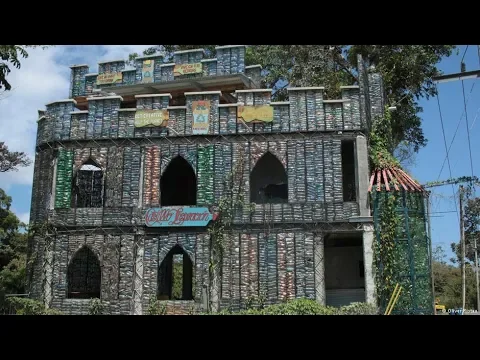
This visual appeal helped Bezeau transform the Plastic Bottle Village into something that blends ecotourism, environmental education, waste reuse, and alternative construction. The project went from being just a local response to plastic waste to functioning as an international showcase of an idea.
The central philosophy appears in a phrase attributed to Bezeau by Vice: when a bottle is on a store shelf, it is not yet a threat to the planet; it becomes a threat when someone buys it, uses it once, and discards it. The project tries to act exactly at this point, removing the bottle from the waste cycle and transforming it into permanent building material.
Project in Panama became a symbol of PET bottle reuse
According to Vice, Bezeau’s original plan envisioned 120 houses and lots, as well as an eco-lodge, yoga pavilion, trails, and small parks. The project developed as a combination of residential village, tourist experience, and center for awareness about plastic and waste disposal.
The Plastic Bottle Village did not solve the global plastic problem, but it managed to prove something important on a real scale: a discarded PET bottle can stop being waste and become part of the structure of a durable house in a tropical climate.
This gave the project strong symbolic value, especially at a time when the world increasingly discusses the environmental impact of single-use plastics.
In the end, the story of Robert Bezeau gained strength because it combines three very powerful elements for the public: excess plastic waste, visually impressive solution, and practical application in architecture. It is exactly this combination that turned an idea born on an island in Panama into a case of international repercussion.




Be the first to react!