






 Portuguese
  Spanish
  5 min of reading
  0 comments


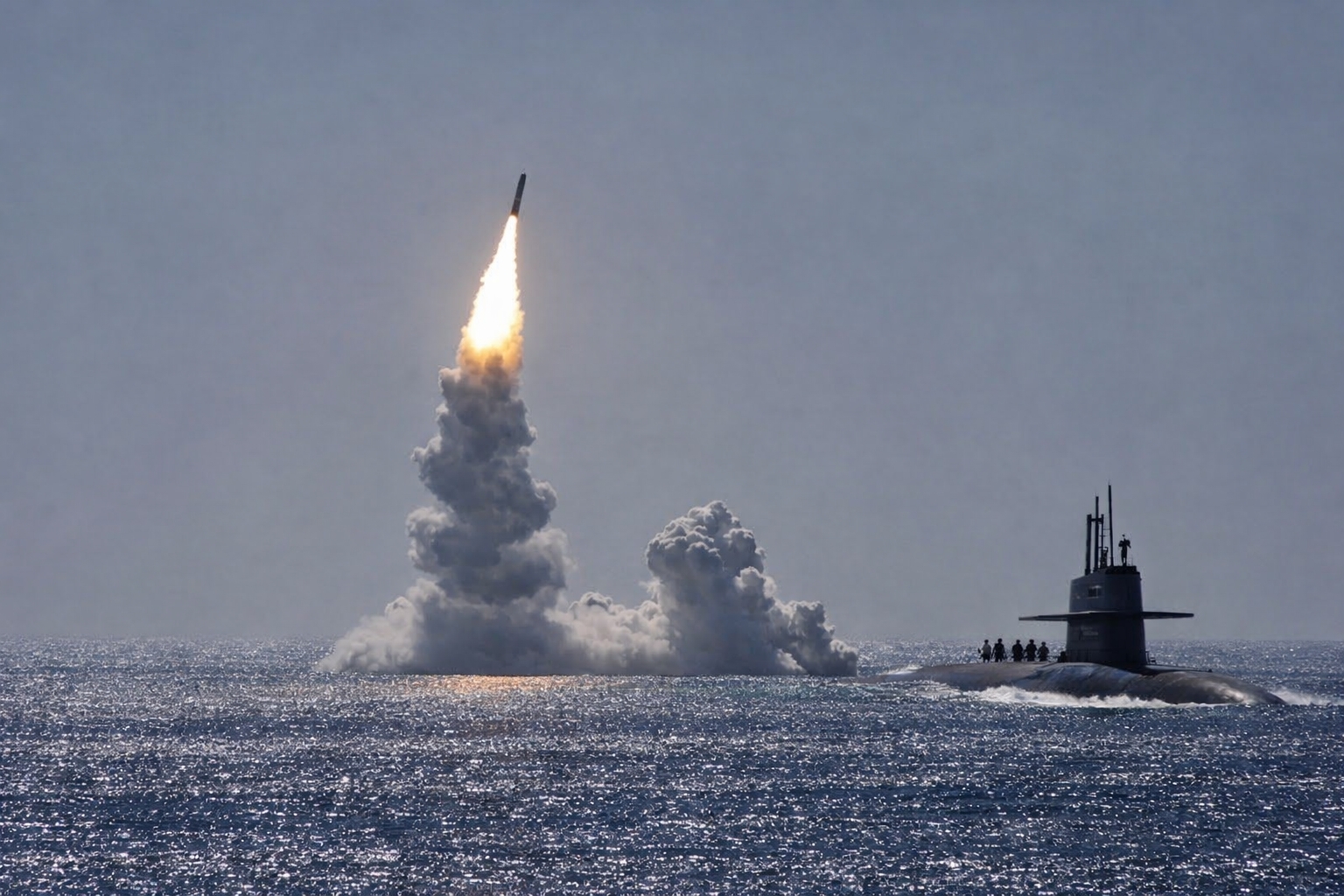
The United States Navy Has Started Naval Construction in Cape Canaveral: A Project of Approximately 12,1 Thousand m² with 8 Laboratories and 9 Cranes, Part of a Million-Dollar Investment to Support Testing, Prototypes, and Modernization of the Trident II, Including the Trident II D5LE and D5LE2 Missiles, with Delivery Expected by January 2028.
The United States Navy is putting money and concrete where it really matters: in the infrastructure that unlocks repeated testing, reduces lab queues, and provides rhythm to the modernization of the D5LE Trident II missiles. The new building under construction in Cape Canaveral is not about a nice ceremony; it’s about not letting the program stagnate when every step requires precision, validation, and repetition, with no improvisation.
-
Helicopter Drops 180 Tons of Sand and Gravel on Swedish River to Revive Ecosystem Damaged by Decades of Exploitation

-
Brazilian Company Launches Retro Smartphone with 48 MP Camera, T9 Keyboard, and Privacy Features for Social Media-Free Use

-
Self-Taught Chinese Farmer Builds 5-Ton Submarine from Scrap, Launches It in Anhui River
-
Invisible Induction Technology Enables Wireless Power for Blenders, Coffee Makers, and Air Fryers, Reducing Countertop Cables




The facility has a straightforward name: Engineering Test Facility (ETF) — and the idea is to function as a “test production line,” so that the development and validation cycle runs in parallel and predictably.
What The United States Navy is Building: 12.1 Thousand m², 8 Laboratories, and 9 Cranes
The ETF was designed to support:
- prototyping and development;
- testing and evaluation;
- production of support equipment and hardware components related to flight within the scope of the D5LE2.
In practice, the project delivers a building of approximately 130,000 ft² (about 12.1 thousand m²) with:
- eight separate lab spaces;
- nine heavy-lift cranes;
- backup generator;
- administrative and support areas.
The message from these numbers is simple: eight laboratories mean work running simultaneously; nine cranes indicate regular and safe movement of heavy parts.
It’s construction architecture designed to reduce waiting time, not to just “make it work” when demand tightens.
Million-Dollar Investment by The United States: Contract of Over US$ 166 Million and Project Completion by January 2028
The contract to build the ETF was awarded in November 2025 to Walsh Federal for US$ 165.7 million (an amount that is often rounded to US$ 166 million) and is expected to be completed by January 2028.
In the contract announcement, Lieutenant Commander Pete Fovargue of the United States Navy was very clear about the reason for the urgency: the structure was set up to deliver an accelerated project and support the Trident II program, including focusing on what will arm the Columbia submarines until 2084.
Why This Became Even More Evident After Tests at Sea
Between September 17 and 21, 2025, Strategic Systems Programs (SSP) conducted four planned test flights of unarmed Trident II D5LE missiles, launched from an Ohio class submarine off the east coast of Florida.
One of these launches, at night, lit up the sky and was visible from Puerto Rico, a striking image, but one that relies on a lot of “invisible” work on land: equipment, checks, validation, repetition, and process safety.
The SSP itself emphasized that these flights happen regularly and are planned to ensure reliability and precision, and made it clear that the tests were not a response to momentary events.

Trident: Why The System Continues to Update and What Changes with the D5LE2
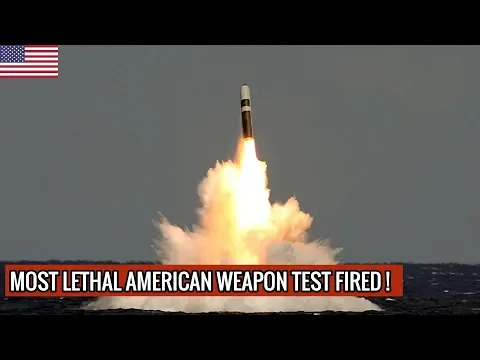
The Trident II D5 was born in the 1980s. The SSP records that a life extension upgrade was completed in 2017, keeping the system in service until the 2040s.
The D5LE2 comes as the next step, focusing on continuity, reliability, and modernization — and the ETF becomes the practical base to maintain the development/testing cycle rolling for decades.
At the groundbreaking ceremony, Vice Admiral Johnny Wolfe Jr. summarized the project’s significance by calling the ETF a “critical investment” and described the building as a “hub of innovation” for developing and testing technologies and keeping the system “more precise and reliable” for a long time.
Plan of 28 Construction Projects by 2032: Not an Isolated Building, but a Strategy by The United States Navy
The new building is already drawing attention. But what really shows the ambition is the package: the NOTU expects to complete 28 facility projects between 2024 and 2032 to ensure the infrastructure necessary for development and modernization missions related to sea-based strategic deterrence.
And there is an important detail in the background: much of what the NOTU and its partners use today was built in the 1960s, with old renovations.
This construction plan aims to take operations out of “patchwork mode” and elevate everything to a level compatible with the current pace and complexity.
The “Invisible Engine” Behind Strategic Submarines
When you see a test launch, it’s easy to focus only on the rocket coming out of the sea. However, the system thrives on the behind-the-scenes support: laboratory, support equipment, qualified personnel, and facilities that make everything repeatable, safe, and predictable.
The ETF is born precisely for this: to concentrate capacity, cut bottlenecks, and sustain, at scale, the testing and modernization of the Trident (from D5LE to D5LE2) in the long-term horizon.
What catches your attention the most about this project of the United States Navy: the size of the construction (12.1 thousand m²), the million-dollar investment of over US$ 166 million, the deadline until January 2028, or the plan for 28 projects by 2032? Comment below, and if it makes sense, share the post with someone interested in defense and naval technology.





-

-

-

7 people reacted to this.