Portuguese
  Spanish


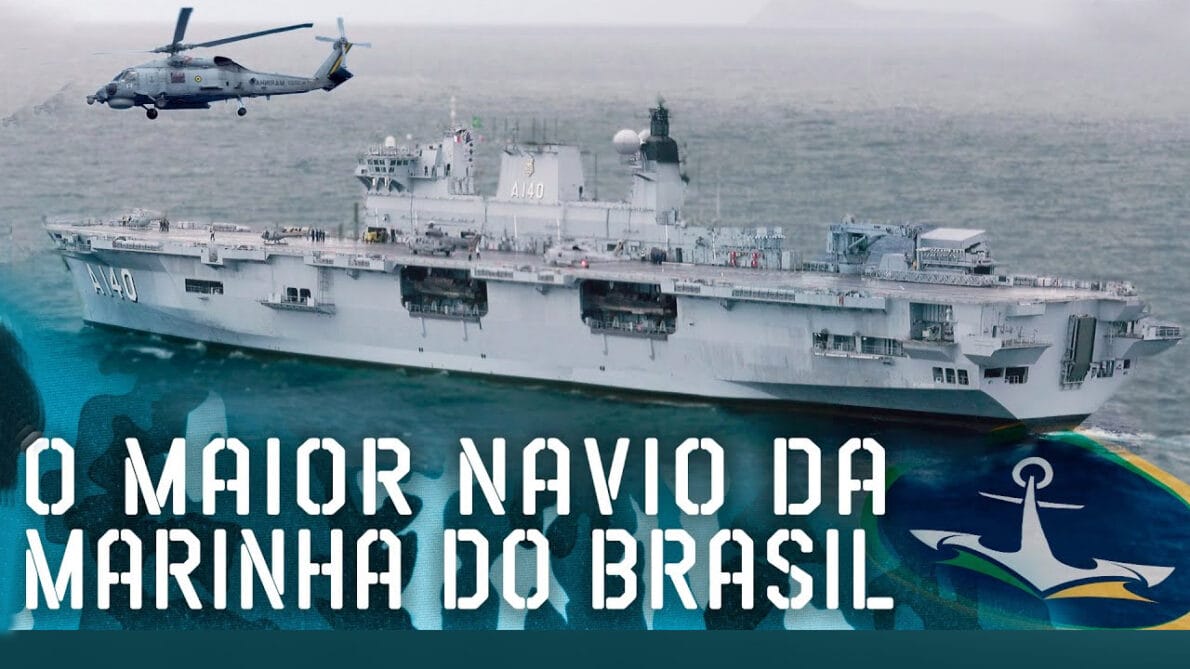

The Largest Ship of the Brazilian Navy, The Atlantic, Underwent a Strategic Maintenance Process at the Naval Arsenal of Rio de Janeiro. With Technological Upgrades and Essential Repairs, The Vessel Is Ready for Future Naval Missions and Humanitarian Operations.
At the Heart of the Naval Arsenal of The Navy of Rio de Janeiro (AMRJ), a Large-Scale Operation Catches Attention: The Docking of the Multipurpose Aircraft Carrier Atlantic.
This Process, Involving Meticulous Preventive Maintenance Work and Technological Modernization, Is One of the Most Critical Steps to Ensure That the Largest Vessel of the Brazilian Navy Is Prepared to Face the Complex Naval Missions Ahead.
The Complexity of This Type of Operation Goes Far Beyond a Simple Review.
-
U.S. Air Force Launches Air-to-Air Missile Project with Range of Up to 1,850 km for Indo-Pacific Operations

-
Australia to Deploy Up to 8 Nuclear-Powered Submarines in Indo-Pacific, Establishes Billion-Dollar Naval Chain Through AUKUS, Joining Elite Group Capable of Extended Underwater Missions

-
Indonesia Begins Construction of 2,000-Ton Scorpène Stealth Submarines with Advanced Weaponry and French Steel

-
Brazil’s Largest Navy Ship, NAM Atlântico, Transforms into Field Hospital During National Crises



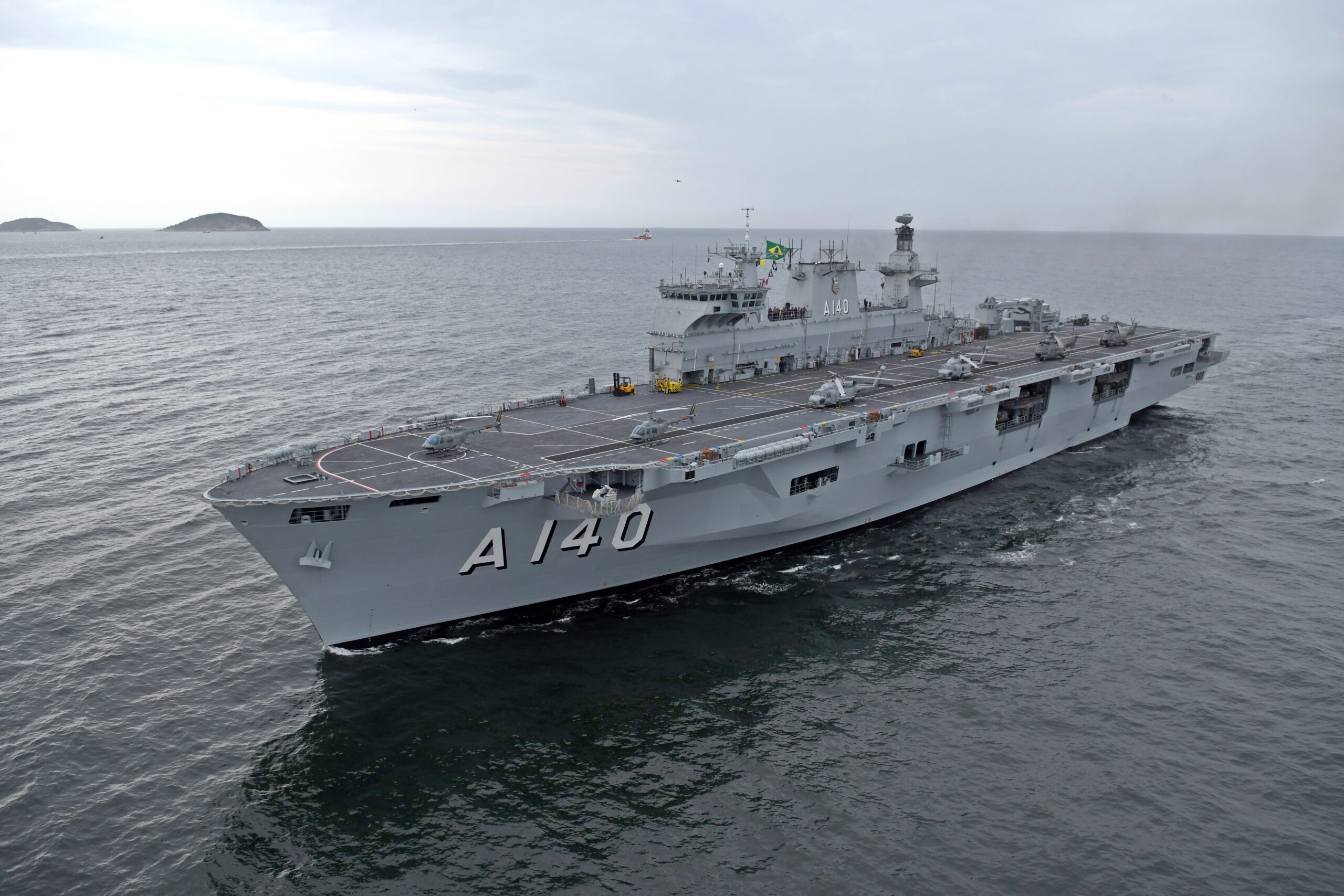
To Correctly Position the Atlantic in the AMRJ Dry Dock, the Mobilization of a Highly Qualified Team of Engineers and Technicians from the Brazilian Navy Was Necessary.
Only After This Initial Stage Could the Vessel Be Carefully Inspected, Allowing Maintenance to Proceed in Compliance with the Strict Operational Requirements of the Navy.
Preventive Maintenance: Meticulous Care
The Docking of the Atlantic Involves a Series of Detailed Maintenance Tasks. From Cleaning the Underwater Structure to Rigorously Inspecting Its Electronic and Mechanical Systems, Every Detail Is Checked to Ensure That the Ship Continues to Operate at Maximum Efficiency.
During the Process, Several Repairs and Upgrades Were Made, Focusing on Essential Equipment, Which Received Technological Improvements to Maintain the Vessel’s Performance at a High Level.
These Technological Upgrades Are Crucial to Ensure the Reliability of the Atlantic, a Strategic Asset for the Brazilian Navy.
The Maintenance Aims to Extend Its Lifespan and Ensure That It Is Always Ready to Operate with Total Effectiveness, Whether in Defense Missions, International Operations, or Humanitarian Support.
Naval Arsenal: Tradition and Innovation in Defense Service
The Naval Arsenal of Rio de Janeiro Is One of the Pillars of the Operational Capacity of the Brazilian Navy. With Over 250 Years of History, AMRJ Plays a Central Role in Maintaining and Modernizing the Fleet’s Large Vessels.
From Frigates to Submarines, the Arsenal’s Expertise Ensures That The Navy Is Always Ready to Meet National Defense and Security Demands.
Over the Years, AMRJ Has Established Itself as the Main Maintenance Center for Large Military Ships in Brazil.
The Docking of the Multipurpose Aircraft Carrier Reinforces the Strategic Importance of the Arsenal, Demonstrating That, Besides Preserving the Existing Fleet, AMRJ Is Committed to Modernization and the Technological Demands of the 21st Century.
Modernization and Preparation for the Future
One of the Highlights of the Maintenance Conducted on the Atlantic Is the Aspect of Technological Modernization. Equipped with the Most Advanced Navigation, Communication, and Control Systems, the Ship Is Constantly Adapted to Meet the Contemporary Demands of Naval Missions.
This Modernization Also Reflects the Navy’s Commitment to the Strategic Preparation of Its Fleet, Keeping It Capable of Facing Not Only Traditional Challenges but Also Humanitarian Emergencies and New Forms of Conflict.
According to the Portal Sociedade Militar, The Multipurpose Aircraft Carrier Atlantic, with Its Versatility, Is a Key Component for These Operations, Performing Functions from Heavy Cargo Transport to Logistical Support in Large Operations.
With Its Robust Structure and Capability to Operate Aircraft and Military Vehicles, the Atlantic Stands Out for Its Flexibility in Joint Missions.
These Characteristics Make the Ship Essential Not Only for Brazil’s Defense but Also for Collaborating in International Peace and Security Operations.
Strategic Pillar of National Defense and Humanitarian Missions
Incorporated into the Brazilian Navy in 2018, the Multipurpose Aircraft Carrier Atlantic Is Undoubtedly One of the Pillars of the Country’s Naval Capacity.
With Its Imposing Size and Cutting-Edge Technology, It Plays a Crucial Role in Defense Strategy, Being an Instrument of Naval Power Projection and Diplomacy.
The Atlantic Has Also Excelled in International Humanitarian Operations.
Its Capacity to Carry Out Logistical Support, Evacuation, and Transportation Missions in Disaster Areas Makes It a Valuable Tool in Times of Crisis, Both in Brazil and Other Regions.
Recently, It Has Been Part of Rescue and Assistance Missions in Areas Affected by Natural Disasters, Demonstrating the Importance of Its Presence in Times of War and Peace.
Furthermore, The Ship Has Been a Constant Presence in International Naval Exercises, Strengthening Cooperation Between Brazil and Other Naval Powers.
Thus, the Atlantic Helps to Project Brazilian Power in International Waters, Demonstrating the Country’s Ability to Act in a Global Context.
The Atlantic Prepared for the Future
With This First Docking Completed, The Multipurpose Aircraft Carrier Atlantic Remains in Full Operational Condition.
Modernized, with Updated Systems and Ready for Future Missions, It Continues to Be the Largest and Most Versatile Asset of the Brazilian Navy.
The Maintenance Process Was Essential to Ensure That the Atlantic Continues to Fulfill Its Strategic Functions, Whether in Defense Operations, International Cooperation, or Humanitarian Aid Missions.
Now, It Is Up to the Atlantic, the Giant of the Brazilian Seas, To Maintain Its Position as the Main Ship of the Fleet and Be Ready to Face Future Challenges. With This, the Brazilian Navy Stays Firm in Its Commitment to Protect National Waters and Operate Efficiently in Various Missions.
What Do You Think About the Importance of This Type of Maintenance for Brazil’s Security? Could the Atlantic Be the Key Difference in a Future Emergency Mission?