Portuguese
  Spanish


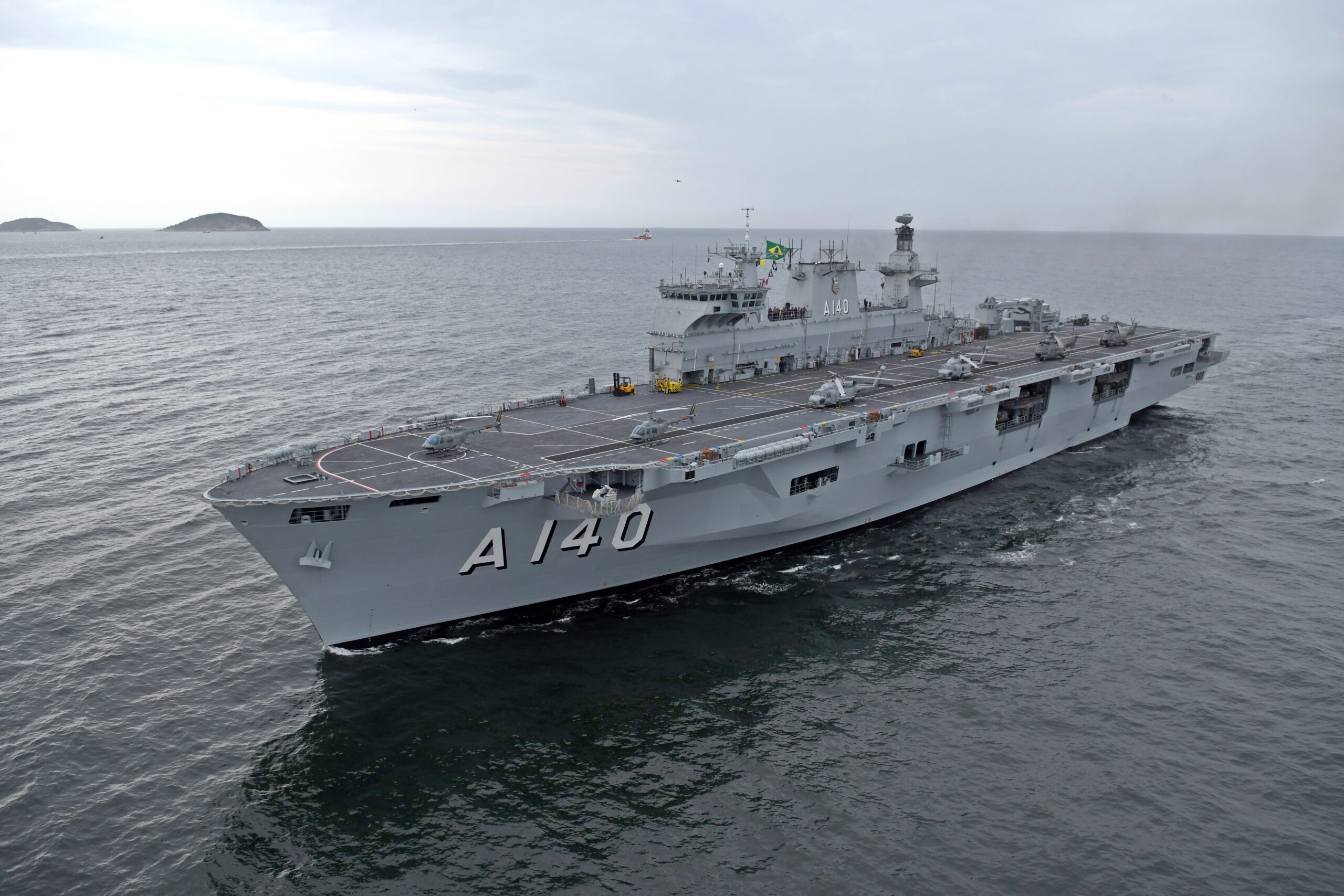

Ex-HMS Ocean, the NAM Atlântico is 208 meters long, carries up to 18 aircraft, and has already been used by the Navy in humanitarian missions in Brazil.
The NAM Atlântico (A-140) is currently the flagship of the Brazilian Fleet and one of the most relevant platforms of the Brazilian Navy. Before sailing under the Brazilian flag, the ship served the British Royal Navy as HMS Ocean and was acquired by Brazil in February 2018, with incorporation in June of the same year.
More than just a large military ship, the Atlântico combines functions that would normally require more than one naval means. The vessel includes a flight deck, hangar, amphibious capability, and space for a large number of embarked personnel, which explains why it has become central to Brazilian operations at sea and also in support missions to the population.
Ex-HMS Ocean became the NAM Atlântico and returned to Brazil a large aeronaval platform
An official publication of the Navy records that the ship, originally called HMS Ocean, was built in the mid-1990s, purchased by the Brazilian Navy in 2018, and commissioned a few months later.
-
Brazilian Navy Demonstrates Strength in Naval Exercise with Over 20 Nations, Deploys Frigate Independência in Anti-Submarine and Air Defense Scenarios, and Joins Historic Formation with 26 Ships from 14 Allied Navies off the U.S. Coast

-
BAE Systems to Supply New Bofors 40Mk4 Cannons to the Brazilian Navy
-
Ukraine Bets on Swedish Gripen E Jets to Counter Russia, But 16 Fighters Won’t Arrive Until Late 2020s; Kiev to Use C/D Models for Pilot Training and Operations Amid Ongoing Missile and Drone Threats
-
End of an Era: US Navy’s C-2A Greyhound Makes Final Catapult Launch Before Retiring to Arizona Desert; Aircraft Supported Carriers in Wars and Humanitarian Missions for Nearly 60 Years


Initially classified as a Multi-Purpose Helicopter Carrier, it began to receive, on November 12, 2020, the designation of Multi-Purpose Aircraft Carrier, due to the possibility of also operating with remotely piloted aircraft and vertical landing turboprop aircraft.


The arrival of the Atlântico filled an important gap for the Brazilian Navy by reinstating a platform focused on embarked air operations and amphibious support. Since then, the ship has taken the position of the main vessel of the Fleet and concentrated a significant part of the country’s mobility and naval presence capability.
208-meter multi-purpose aircraft carrier concentrates flight deck, hangar, and troop transport in a single platform
According to the Navy News Agency, the Atlantic is 208.12 meters long, capable of transporting 18 aircraft between hangar and flight deck, has a crew of 432 military personnel, and can embark up to 1,400 military personnel on a mission. These numbers help to gauge the size of the vessel within the Brazilian naval structure.
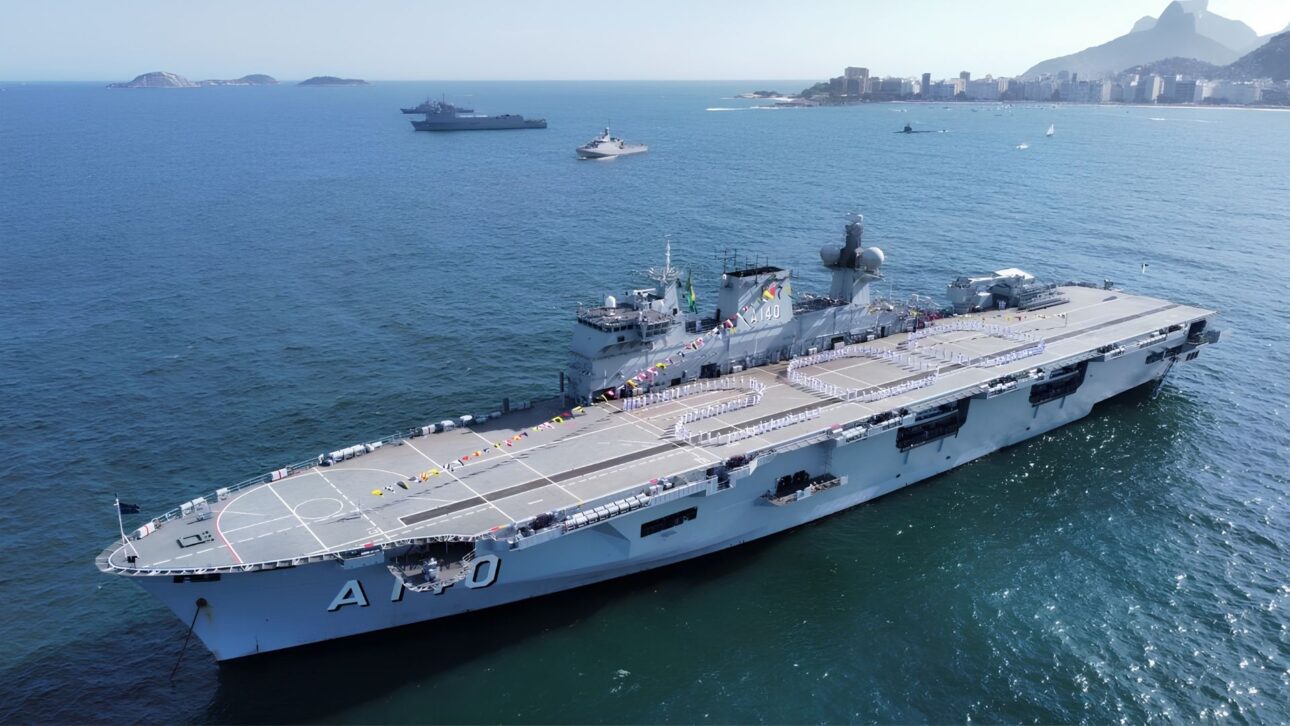
Another official publication from the Navy highlights that the ship can transport troops with up to 800 Marines, reinforcing its amphibious and expeditionary vocation. In practice, this makes the Atlantic a platform designed to combine air mobility, personnel transport, and support for projection operations at sea and on land.
The strategic weight of the ship lies precisely in this combination of functions. Instead of serving only as a flight deck for helicopters, the Atlantic combines air, logistics, and military transport capabilities in a single hull, which enhances its utility both in operational scenarios and in state support actions.
NAM Atlântico has moved from combat logic to act as a field hospital in tragedy on the coast of São Paulo
In February 2023, the Navy sent the Atlantic to the northern coast of São Paulo to support Civil Defense actions after the heavy rains that hit the region.
On that occasion, the force reported that the ship would act as a reinforcement to the medical care of the displaced, helping to relieve local hospitals and providing logistical support to the victims.

The operation mobilized a large embarked structure. According to the Navy, the ship proceeded to the mission with six helicopters, landing craft, a rapid deployment team from the Operational Medicine Center, and a group of 180 Marines, in addition to health professionals from different specialties.
This deployment showed one of the lesser-known aspects of the Atlantic. Although it is a military vessel, the ship also functions as a rapid response platform in disasters, especially when it is necessary to provide care, logistics, and mobility to affected areas in a short time.
Fleet Flagship reinforces Brazilian naval presence and expands response capability in complex missions
Since it entered service in Brazil, the Atlântico has come to symbolize the combination of naval presence, mobility, and operational versatility.
Its size, the capacity to embark aircraft and troops, and the available internal space make the vessel a central piece for tasks requiring command, personnel movement, and support for different types of missions.
The Brazilian trajectory of the ship also shows that the value of a large naval platform is not measured solely by its direct military function.
In the case of the Atlântico, the same structure that supports air and amphibious operations has also been used to provide medical assistance, logistical support, and state presence in critical moments within the national territory.