






 Portuguese
  Spanish
  3 min of reading
  0 comments


Discover How Researchers At The University Of Washington Transformed Coffee Grounds And Fungi Into An Innovative, Sustainable And Durable Compostable Material
An innovative discovery could transform coffee waste into a sustainable solution to replace plastic. Researchers at The University Of Washington have developed a compostable material that combines coffee grounds and fungi.
This development promises to reduce waste and offer an ecological alternative to conventional plastics.
Opportunity In Coffee Waste
Only 30% of the coffee bean is soluble in water. This means that millions of pounds of coffee are discarded annually. A large portion goes to waste or composting. This waste represents an unexplored opportunity in the field of biomaterials.
-
GM’s electric cars could become “giant batteries” to ease the power grid as AI data centers increase consumption; the plan involves 250,000 bidirectional vehicles, reused batteries, and new sodium chemistry for industrial storage.

-
New desalination technology transforms seawater into potable water, avoids polluting brine, and even recovers salts and minerals.

-
Russia launches a 10,000-ton self-propelled scientific platform capable of drifting for years in the Arctic, replacing old Soviet stations on floating blocks.

-
Jordan transforms barren desert sand into a farm powered by Red Sea water, solar energy, and salt-cooled greenhouses to produce food where almost nothing grows.

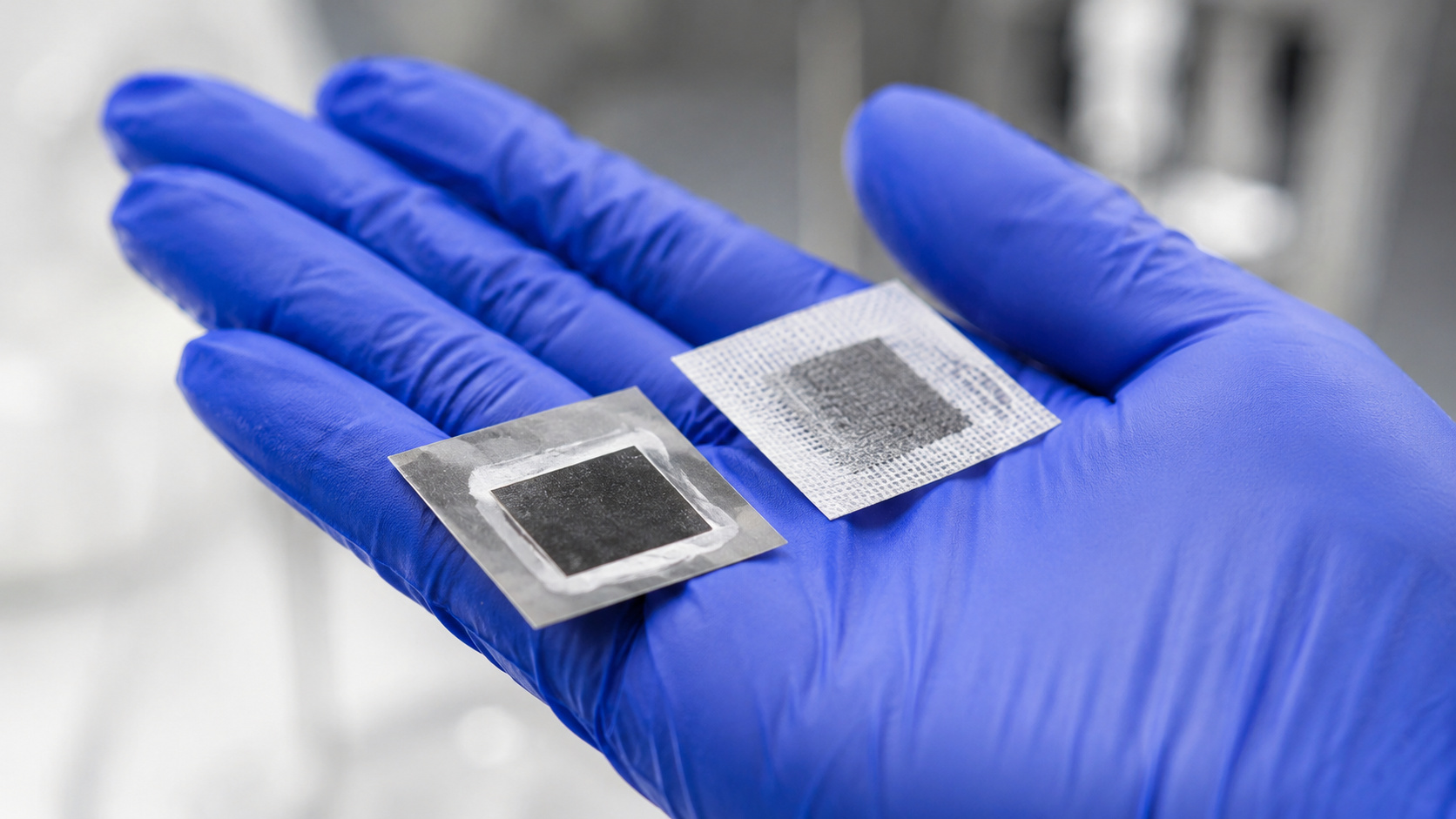

Danli Luo, a doctoral student in human-centered design and engineering, harnessed potential in this dispersion.
Coffee, rich in nutrients and sterile after brewing, serves as an ideal substrate for fungal growth. Before they become mushrooms, fungi form mycelium, a network of filaments that binds loose materials and creates strong, waterproof structures.
The Differentiator Of Mycofluid
Luo’s team developed an innovative material: Mycofluid paste. This paste is produced from coffee powder and can be used in 3D printing to create packaging, decorative pieces, and containers.
The differentiator is that it does not use the Reishi fungus. During the process, the spores of this fungus grow and generate the mycelium, giving the material properties similar to those of Styrofoam.
Mycofluid stands out for offering strength and lightness. This opens doors to practical applications, such as customized packaging, especially for small producers and arts that provide sustainable and efficient solutions.
How Mycofluid Is Produced
The manufacturing process of Mycofluid combines coffee grounds, brown rice flour, Reishi mushroom spores, xanthan gum, and water.
This mixture is fed into a Jubilee model 3D printer, equipped with a special nozzle capable of holding up to 1 liter of paste.
After printing, the objects are stored in a humid environment for 10 days. During this period, the mycelium grows and forms a protective envelope.
Then, the items are dried for 24 hours to prevent fungal growth. The result is a dense material with strength and hardness comparable to cardboard and charcoal.
The material also exhibits water resistance. When submerged for an hour, it absorbs only 7% of its weight in liquid and regains its original shape after drying, without deformation.
Sustainability And Potential
All components of Mycofluid are compostable and even edible, although the taste is not pleasant. The material’s composition ensures that it decomposes under suitable conditions.
The project aims to provide a sustainable alternative to plastics, especially for arts that require durable packaging.
Thus, Mycofluid presents itself as a viable and ecological solution to replace non-biodegradable materials.
Challenges And Future Paths
Despite the advantages, the large-scale production of Mycofluid faces challenges. The main difficulty is the need for homogeneous coffee powder to ensure the quality of the material.
To overcome this obstacle, Luo’s team is studying other sources of organic waste, such as food scraps, in an attempt to create biopastes with similar properties.
This type of innovation is fundamental to reducing dependence on petroleum-derived plastics. In addition to reducing waste, solutions like Mycofluid promote a circular economy and foster a more sustainable industry.
The combination of coffee waste with fungi shows the potential to transform organic materials into functional and ecological products.
With initiatives like this, it is possible to reduce environmental impact and move toward a greener and more responsible future.
With information from Ecoinventos.







Be the first to react!