Portuguese
  Spanish




Free 80-Hour Course Promotes Training in Anti-Racist Practices in Education for Young People and Adults, with Self-Instructional Classes, Certificate of Completion and Open Access through the MEC’s Virtual Learning Environment.
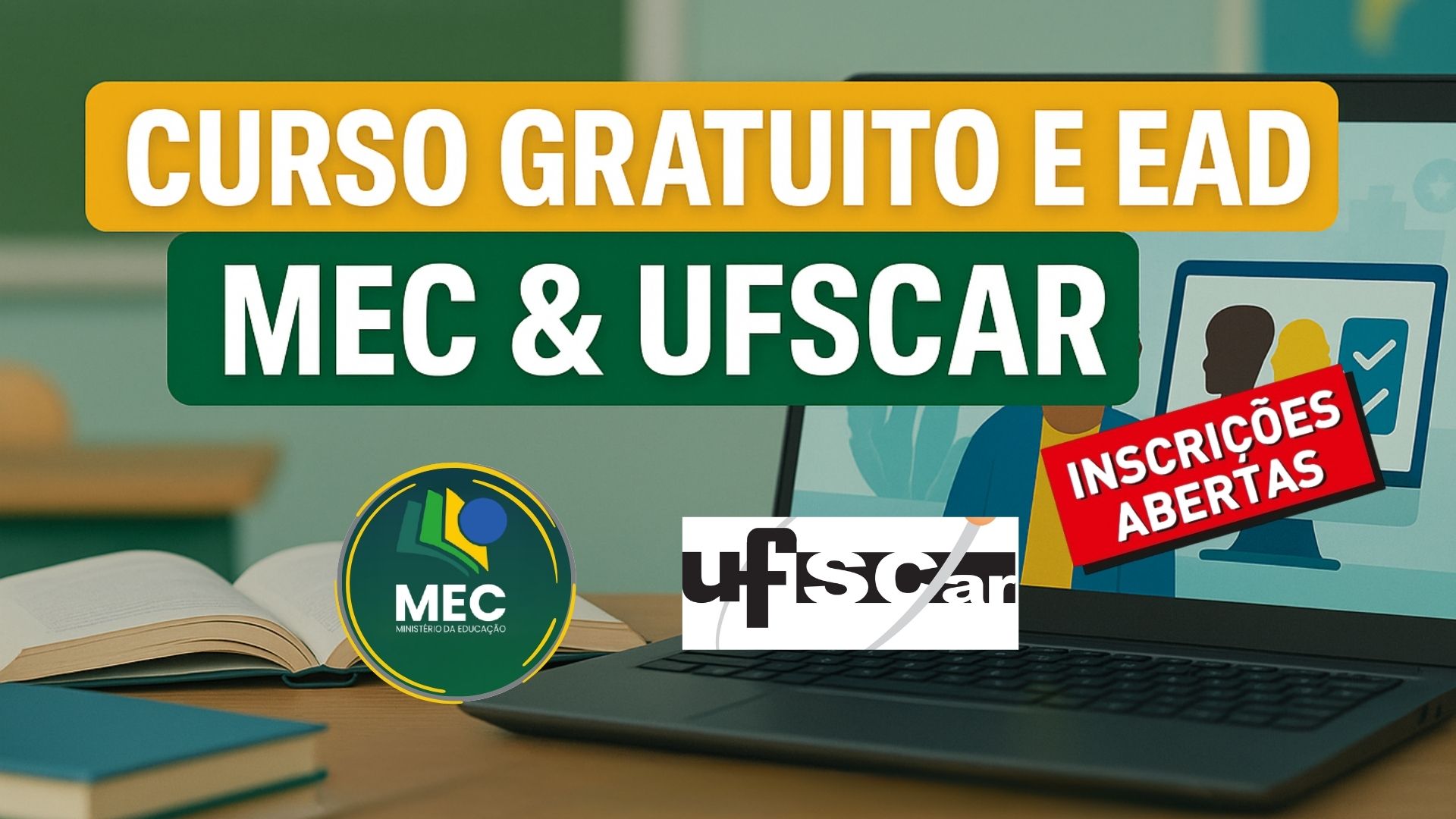
The Ministry of Education and the Federal University of São Carlos have made available, on the AVAMEC platform, the free course “Education for Young People and Adults and Education for Ethnic-Racial Relations,” aimed at EJA professionals all over the country.
The training is self-instructional, integrates the National Teacher Training Program for EJA (ProfEJA), and was presented on October 9, during an official videoconference from MEC.
According to the institutional announcement, the goal is to support public networks in constructing curricula and pedagogical practices that confront racism and promote diversity.
-
Surprising opportunity in the railway sector: MRS offers a free course for assistant train driver and shunter in Juiz de Fora with a R$ 1,600 scholarship, specialized training, and the chance to join one of the largest railway operators in Brazil.

-
It’s official: IFMS opens spots in free courses on artificial intelligence, drones, and app creation, expanding technological education in 2026 and preparing students for areas with high professional demand and accelerated digital transformation.
-
Senai launches an unprecedented program with Petrobras and opens 2,000 spots in free courses with recognized certification, a monthly allowance of R$ 600, and training for industrial professions that continue hiring across the country.

-
Petrobras and SENAI open 480 spots in free technical courses with a scholarship of up to R$ 858, meal allowance, and training in Mechanics, Welding, Metallurgy, and Industrial Automation to meet the growing demand of the industry and the oil and gas sector.


80-Hour Training on AVAMEC
The course load is 80 hours, with study at the participant’s own pace, in a virtual environment.
UFSCar’s promotional materials further inform that there is a certificate of completion at the end of the activities, issued by the MEC platform.
Why the Course Was Created
The proposal arises from recent diagnostics that expose educational inequalities by race and color in basic education and, specifically, in EJA.
In an official statement, Secadi/MEC highlighted data from the 2022 Census and the 2024 School Census, pointing to a high proportion of black and brown students in this modality, a scenario that demands anti-racist policies and pedagogical practices.
The launch of the course was presented as an action to reduce inequalities and ensure the right to quality education for historically excluded audiences.
Content and Objectives of the Training
The training path seeks to guide pedagogical planning in EJA from the perspective of ethnic-racial relations, articulating theoretical foundations, legal references, and proposals for didactic activities.
According to MEC, the initiative adds to a series of 15 self-instructional trainings from ProfEJA, alongside supporting materials such as an e-book with activity suggestions for different areas of knowledge.
The reading material accompanies the course and was produced by UFSCar.
While the modules address themes of language, humanities, mathematics, and natural sciences in dialogue with ERER, the structure prioritizes application in the classroom, focusing on practices that value diversity, confront racism, and consider the paths of young people, adults, and the elderly who return to school.
The course e-book gathers contents and methodological proposals in a reference format, complementing the activities on AVAMEC.
Who Can Participate
The training is aimed at professionals working in EJA in public education networks, as well as popular educators linked to actions of the Brazil Literacy Program and teachers interested in the subject.
In MEC’s presentation, the potential audience includes teachers of the modality, coordinators, and trainers who are part of the EJA Pact, focusing on strengthening pedagogical practices and curricula aligned with racial equity.
How It Fits into MEC Policies
The course is linked to two agendas coordinated by Secadi: the National Pact for Overcoming Illiteracy and Qualifying EJA (EJA Pact) and the National Policy of Equity, Education for Ethnic-Racial Relations and Quilombola School Education (PNEERQ).
By integrating the ProfEJA, the offering is part of a broader strategy for continuing education and the production of materials for this modality, with partnerships between universities and federal institutes.
Certification and Support Material
In addition to video lessons and activities, the initiative includes certification at the end of the course, according to UFSCar’s institutional announcement for the national launch.
In parallel, the e-book “Education for Young People and Adults and Education for Ethnic-Racial Relations” consolidates contents, references, and didactic proposals that dialogue with the stages of EJA and serve as a basis for planning and in-service training.
Registration and How to Participate
Registrations occur directly on the MEC’s Virtual Learning Environment (AVAMEC), with free access after login on the platform.
As it is self-instructional, enrollment does not depend on a competitive selection process, and participants begin their studies as soon as they complete the online enrollment.
The recommendation is that EJA professionals consult the course page on AVAMEC to confirm requirements and operational deadlines for completion before starting the training path.