Portuguese
  Spanish


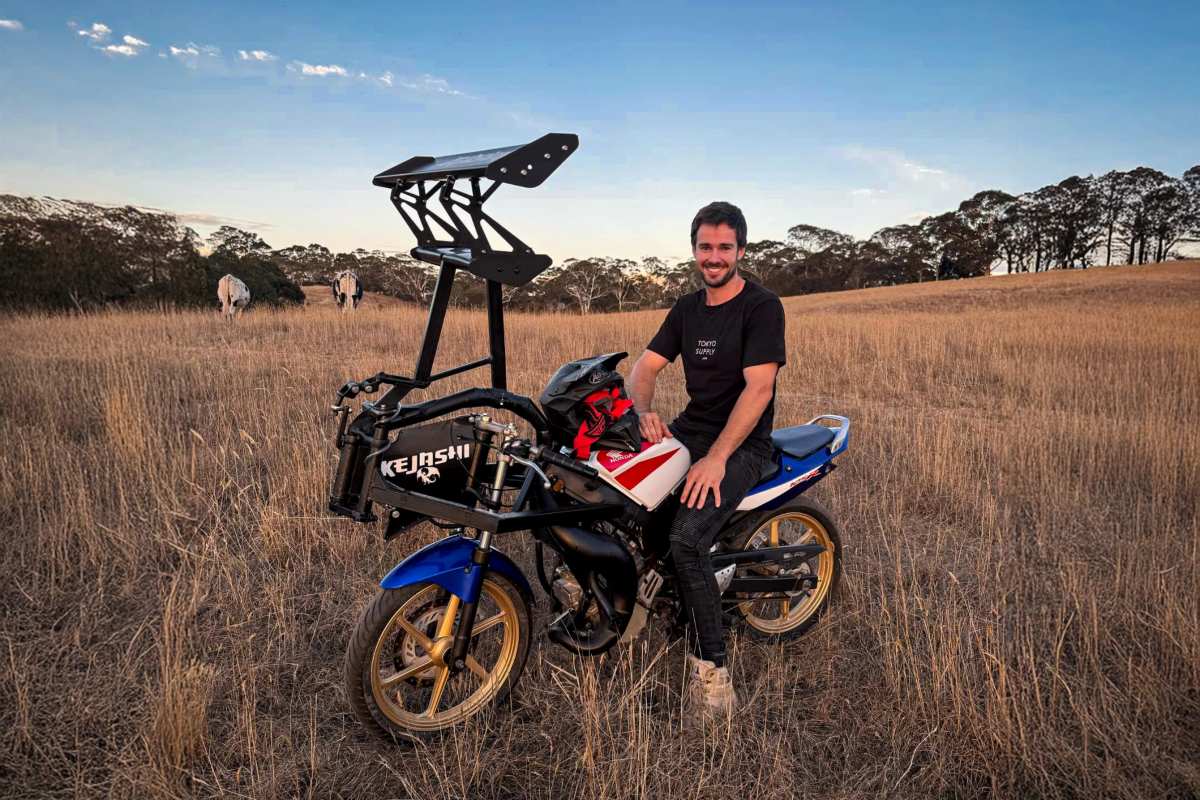


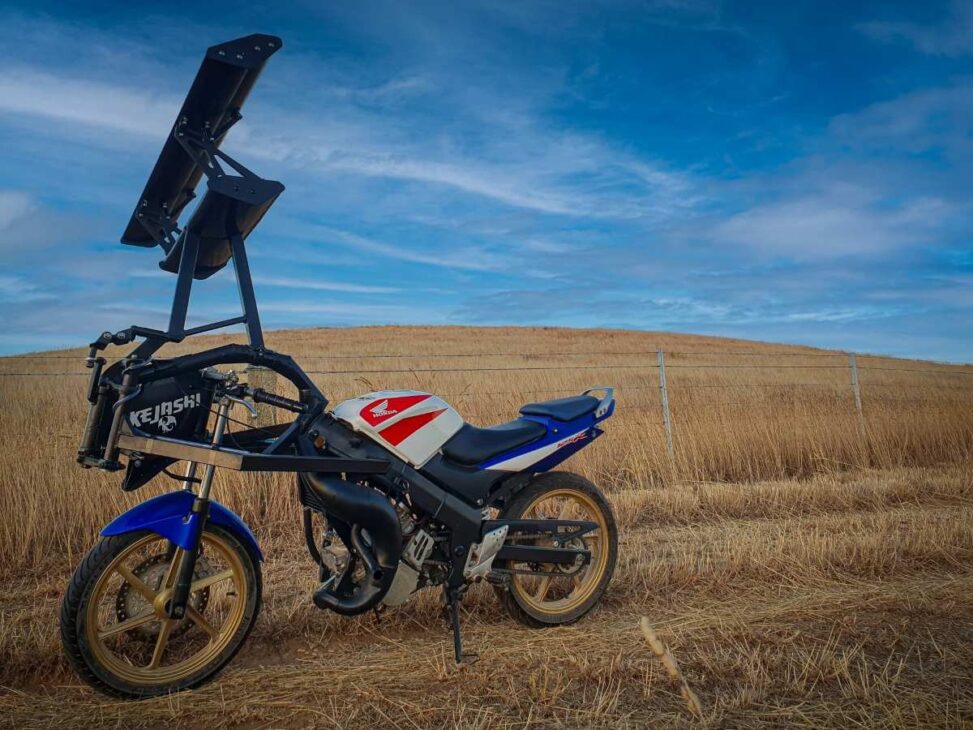
Kejashi Motorcycle, Created by Kent James Shillitoe, Combines Oscillating Wing and Offset Steering to Increase Stability and Grip Even in Extreme Corners.
The Kejashi is the world’s first motorcycle with a tilted wing system that remains level in turns.
This solution generates downforce similar to that of a Formula 1 car, but without pushing the bike outward.
The design combines extreme mechanical innovation, adaptive aerodynamics, and an experimental design aimed at functionality.
-
1983 Chevrolet Runs Over 100,000 km Without Gasoline, Powered by Wood Chips, Reaches 125 km/h in Airport Test

-
Workshop Converts Giant Tractor Tire Tricycle into a Three-Wheel Drive Hybrid with 36,000-Watt Electric Motor Capable of Climbing Hills

-
Sales of Brazil’s Cheapest Electric Car Halted Before First Deliveries: E-Motors Suspends Emova Easy Due to Import Tax Increase and Rising Freight Costs

-
Nissan Discontinues Qashqai SUV Amid Cost-Cutting, Chinese Competition, and Product Line Review




Created by Kent James Shillitoe, the Kejashi goes beyond an exotic prototype. It seeks to enhance stability, reduce the need for roll in fast corners, and explore new forms of dynamic control.
The result is a bold concept with real applications in efficient and safe mobility.
How the System Works
The differentiator lies in the offset steering mechanism. When turning the handlebars, the front wheel moves laterally out of the curve. This reduces the lean angle required for both the rider and the motorcycle.
The most important aspect is that this movement synchronizes the tilting wing, maintaining the aerodynamic force that pushes the car (or motorcycle) downward level.
This way, the force acts to increase grip without pushing the assembly outward in tight corners. The rider maintains more control and confidence at high speeds.
Technical Context
In MotoGP, small fixed flaps help with aerodynamics, but they lose effectiveness when the rider exceeds a lean angle of 45 degrees. In such situations, they end up generating force contrary to what is expected.
Shillitoe’s proposal treats the wing as an adaptable element that maintains efficiency even at extreme angles.
This approach addresses a limitation that high-performance motorcycling has faced for years. With the wing adjusting to the lean angle, the aerodynamic gain remains constant.
Application Potential
The prototype weighs around 130 kg, similar to a basic CBR125, but generates up to 60 kg of downforce at 150 km/h. This effect increases grip without adding weight, which is valuable for both sport bikes and high-performance urban vehicles.
Therefore, solutions like this could pave the way for lighter, safer, and more efficient vehicles with lower fuel consumption.
Connections and Trends
The technology relates to the use of active wings in motorsport, such as F1’s DRS, which regulates drag without sacrificing stability. Although there are no other examples of tilting movable wings on motorcycles, there are already electric mobility projects exploring aerodynamic bodywork and active lateral suspension.
Additionally, in urban scenarios, reduced lean angle and extra stability mean more safety, less tire wear, and greater efficiency in movement.