Portuguese
  Spanish


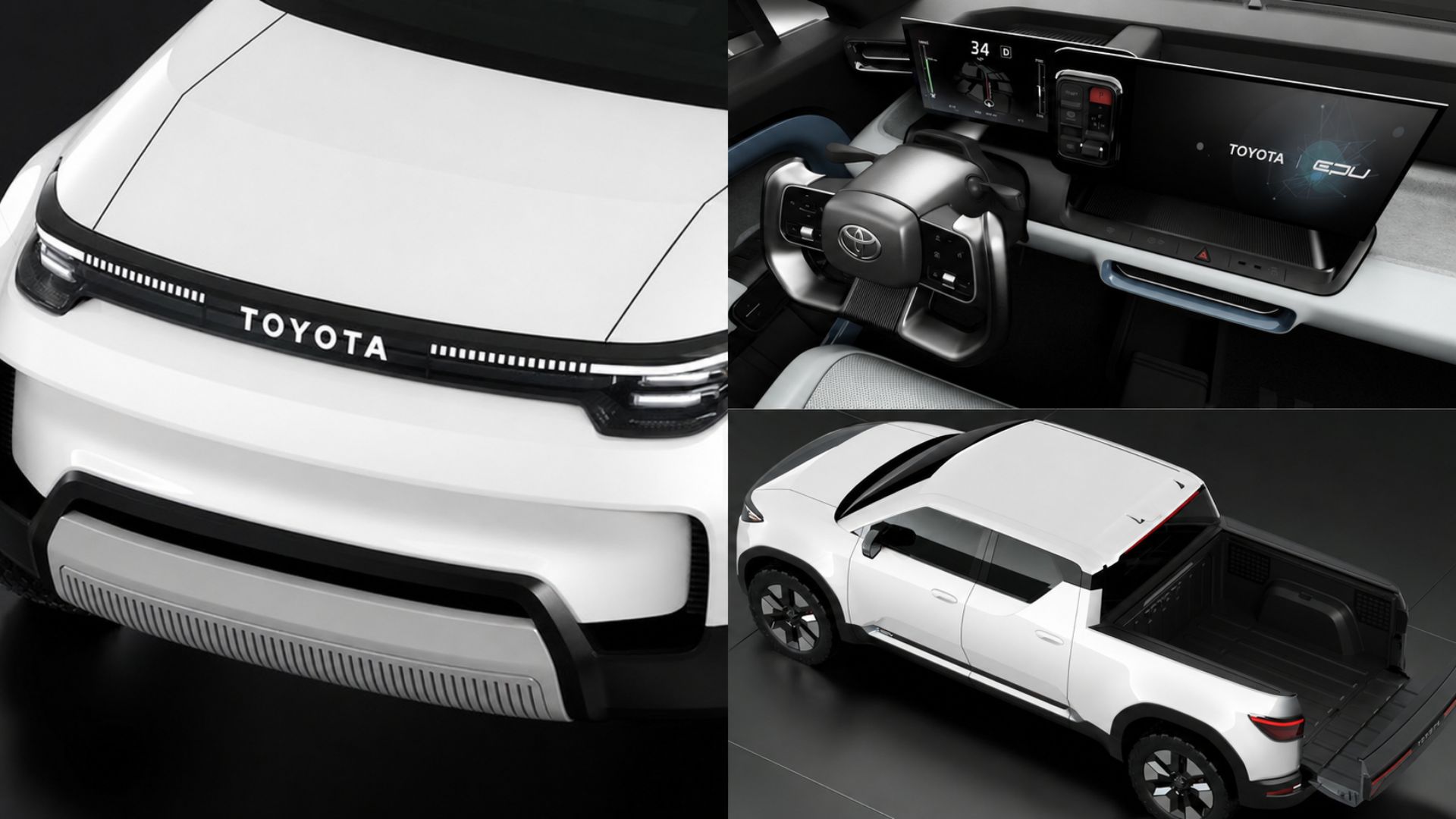


Project 150D advances in tests in São Paulo’s interior and prepares Toyota to compete in one of the most active segments of the Brazilian market, with a unibody pickup derived from the Corolla Cross, known flex engine, and a future plug-in hybrid flex version.
Toyota is already testing the new compact medium pickup derived from the Corolla Cross on highways in the interior of São Paulo, a project internally known as 150D and scheduled to debut in Brazil in the first half of 2027, according to Autos Segredos.
The model will have a unibody structure, a size below the Hilux, and a direct focus on the Fiat Toro, the current benchmark among intermediate pickups.
The list of rivals should also include future competitors such as the Renault Niagara and BYD Mako, the latter expected to arrive in the country in 2026.
-
Hilux’s little sister: Toyota relaunches the Land Cruiser 70 in the 2027 lineup with over 40 years of production, a 2.8 turbo diesel engine with 201 hp and 51 kgfm, a six-speed automatic transmission, and a renewed retro look.

-
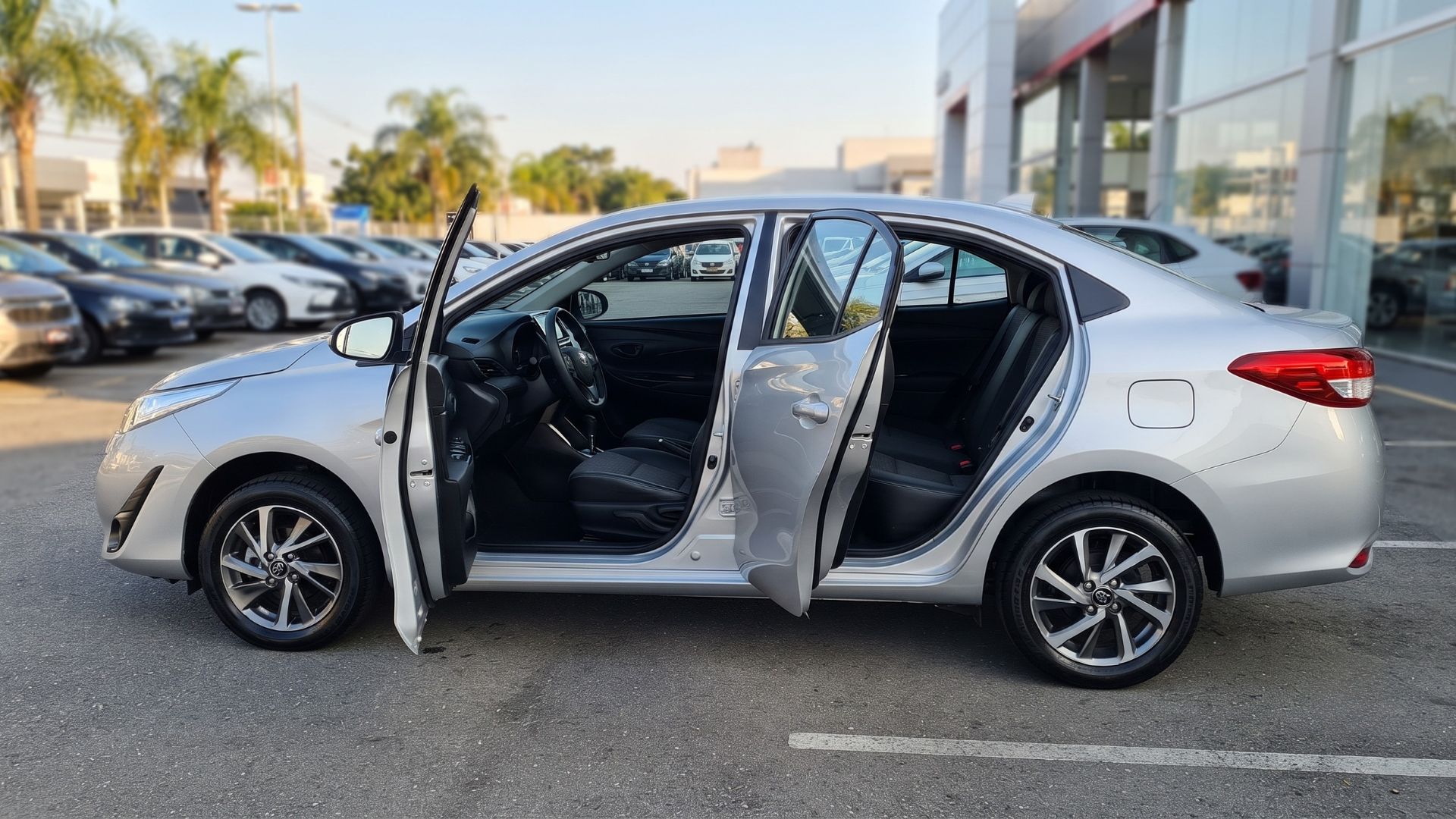
Automatic, economical, and known for reliability: with a 1.5 engine of up to 110 hp, CVT transmission, seven airbags, and fuel consumption of up to 15.9 km/l, this used hatchback appears as a rational alternative to Polo, HB20, and Onix; meet the Toyota Yaris XLS 2020.
-
He surpassed the Tera, Creta, and Tracker: With a TSI engine of up to 150 hp, 6-speed automatic transmission, and a 373-liter trunk, the Volkswagen T-Cross was the best-selling SUV in June, with 11,753 registrations.

-
It looks factory-made, but it came out of a workshop: a mechanic from Pernambuco builds a handcrafted “mini Toyota,” drives it through the streets, and the video goes viral on social media, leaving residents astonished.



The prototypes are already circulating with the definitive bodywork and zebra camouflage, without major inserts to hide proportions or volumes.
This phase indicates that Toyota has moved on to validation tests in real use, a common stage before final adjustments to suspension, finish, mechanical, and electronic calibration.
Toyota Corolla Cross pickup will have a unibody base
The future pickup will use the Corolla Cross architecture as a starting point, a strategy that allows reducing industrial costs and utilizing components already known by the brand.

The proposal is to combine SUV comfort, a bed for daily use, and an intermediate position between compact and traditional medium pickups.
The sides should maintain stampings very close to those of the Corolla Cross, especially in the door area and waistline.
The biggest differentiation will be at the rear, where the bed will require its own design, an exclusive tailgate, and a new lighting assembly.
In the most complete versions, the taillights should extend over the tailgate and be connected by an illuminated LED bar.
Entry-level configurations, on the other hand, should adopt a simpler solution, with an acrylic finish visually connecting the optical assemblies.
The rear bumper will feature the license plate and an integrated step to facilitate access to the bed when the tailgate is closed.
This feature aims for practicality in transporting smaller objects, without requiring the complete opening of the cargo compartment.
The new Toyota pickup’s front visual will be exclusive
Although the pickup originates from the Corolla Cross, the front should not entirely replicate the SUV’s look.
Toyota is preparing an exclusive design to give the model its own identity and a more robust appearance, compatible with the proposal of a pickup truck.
The brand has not yet released official images or publicly confirmed project details.
For now, the information comes from specialized press reports and sightings of prototypes in areas near Toyota’s operations in the state of São Paulo.
The strategy follows a trend in the Brazilian market, where unibody pickups have begun to attract consumers seeking more comfort than a traditional pickup truck, but who do not give up a bed and an elevated driving position.
2.0 flex engine will equip entry-level versions
The initial versions of the new pickup are expected to use the 2.0 Dynamic Force flex engine already applied in the Corolla and Corolla Cross.
The assembly delivers up to 176 hp with ethanol and 169 hp with gasoline, always at 6,600 rpm.
Maximum torque is 21.4 kgfm with both fuels, available at 4,400 rpm.

The transmission will be an automatic CVT type, with a simulation of ten gears, a solution already known in Toyota’s national models.
This configuration should cater to the more accessible versions of the lineup, aimed at consumers who prioritize mechanical reliability, ride comfort, and predictable running costs.
There is still no firm confirmation regarding cargo capacity, final dimensions, or version names.
Plug-in flex hybrid will be a highlight of the pickup truck
In the more expensive configurations, the pickup truck is expected to receive an unprecedented plug-in flex hybrid system for Toyota in Brazil.
The powertrain combines a 2.0 internal combustion engine with electric motors and was showcased by the brand in a new-generation Prius during Fenasucro 2025.
In the American market, the equivalent system uses a 2.0 gasoline engine with 152 hp and 21.2 kgfm, associated with a 120 kW electric motor, equivalent to 160 hp.
The combined power reported by Toyota is 223 hp. The transmission is an e-CVT transaxle type, integrated into the hybrid system.
There is also an additional electric motor dedicated to on-demand all-wheel drive, a solution called E-Four by the Japanese manufacturer.
For Brazil, the technology is expected to gain flex adaptation, allowing the use of ethanol and gasoline.
The change may alter performance figures, but national data has not yet been officially released by Toyota.
Prius electric range serves as a reference
In the plug-in Prius sold outside Brazil, the 13.6 kWh battery allows an electric range of up to 86 km in the WLTP cycle.
This figure serves as a reference for the technical package expected to equip the pickup truck, but the final range will depend on local calibration and vehicle weight.
The same plug-in flex hybrid base is also expected to be used in other Toyota products for Latin America, including a future coupe SUV.
This move reinforces the brand’s commitment to electrification combined with the use of biofuels in the Brazilian market.
Competition with Fiat Toro and BYD Mako is expected to grow
The arrival of the pickup truck will expand Toyota’s presence in a segment that grew with the Fiat Toro and has attracted projects from different manufacturers.
The competition is expected to intensify with the entry of electrified models and new proposals for urban, family, and light professional use.
Until the launch, scheduled for 2027, Toyota is expected to intensify testing on Brazilian highways and advance in defining versions, equipment, and commercial strategy.
Official confirmation of prices, capacities, and national consumption data should occur closer to the debut.