






 Portuguese
  Spanish
  3 min of reading


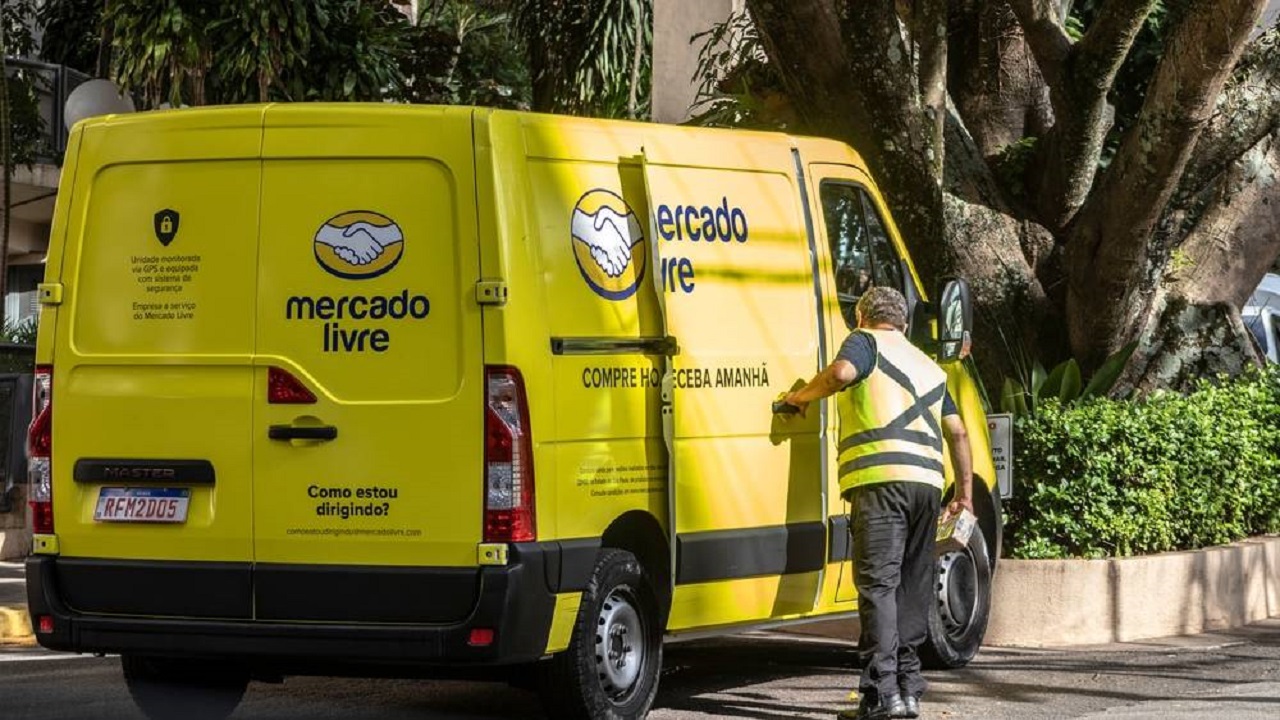
Mercado Libre is Going Against Its Competitors and, Despite the Negative Economic Scenario in Brazil, the Company Announced It Will Make Billion-Dollar Investments in the Country Focused on Logistics and Mercado Pago
Mercado Libre, one of the largest e-commerce platforms in Latin America, announced that it plans to increase its investments in Brazil by 70% this year alone. This increase is equivalent to R$ 17 billion and represents a strategy to strengthen and grow the company’s business in the country, according to what was reported last Tuesday (22) in a statement released by the company. A large part of these investments will be directed to Mercado Pago, a fintech of the group that provides payment services, transfers, and mobile top-ups. This segment already accounts for more than a third of Mercado Libre’s revenue in the country.
Mercado Libre Will Build 4 Distribution Centers in São Paulo
The company is also expected to allocate a significant portion of the new investments to expanding its logistics capacity. As a result, 4 new Distribution Centers will be developed in the state of São Paulo, expanding the company’s product distribution capacity throughout Brazil.
Mercado Libre is going against the trend of its competitors, who view the economic situation in Brazil and Latin America with some skepticism. The e-commerce giant is expanding its operations in the country, increasingly focusing on financial services.
-
Brazilian Joins Homeownership Consortium, Faces Decade of Dual Payments Totaling $141,000, Surpassing Traditional Mortgage

-
Land Rover to Halt Production in July, Putting 371 Jobs at Risk, as Chinese Automaker Negotiates to Convert Factory to 100,000 Vehicles Annually by 2027

-
Mexican Pest Threatens U.S. Cattle Herds at Historic Lows, Potentially Boosting Brazilian Beef Exports as Burger Prices Soar

-
Brazilian Freight Bill Progresses in Congress with $5,000 Minimum Wage, 70% Advance Payment, and Fines Up to $1 Million, as Agriculture and Industry Warn of Rising Costs and Legal Uncertainty


In the past year, its investments in the Brazilian subsidiary were equivalent to the same amount spent in the previous four years. Last month, the company also announced significant investments in Mexico, exceeding US$ 1.4 billion. This amount will also be directed toward expanding logistics capacity, given that the country was responsible for the highest net profit for Mercado Libre in the region in the fourth quarter.
New Investments and New Job Openings
The expansion of investments directly impacts the creation of new jobs. Just in the past year, Mercado Libre made more than 16,000 hires across the continent, with 7,000 of those in Brazil.
The expectation is that this year will follow the same path. In February, the company announced the opening of more than 750 job openings, mainly focusing on the technology and innovation area.
Mercado Libre was founded in Argentina in 1999, starting operations in Brazil the same year. The group grew in the following decades and diversified its business, although e-commerce remains its strongest area. Mercado Pago, for example, was created 18 years ago, in 2003, to be used for payments within the platform, and currently offers financial services outside the platform as well as a card machine.
Mercado Libre is the Favorite Among Consumers and Investors in Brazil
Following the e-commerce season, industry analysts have delved into the consumption trends in Brazil and which companies are managing to gain prominence. The Bradesco BBI and Credit Suisse highlighted in analyses with optical differences that one publicly traded company is drawing more attention than others. This company is Mercado Libre, which scored well in several metrics, with research suggesting that it is one of the leading e-commerce platforms in the country.
According to analysts, the company has the largest base of buyers, the lowest customer overlap with Shopee, the second-highest Net Promoter Score (NPS), a metric that measures customer satisfaction, trailing only Amazon, and several other highlights.





Be the first to react!