






 Portuguese
  Spanish
  5 min of reading
  0 comments


One of the driest countries in Africa, Namibia suddenly found itself facing the largest oil discovery ever made south of the Sahara and now attracts industry giants jostling to drill its deep waters in search of the hidden oil in the Orange Basin.
Few economic turnarounds are as sudden as the one happening in Namibia. A country with a modest population and an economy based on mining and tourism, it suddenly entered the global oil map due to gigantic discoveries at sea, in the region known as the Orange Basin. What was a discreet coastline has become one of the hottest frontiers in the oil industry.
The milestone that changed everything was the discovery of Venus by TotalEnergies, touted as the largest oil discovery ever made south of the Sahara. Along with other findings in the region, it transformed the perception of Namibian potential. Now oil companies are rushing to drill there, with Shell planning several new exploration wells and billion-dollar investment decisions expected in the coming months.
The challenge of drilling in deep waters
Namibia’s oil is not on land or in shallow waters, but at the bottom of the sea, thousands of meters deep. Drilling there requires highly sophisticated technology, with drillships and platforms capable of operating where the pressure is brutal and any mistake costs a fortune. This is called deepwater exploration, one of the most difficult and expensive territories in petroleum engineering.
-
FIRJAN’s mega plan of R$ 526.3 billion for Rio de Janeiro aims to revive Brazil’s largest industry, with two-thirds of the investments going to oil and gas.

-
China signals an increase in beef imports, Brazil has already consumed 70% of the 1.106 million ton quota and seeks to renegotiate the tariff that jumps from 12% to 55%, while demand from the US also skyrockets.
-
Food inflation rose 302% in 20 years in Brazil, but the supermarket changed: purchasing power yielded 87% more mortadella and 31% less fruit, and ultra-processed foods took over the cart.
-
Petrobras sells the first batch of 3,800 m³ of aviation fuel made with certified soy, capable of reducing emissions by up to 70%, in an unprecedented project that anticipates the aviation sector’s requirements expected for 2027.
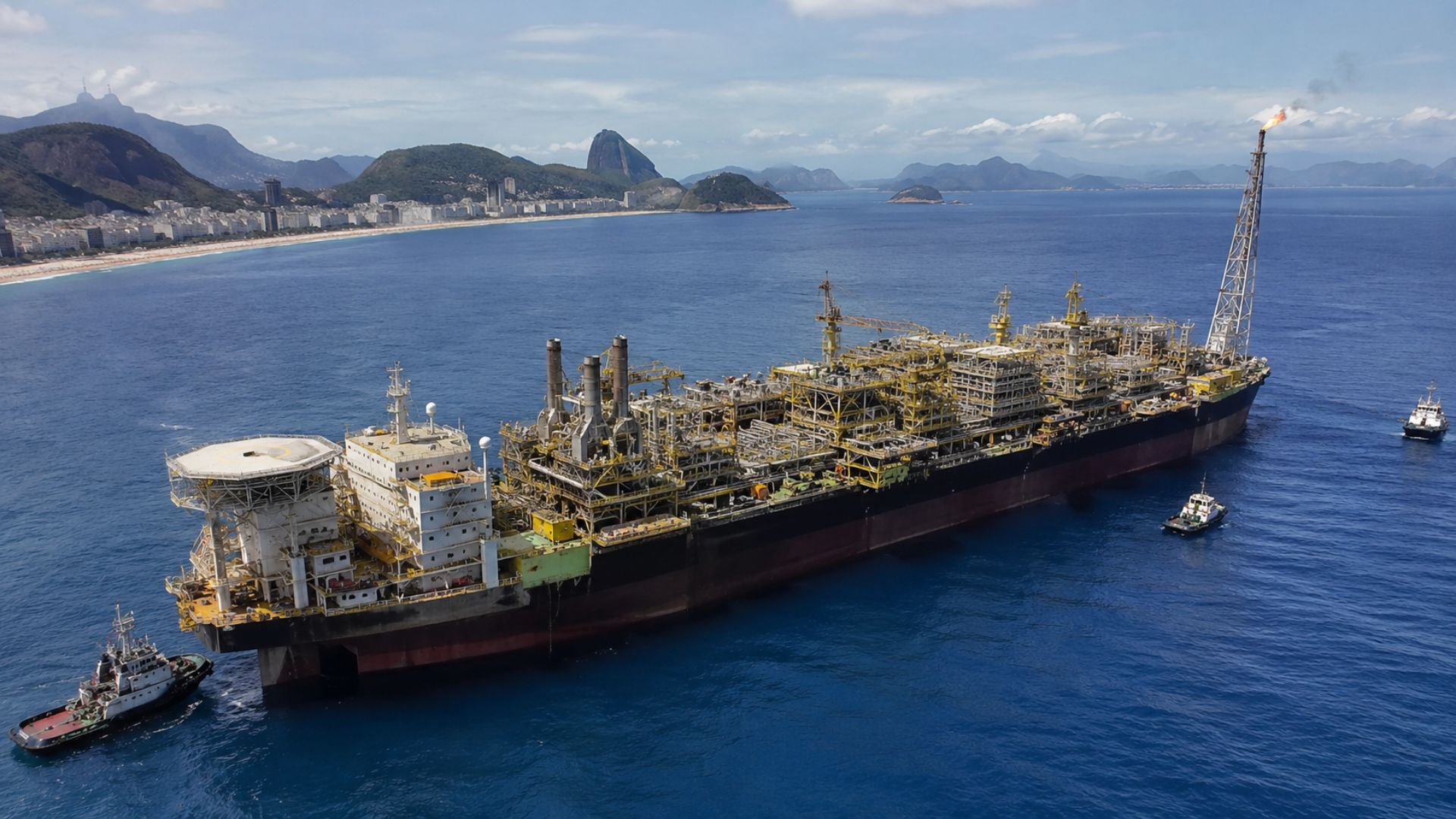


I confess that I am impressed by the size of the technological leap needed to extract oil from this environment. The drill needs to pass through the water column, cross the seabed, and still penetrate kilometers of rock to reach the reservoir, all guided by sensors and controlled from the surface. That companies are willing to face this challenge in Namibia shows how promising the discovery is, because no one invests so much without the prospect of a huge reward.
There is a curious geological detail that helps explain so much enthusiasm. The coast of Namibia and the coast of Brazil were, millions of years ago, the same land, before continental drift separated South America from Africa and opened the Atlantic Ocean between them. This means that the formations that hold oil on both sides of the ocean have geological kinship, and Namibian success rekindles interest in similar basins on the Brazilian margin. What is discovered on one side of the Atlantic becomes a valuable clue for the other, and that is why geologists worldwide follow every well drilled in the Orange Basin, hoping to better understand what might also be hidden under the waters of our own coast, on the other side of this sea that once did not exist.

What this could mean for a small country
An oil discovery of this magnitude has the power to transform the economy of an entire nation. For Namibia, it means the prospect of revenues that could finance schools, hospitals, infrastructure, and lift much of the population out of poverty. It is the kind of sudden wealth that changes a country’s destiny, opening up possibilities that previously seemed distant for a small and vulnerable economy.
But history shows that oil does not always turn into a blessing. Several countries that discovered abundant oil fell into the so-called resource curse, where wealth concentrates income, fuels corruption, and leaves the majority out. Namibia’s great test will be to manage this fortune in a way that truly benefits its people, and not just big companies and a handful of privileged individuals. It is a narrow path between prosperity and the trap.

The new African oil frontier
Namibia is not alone in this movement; it is the most visible tip of a larger race for African oil. As traditional reserves in other parts of the world mature, oil companies seek new frontiers, and the west coast of Africa has emerged as one of the most promising. The Orange Basin, which also extends into neighboring waters, has become one of the most coveted spots on the planet for those seeking oil.
This interest brings investment, technology, and jobs, but also places African countries at the center of a global resource dispute, with all that implies in terms of opportunity and risk. How Namibia conducts this phase will serve as an example, for better or worse, for other nations on the continent that dream of turning discoveries at the bottom of the sea into real development for their people.

A desert that could become an oil power
I imagine the size of the expectation that grips a country when it discovers, almost without warning, that it is sitting on one of the largest oil reserves in its region. Namibia is experiencing this moment now, suspended between the promise of a historic economic transformation and the risks of wealth that is not always shared fairly.
What will happen with this oil, and with the money it can generate, is still a blank page. The drills are on their way to the bottom of the sea, and the world will watch to see if one of Africa’s driest countries can turn the oil hidden beneath its deep waters into a better future for those living on the surface, and not just into profit for the coffers of large foreign oil companies.
Do you believe that Namibia will be able to turn this oil discovery into wealth for its people?





Be the first to react!