






 Portuguese
  Spanish
  4 min of reading
  0 comments


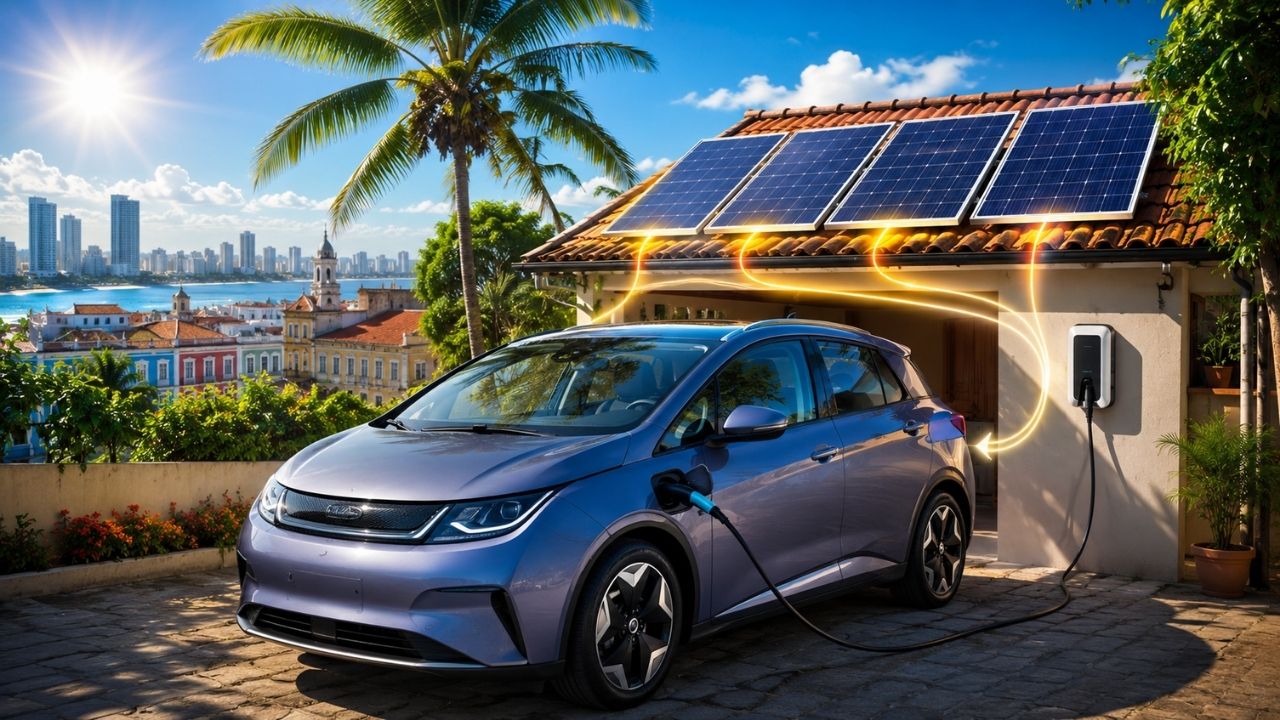
Simulation with the BYD Dolphin calculates that an electric car running 1,500 km per month would consume 181.5 kWh; in Recife, solar energy from 4 solar panels of 550 W was recommended to compensate for home charging with a margin against fluctuations in photovoltaic generation throughout the local month.
A simulation presented in a video estimates that a BYD Dolphin driver could compensate for the energy needed to travel 1,500 km monthly using four 550 W photovoltaic modules in Recife. The calculation is based on an electric car running 50 km per day and an estimated local production of solar energy.
As shown in a video published by the channel Luciano Batista, the survey considers a consumption of 12.1 kWh every 100 km, a hypothetical rate of R$ 1 per kWh, and losses from the photovoltaic system. Under these conditions, the home charging would consume 181.5 kWh monthly and would have an approximate cost of R$ 180 at the outlet, before compensation by solar panels.
BYD Dolphin consumption was calculated for a routine of 50 km per day

The starting point was a fixed routine: 50 km daily for 30 days. In this scenario, the BYD Dolphin would complete 1,500 km in the month. The simulation employed a consumption of 12.1 kWh for every 100 km, a number used by the author of the calculation to size the vehicle’s electrical demand.
-
FIRJAN’s mega plan of R$ 526.3 billion for Rio de Janeiro aims to revive Brazil’s largest industry, with two-thirds of the investments going to oil and gas.

-
China signals an increase in beef imports, Brazil has already consumed 70% of the 1.106 million ton quota and seeks to renegotiate the tariff that jumps from 12% to 55%, while demand from the US also skyrockets.
-
Food inflation rose 302% in 20 years in Brazil, but the supermarket changed: purchasing power yielded 87% more mortadella and 31% less fruit, and ultra-processed foods took over the cart.
-
Petrobras sells the first batch of 3,800 m³ of aviation fuel made with certified soy, capable of reducing emissions by up to 70%, in an unprecedented project that anticipates the aviation sector’s requirements expected for 2027.



By halving the distance, the calculation reaches 6.05 kWh for 50 km. Multiplied by the 30 days, the total is 181.5 kWh. The result serves as a reference for an electric car in this usage profile, but does not replace the actual measurement of each driver.
Domestic recharge would have an estimated cost before self-generation
To convert consumption into expense, the simulation adopted a rounded tariff of R$ 1 per kWh. With 181.5 kWh consumed, the domestic recharge of the car would represent about R$ 181.50, presented in the video as approximately R$ 180 per month.
The final expense may vary according to the distributor’s tariff, taxes, flags, compensation mode, and driving habits. Even so, the calculation demonstrates why electric car owners consider combining electric mobility and solar energy to reduce the portion of consumption attributed to the vehicle.
Solar panels were sized with the average irradiation of Recife

The calculation of solar panels considered 550 W modules, an average daily irradiation of 5.34 in Recife, and an efficiency of 75% to incorporate system losses. With these assumptions, each panel would produce approximately 66.08 kWh monthly.
Dividing the need of 181.5 kWh by this production, we arrive at 2.75 panels. Since the module cannot be fractioned, three units would form the minimum theoretical quantity to compensate for the calculated consumption of the BYD Dolphin. The indicated quantity depends directly on the location and installation conditions.
Four solar panels would add leeway for generation fluctuations
Although three panels cover the mathematical account, the video’s recommendation was to install four solar panels of 550 W, totaling 2.2 kWp. The additional panel creates a margin for cloudy days, seasonal variations, or slightly larger trips than the predicted average.
Using the same formula used in the simulation, four modules could generate approximately 264 kWh in the month in Recife. This volume exceeds the estimated demand for the electric car, but does not mean automatic elimination of the bill: the residence’s energy, the network rules, and the system costs remain relevant.
Solar energy can offset consumption, but does not equate to free refueling


In a grid-connected system, the solar energy generated on the property can offset consumption recorded over the period, including part of the energy used by the car. This is different from stating that the vehicle’s charge will always be free or directly supplied by the panels at the time of connection.
Besides the cost of acquiring the solar panels, the project may involve an inverter, mounting structures, installation, approval with the distributor, and electrical adjustments. The benefit for home charging should be analyzed considering the initial investment, expected production, and total household consumption.
Result changes according to city, direction, and vehicle use
The presented account was made for Recife and depends on the solar irradiation considered in the example. In cities with different photovoltaic production, roof shadows, unfavorable orientation, or higher losses, the system required to generate the same amount of solar energy may increase.
The consumption of the BYD Dolphin also varies in practice. Traffic, air conditioning, speed, route, transported load, and driving habits influence the performance of any electric car. Therefore, home charging should be sized based on the real routine and an individualized photovoltaic project.
The union between electric car, solar energy, solar panels, and home charging can reduce the vehicle’s impact on the bill, but requires proper sizing. Would you install four panels to offset your monthly commutes or do you still consider the investment high? Leave your opinion in the comments.




Be the first to react!