Portuguese
  Spanish


The peak of the planetary alignment occurs on June 12, 2026, right after sunset. According to Star Walk, it can be seen with the naked eye, without a telescope, between 30 minutes and an hour after dusk. In São Paulo, the best window is from 5:53 PM to 6:45 PM.
Mercury, Venus, and Jupiter will gather in a small planetary alignment that can be seen with the naked eye in Brazil. According to NSC Total, the phenomenon reaches its peak this Friday, June 12, 2026, and can be observed right after sunset, without the need for a telescope. For this, the weather just needs to cooperate and the sky must be clear.
According to the report, the planets began to approach in the sky since the beginning of the month and should remain close until mid-June. According to the astronomy app Star Walk, as they are bright celestial bodies, the trio can be seen without a telescope or binoculars, depending only on the weather forecast. The right direction to look is west, where the Sun sets.
When and how to see the planetary alignment
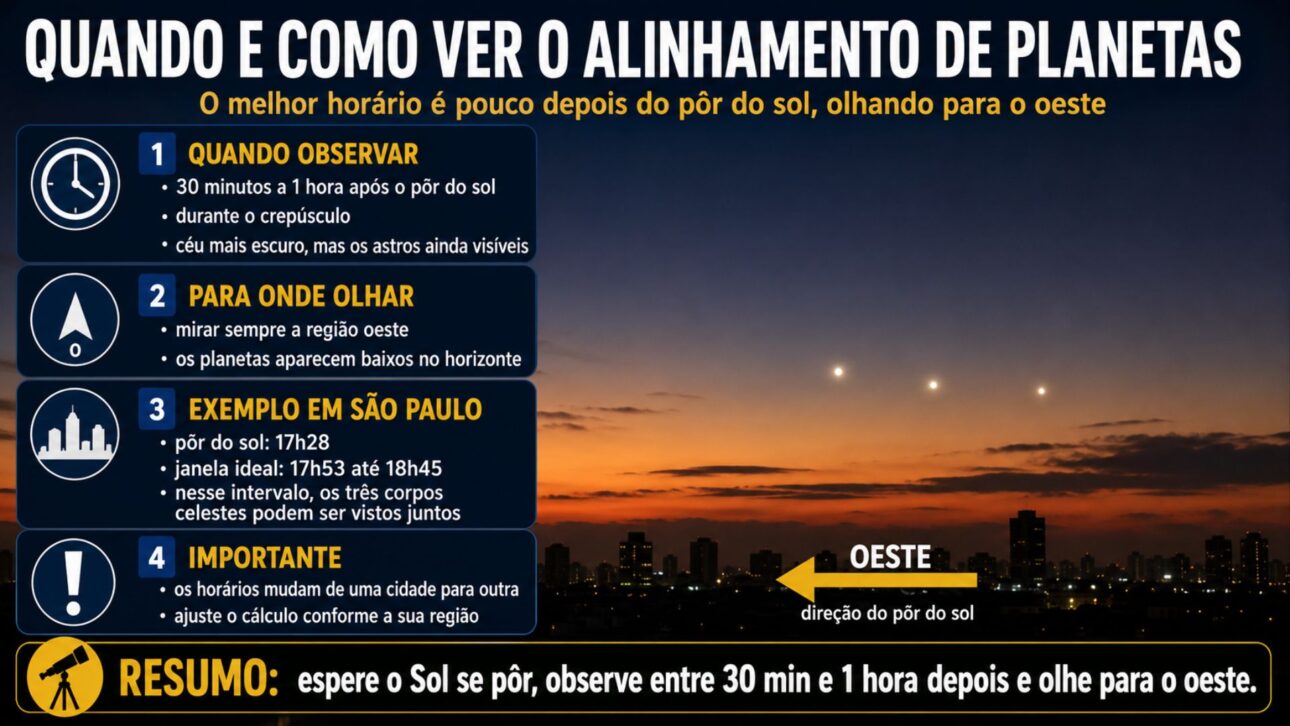
The best time to observe the planets begins shortly after the Sun sets. According to Star Walk, the ideal window is from 30 minutes to an hour after dusk, during twilight, when the sky is darker but the celestial bodies have not yet descended towards the horizon line. The point to aim for is always the western region.
-
AI Video Generator Automatically Creates Subtitles and Animated Captions

-
São Paulo Unveils Latin America’s Largest Underground Reservoir, Holding 900 Million Liters, in the Greater São Paulo Area

-
Chinese Teen Wins Gold in Germany for Invention Turning Air Moisture into Underground Irrigation in Drought-Stricken Areas

-
Desertification Threatens Brazil’s Caatinga: 85% of Semi-Arid Region Affected, 30 Million at Risk, and Efforts Underway to Restore 10 Million Hectares by 2045




In Brazil, the observation window is considered favorable. According to the report, in São Paulo, the sunset occurs around 5:28 PM, making the interval between 5:53 PM and 6:45 PM the ideal period to spot the three celestial bodies together. As sunset times vary from city to city, it’s worth adjusting the calculation according to your region.
How to identify each planet in the sky
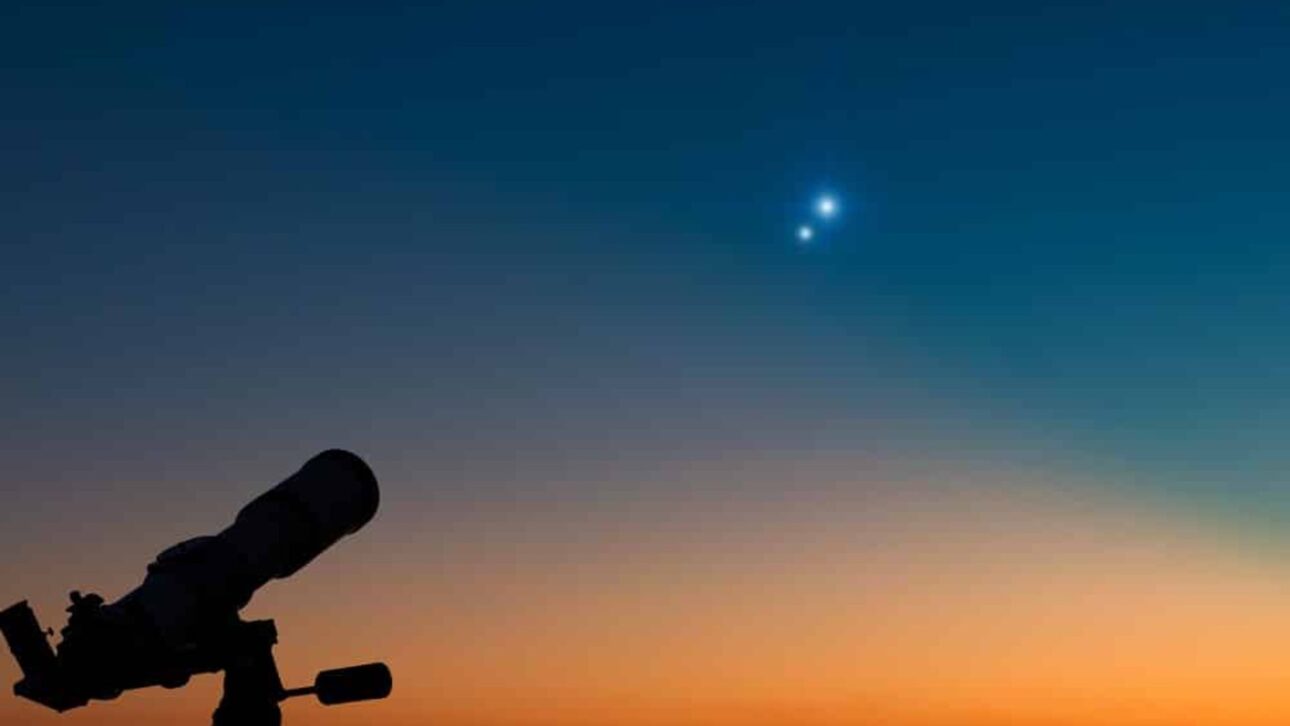
The planets will not be spread out, but rather concentrated in a small, easy-to-locate sector. According to the report, they will appear to form a slanted diagonal line in the sky. Venus will be the brightest “star” and will stand out even before the night is completely dark, while Jupiter appears as the second brightest, very close to Venus.
The challenge is with Mercury, the planet closest to the Sun. According to the material, because it orbits close to our central star, it appears very low on the horizon and quickly disappears. To observe Mercury, it is essential to find a high place or a spot without buildings, trees, or mountains to the west.
Why it’s worth looking at the sky
What is scheduled for this Friday is a mini alignment, where the planets appear gathered when viewed from Earth. In practice, they are not exactly lined up in space, but they concentrate in the same region of the sky as seen from here. Since they are bright, the phenomenon is accessible to anyone, without equipment, which is not always the case in astronomical events.
Another advantage is that you don’t have to rely solely on the day of the peak. According to the report, the planets have been close since the beginning of June and should remain so until mid-month, which increases the chances for those who want to try observing. For those interested in the subject, the material also mentions that in August, it will be time for the Perseid meteor shower.
The meeting of Mercury, Venus, and Jupiter is a simple invitation to look at the sky this Friday, right after sunset. With a clear horizon to the west and a bit of luck with the weather, you can see the three planets with the naked eye, without any equipment. Just choose a good observation point and aim at the side where the Sun has just set.
And you, will you try to observe the alignment of the planets? Comment if you managed to see Mercury, Venus, and Jupiter and share the experience with other readers.