






 Portuguese
  Spanish


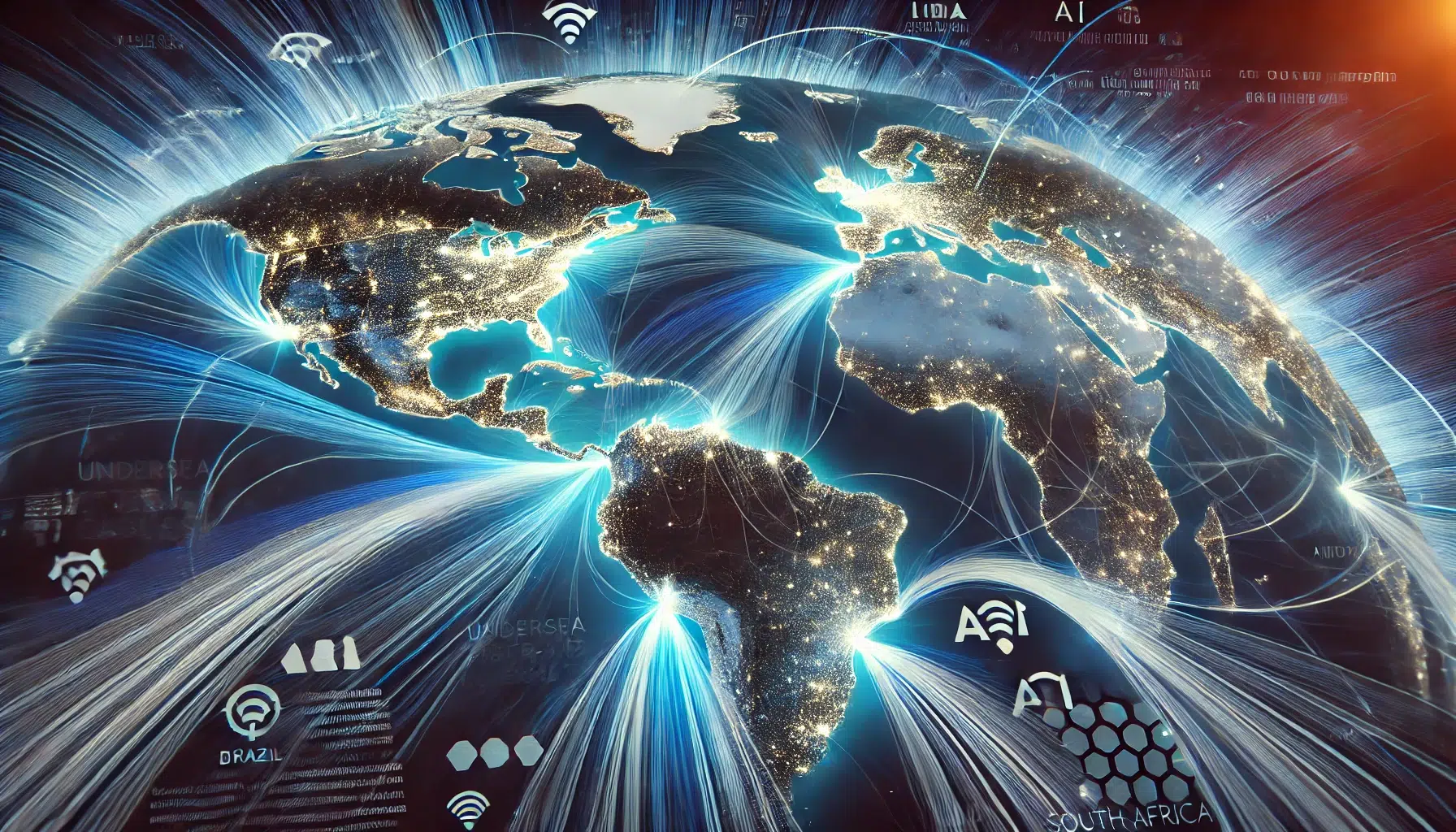


Meta Bets on the World’s Largest Digital Infrastructure to Boost Connectivity and Artificial Intelligence!
Meta is investing billions in the Waterworth Project, an initiative officially announced in February 2025, that promises to transform the global internet with 50,000 km of submarine cables.
In this way, the company will bring high-speed connectivity to strategic countries such as Brazil, the United States, India, and South Africa. Additionally, this expansion will strengthen data transmission and boost the growth of Artificial Intelligence (AI).
Undoubtedly, this advancement could completely change the digital future!
-
The ‘tsunami’ of investments directed at Artificial Intelligence (AI) and semiconductor companies, which prioritize security and more predictable profits, has been a determining factor in the declining trajectory of Bitcoin.

-
Samsung eyes strategic chip factory in South Korea and could shake up the global AI landscape with advancements in HBM memories and advanced packaging.

-
Nvidia makes agreements in South Korea for AI factories and takes data centers, advanced chips, and global cloud to another level by 2027
-
ChatGPT reveals which human job it would choose if it could really work


Meta Installs Submarine Cables to Expand Global Connectivity
Meta, the owner of Facebook, Instagram, and WhatsApp, has launched an ambitious digital infrastructure project. According to a statement made by CEO Mark Zuckerberg in February 2025, the Waterworth Project will lay 50,000 kilometers of submarine cables to connect continents such as South America, North America, Asia, and Africa.
The plan began to be conceived in 2022, when Meta announced the Anjana cable, which will connect the United States to Spain. This submarine cable, expected to be completed by the end of 2025, is part of a broader strategy to reduce the company’s reliance on third-party infrastructures, such as those offered by Google and Microsoft.
In this way, the company aims to expand the global internet, ensuring high-speed connectivity and increasing data transmission capacity.
Moreover, this project reinforces Meta’s commitment to supporting the advancement of Artificial Intelligence (AI). After all, more robust networks are essential for processing large volumes of information.
Submarine Cables: The Backbone of the Global Internet
Currently, submarine cables support virtually all communication networks worldwide.
To give an idea, approximately 99% of intercontinental data transmission occurs through these connections. Moreover, more than 450 submarine cables traverse the oceans, totaling around 1.2 million kilometers in length, according to a report published by TeleGeography in 2024.
The growth of submarine cable infrastructure has significantly increased in recent years.
In 2021, Google announced the Firmina cable, which will link the United States to Brazil and is expected to go live in 2026.
Similarly, Meta plans to add new high-speed connectivity corridors with the Waterworth Project, significantly improving global internet infrastructure.
As a result, companies, governments, and ordinary users will have access to much faster and more stable connections.
Brazil Becomes a Strategic Hub for Digital Infrastructure
Brazil is among the countries benefiting from the Waterworth Project. As a result, the country will consolidate itself as a strategic center for digital infrastructure in Latin America.
Additionally, the new network of submarine cables will boost essential sectors such as e-commerce, digital services, and technological innovation.
At the same time, this infrastructure will drive the digital economy and enhance cybersecurity.
This way, Brazil will reduce its dependence on foreign networks.
According to the National Telecommunications Agency (Anatel), demand for internet in the country grew by 35% between 2020 and 2024, making investment in connectivity essential.
In addition to the Waterworth Project, Meta has already invested in the construction of the Malbec cable, launched in 2021, which connects Rio de Janeiro and São Paulo to Argentina.
These investments are part of a strategy to consolidate Brazil as a key point in global digital infrastructure.
Finally, the new project promises faster and more efficient connections, improving data transmission and providing a significant technological leap.
The Challenges of Expanding Global Connectivity
Despite the numerous benefits, the construction and maintenance of submarine cables pose challenges.
For example, environmental impacts, risks of sabotage, and natural damage need to be considered.
According to a report by the International Cable Protection Committee (ICPC) published in 2023, around 150 incidents of damage to submarine cables occur annually, many caused by fishing activities or ship anchoring.
Furthermore, recent attacks on telecommunications cables in the Baltic Sea in October 2023 highlighted the vulnerability of this infrastructure to geopolitical conflicts and cyberattacks.
The North Atlantic Treaty Organization (NATO) has increased patrols in the region following suspicions of sabotage attributed to hackers linked to foreign governments.
However, even in the face of these difficulties, technology companies remain committed to creating a faster, more accessible, and efficient global internet.
In this way, the expansion of digital infrastructure represents an essential step to ensure that connectivity keeps pace with the growth of Artificial Intelligence (AI) and new technological demands.
Conclusion: The Future of Global Connectivity
The Waterworth Project by Meta represents one of the largest advances in digital infrastructure in recent years.
Since 2021, companies like Google, Microsoft, and Amazon have been investing billions in submarine cables to support the growing demand for data.
Now, with a project extending across five continents, Meta reaffirms its position as one of the leaders in building the next generation of communication networks.
If everything goes as planned, the first cables of the Waterworth Project are expected to go live in 2027.
Meanwhile, the technology and telecommunications sector remains attentive to the new trends and challenges of this digital revolution, which promises to transform the way the world connects.


