






 Portuguese
  Spanish


Global Event Boosts The Market For Scientific Relics And Highlights Fossils And Meteorites Of Incomparable Value
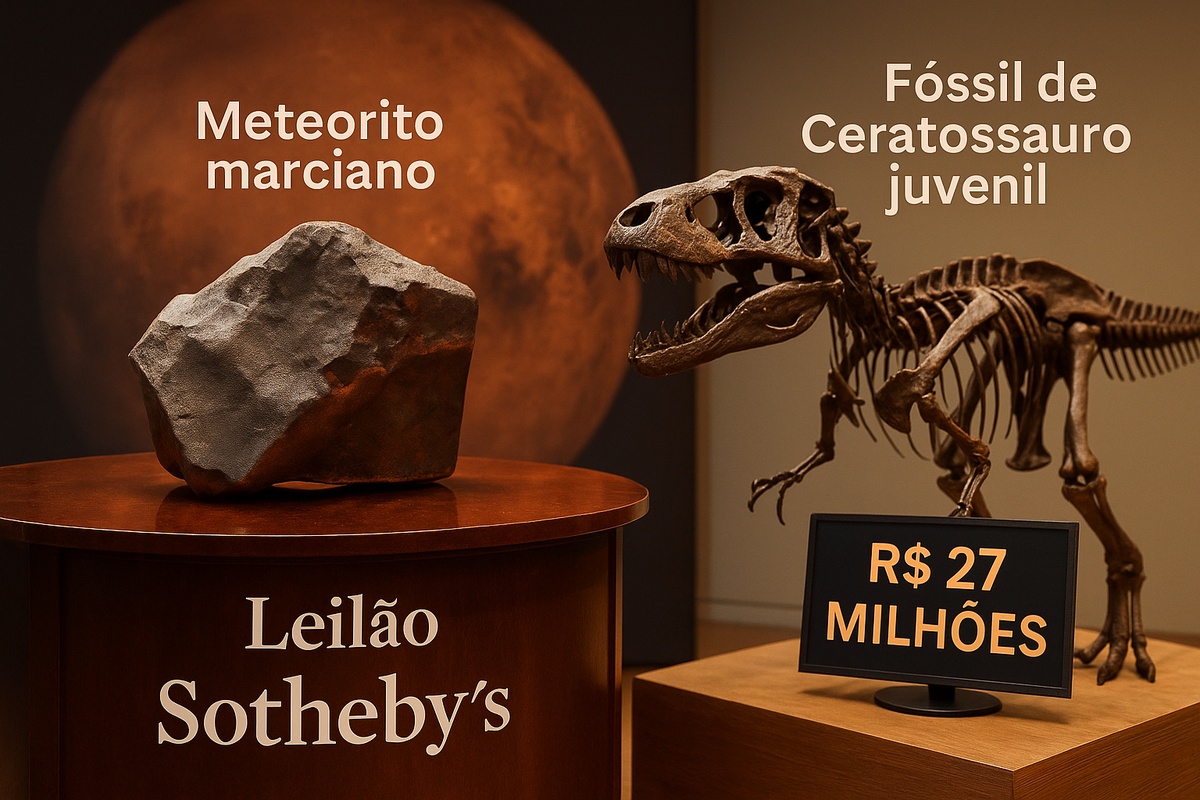
In July 2024, the auction house Sotheby’s, located in New York, brought together collectors, investors, and experts for an international auction of scientific relics. Thus, people from all over the world focused their attention on the competition for rare objects. For this reason, a 25 kg Martian meteorite reached a record value of $5.3 million (€4.3 million). Furthermore, a juvenile dinosaur skeleton surprised and garnered attention, as it was sold for $30 million.
Remarkable Martian Meteorite Discovery Expands Frontiers Of Space Research
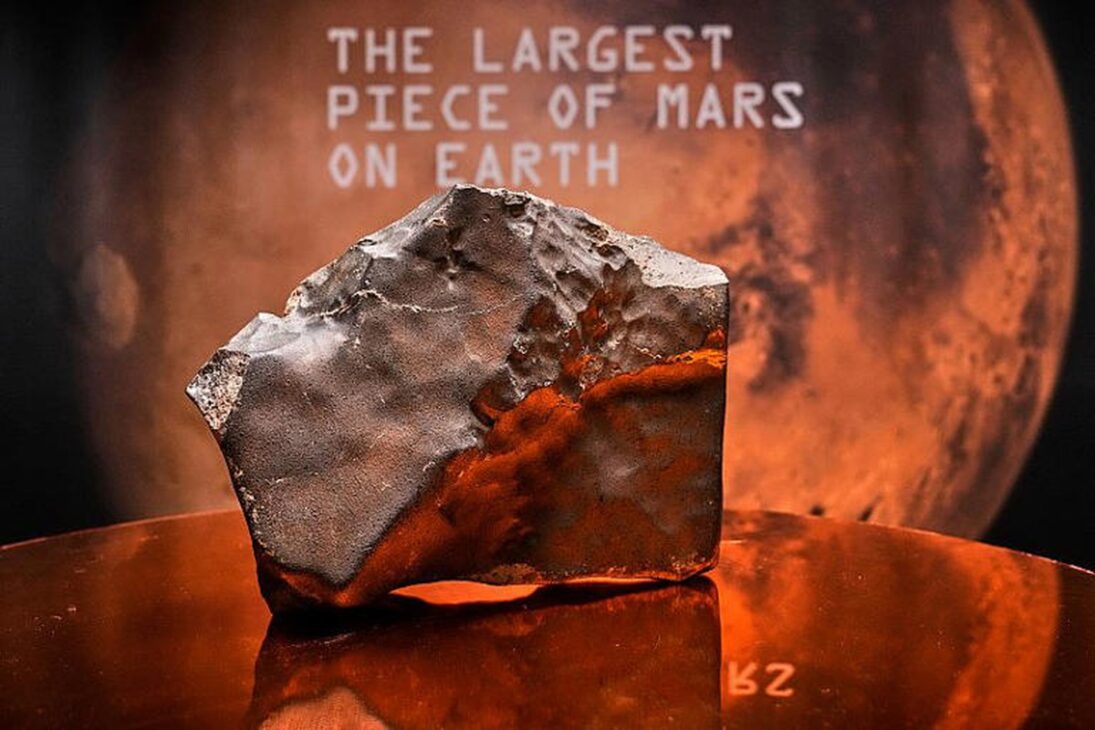
A meteorite hunter located the rock named NWA 16788 in November 2023, in the Sahara Desert, Niger. Since then, Sotheby’s official statement claims that the fragment is the largest piece of Mars ever identified on Earth. Therefore, Sotheby’s specialists and geology consultants explain that an asteroid launched the meteorite from the Martian surface millions of years ago. Thus, the fragment traveled an impressive 225 million kilometers to reach our planet.
Initially, the auction organizers estimated the value of the meteorite between $2 and $4 million. However, the bidding drove the price past $5.3 million, including fees and costs. Finally, the value set a record for meteorites sold at auction, according to Sotheby’s on July 17, 2024.
-
Bosch Unveils Revolutionary 2.3 kg Hub Motor for E-Bikes with 45 Nm Torque and 400 Watts Power, Eliminating Resistance Above 25 km/h in Historic Shift for German Manufacturer

-
Brazilian Engineer Develops Marine Bacteria from Ubatuba into a Mini Power Plant Generating 227 mW per Square Meter, Cleans Air by Capturing CO₂ and Releasing Oxygen
-
Trump Signs Orders to Develop Quantum Computer and Bolster U.S. Systems Against Encryption-Breaking Attacks

-
Breakthrough in Clean Energy: Scientists Develop Battery-Free Artificial Photosynthesis Using Only Sunlight to Generate Chemical Energy


Auction Highlights Rare Fossil And Promotes Scientific Advancement
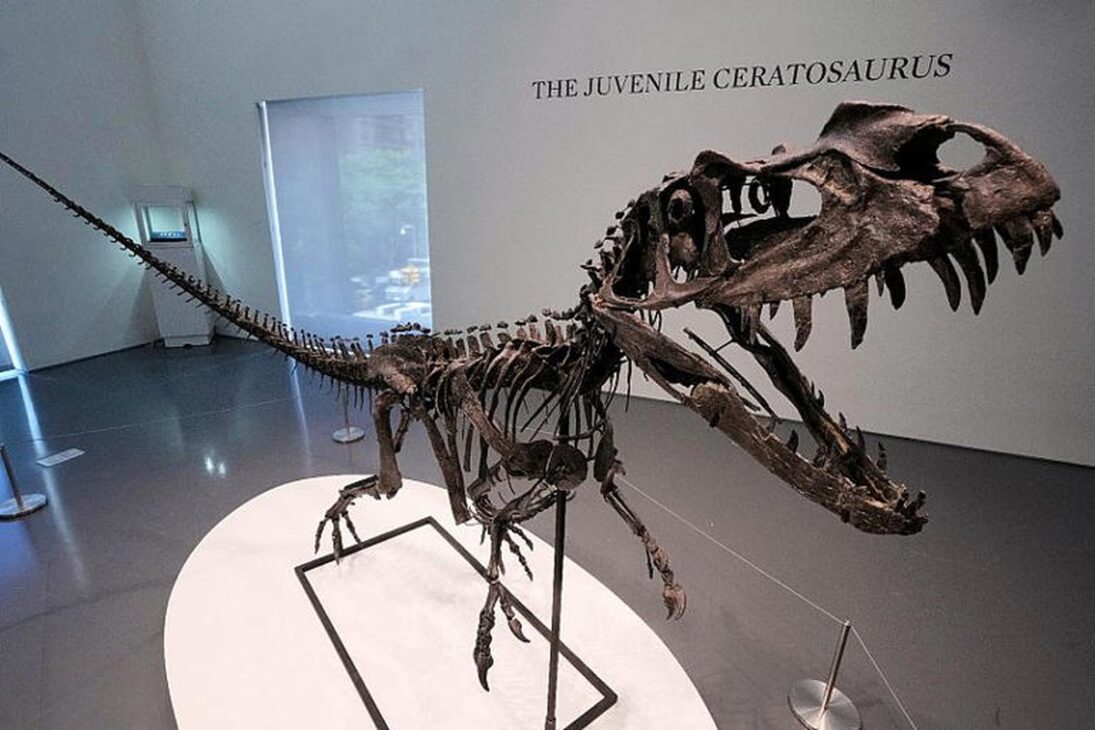
The meteorite garnered attention, but the juvenile skeleton of Ceratosaurus nasicornis provoked a heated bidding war. Indeed, six participants placed bids for six minutes, and the final value reached $30 million (€25.8 million). Therefore, Sotheby’s paleontologists report that the specimen is the only juvenile of the species ever cataloged. Additionally, the fossil dates back to the Jurassic period, with more than 150 million years of history.
Even with an initial expectation between $4 and $6 million, the skeleton surprised and exceeded this range. Thus, the buyer opted for anonymity but declared that they would lend the fossil to a scientific institution. In this way, researchers and the public will have access to the find for studies and exhibitions.
Economic, Scientific, And Cultural Impacts Of Sales
The auction marks a new financial phase for scientific relics and creates opportunities to expand scientific knowledge. Indeed, Sotheby’s editorial team, in July 2024, emphasizes that the sale of fossils and meteorites follows strict criteria of authenticity, transparency, and legal responsibility. In this way, these precautions preserve the integrity and relevance of the pieces.
On the other hand, experts note that such auctions increase the international visibility of science and stimulate new research in paleontology and astrogeology. The funds raised also favor preservation and encourage new discoveries.
In the case of the Martian meteorite, international interest drives research on the origins and evolution of the Solar System. Meanwhile, the Ceratosaurus fossil fosters debates on the history of life on Earth and highlights the importance of fossil records.
Million-Dollar Bidding And The International Auction Scene
The NWA 16788 meteorite emerged in Niger in November 2023. Sotheby’s sold the item for over $5.3 million in July 2024, setting a new record for space relics. Additionally, the juvenile Ceratosaurus nasicornis skeleton reached $30 million during the same event, after intense bidding among bidders from several countries.
Moreover, the record for fossils at auction still stands with the Stegosaurus “Apex”, sold in 2023 by Sotheby’s for $44.6 million (€38.4 million), according to official records. In other words, the figures prove the enormous interest in these scientific treasures.
Perspectives And Responsibility In The Market For Natural Relics
Sotheby’s and experts highlight the need for technical, environmental, and legal criteria in fossil and meteorite transactions. In this way, the organizers verify each transaction, ensure scientific documentation, and conduct independent analyses to guarantee legitimacy.
As a result, the growing interest in natural relics requires a balance between access to scientific knowledge and social-environmental responsibility. Furthermore, the debate about the role of auction houses in the protection of natural and scientific heritage gains strength with each relevant event.
What Does The Future Hold For The Market For Scientific Relics?
Economists, geologists, and paleontologists observe the market for rare natural objects in full expansion. The fascination for discovery and the value of knowledge drive this growth. Thus, efficient governance, transparency, and collaboration with scientific institutions ensure that historic sales bring lasting benefits to science and society.
Therefore, Sotheby’s auctions remain prominent. Still, one question persists: how to transform the value of these relics into scientific and cultural advancements for future generations? The debate remains open.





Be the first to react!