






 Portuguese
  Spanish


Understand how the new measures of the U.S. government intend to accelerate quantum computing and protect federal data with post-quantum cryptography.
A new technological strategy gained momentum in the United States on June 22, 2026. President Donald Trump signed two decrees aimed at the development of quantum computing and the protection of the federal government’s digital systems.
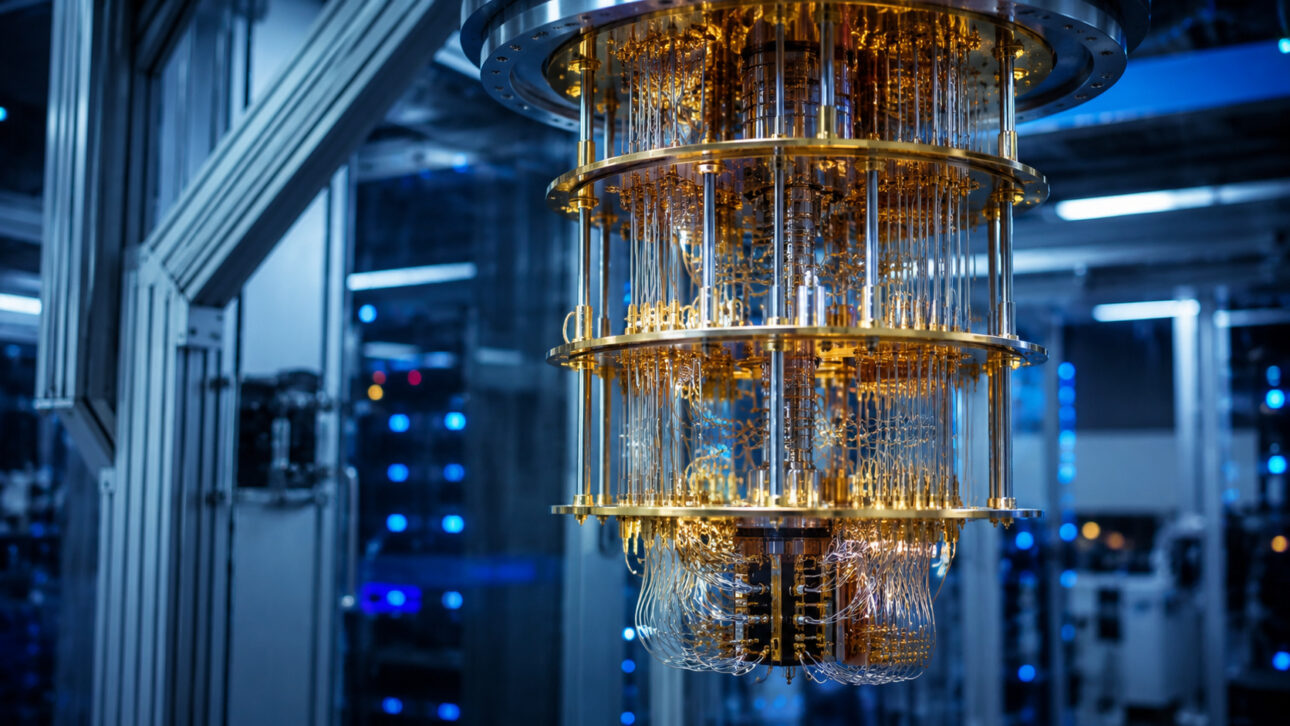
According to Reuters, one of the measures sets the goal of building an advanced quantum computer by 2028. The equipment should be primarily directed towards scientific research and solving problems considered complex for conventional machines.
The second decree focuses efforts on cybersecurity. The main computational systems of the government should migrate to post-quantum cryptography between 2030 and 2031.
-
Breakthrough in Clean Energy: Scientists Develop Battery-Free Artificial Photosynthesis Using Only Sunlight to Generate Chemical Energy

-
Revive Old Photos: Gemini’s Little-Known Feature Uses AI to Restore Damaged Images in Seconds with a Professional Six-Step Recovery Process

-
Young Brazilian Inventor Develops Microplastic Filter, Wins Scholarship to Study in China, and Implements Solution to Improve Water Quality in Southern Brazil

-
Brazilian Teen Develops Cost-Effective Natural Fungicide from Kitchen Herb, Wins Top Prize at World’s Largest Science Fair


Michael Kratsios, director of the White House Office of Science and Technology Policy, stated that the development of the machine could be achieved within the expected timeframe.
Learn about the decrees on quantum computing
The first measure signed by Trump seeks to accelerate the creation of a powerful quantum computer for scientific research. The initiative places this technology among the strategic priorities of the United States.
The second determination sets a schedule to replace the current digital protection mechanisms of the government. The change aims to prepare public systems for possible attacks carried out with more advanced quantum computers.
Federal agencies should also develop plans to implement quantum sensors and networks over the next five years. The strategy also includes actions aimed at the security of supply chains.
International cooperation appears as another relevant point of the decrees. The U.S. government intends to expand measures to protect intellectual property associated with quantum technology.
The combination of these initiatives brings together scientific research, digital security, and industrial protection. The goal is to reduce vulnerabilities before quantum computers have the capacity to break currently used encryptions.
Why Quantum Computing Concerns Governments
Quantum computers use principles of quantum physics to process information. Certain calculations can be performed much faster than on conventional supercomputers.
This capability creates opportunities for areas such as artificial intelligence, chemistry, and materials science. However, the same advancement could offer tools capable of deciphering digital security systems.
The technological race directly involves the United States and China. Both countries seek leadership positions in an area considered strategic for the economy, science, and cyber defense.
The U.S. Department of Commerce announced, in May 2026, investments valued at $2 billion. The investment involved nine quantum computing companies, along with a new partnership with IBM.
The decrees signed the following month expanded this policy. The strategy began to combine business investments, scientific development, and modernization of federal systems.

How Google Prepares for Quantum Threats
Google had already highlighted the risks related to the technology on March 25, 2026. The company announced the goal of migrating its systems to post-quantum cryptography by 2029.
One of the main dangers cited was the attack known as “store now, decrypt later”. In this model, criminals collect currently protected information and store the data to try to decrypt it in the future.
More advanced quantum computers could make this threat possible. The transition to new security mechanisms needs to start before these machines reach such capability.
The United States, United Kingdom, Germany, France, and the Netherlands have already published guidelines on quantum risks. China’s technological advancement also increases the urgency of protective measures.
The signing of the decrees puts the U.S. government in a race against time. The country aims to develop a quantum computer and simultaneously prevent the same technology from compromising strategic information.








Be the first to react!