Portuguese
  Spanish



A Small Lunar Meteorite Found In Africa Could Change What Is Known About The History Of The Moon. The Rock, With Rare Composition And Over Two Billion Years, Reveals That Lunar Volcanic Activity Lasted Much Longer Than Previously Thought.
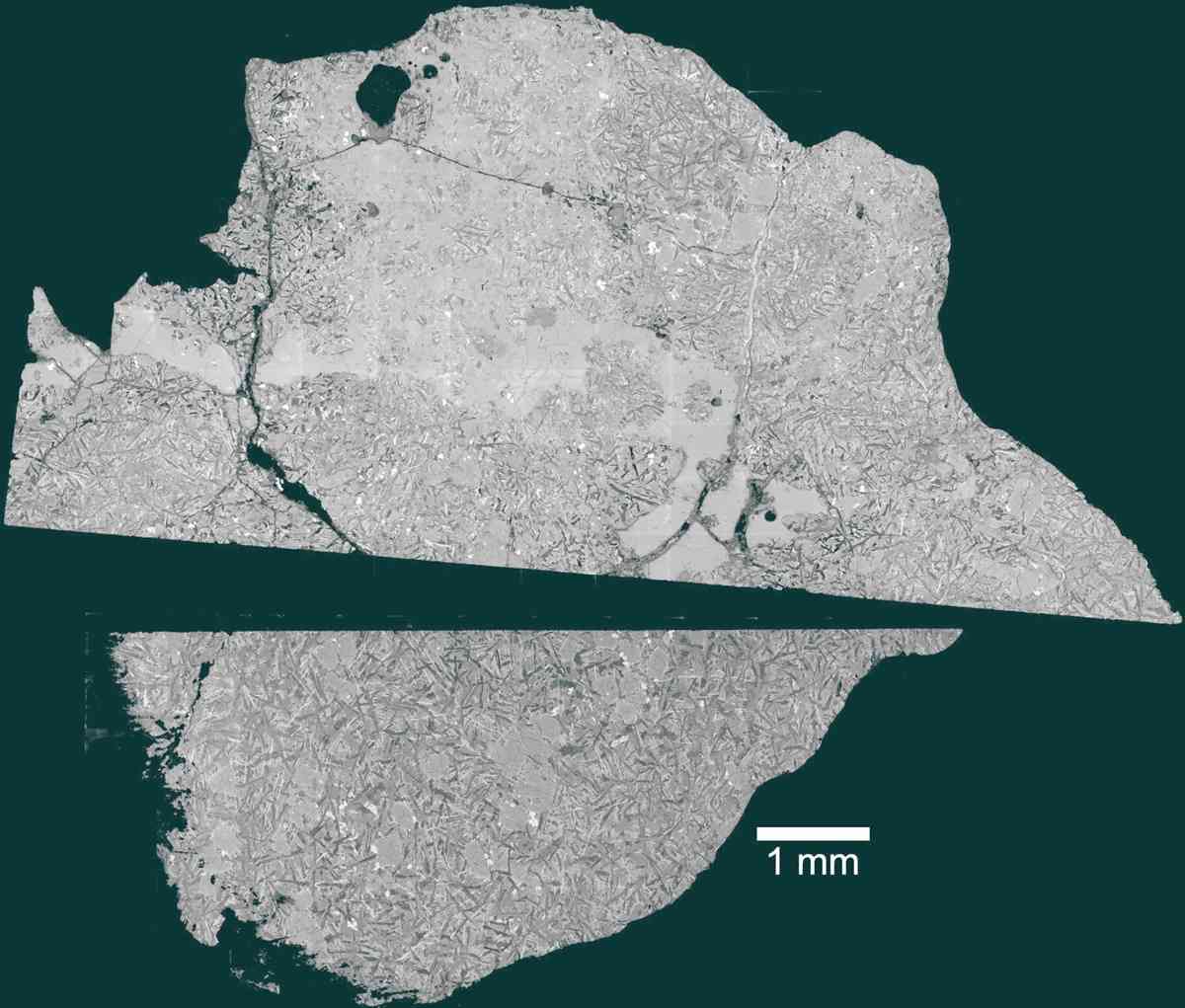
A small lunar meteorite found in the African desert may have changed what is known about the geological history of the Moon.
The meteorite NWA 16286, weighing only 311 grams, has such a unique composition that scientists believe it fills a gap of nearly one billion years in the record of lunar volcanic activity.
Unusual Discovery In The African Desert
The NWA 16286 was found in 2023, in some region of northwestern Africa.
-
Extreme Heat of 41.3°C Warps Roads in Germany, Causes Autobahn Asphalt to Crack, Injures People, and Forces Snowplows to Cool Down Highways

-
AI Security System in Brazil Aims to Cut False Alarms by Differentiating Pets from Intruders, Enhancing 24/7 Monitoring for Homes and Businesses

-
Archaeologists Discover 1,500-Year-Old Byzantine Mosaic with Greek Biblical Inscription in Israel, Uncover Ruins of 10 Buildings Near Kiryat Gat
-
Ohio Carpenter Finds 308-Gram Meteorite the Size of a Baseball After Dreaming of Its Location





With veins of melted glass and a basaltic structure rich in olivine, the rock grabs attention not only for its appearance but also for its history.
Before falling to Earth, it was ejected from the surface of the Moon, likely after being struck by an asteroid or meteorite.
The rock is one of only 31 lunar basalt samples officially identified on the planet. And now, it could become one of the most important.
Formation About 2.35 Billion Years Ago
Scientists from the University of Manchester conducted a detailed analysis of the rock, dating its origin to around 2.35 billion years ago.
This period is particularly relevant because there are few lunar samples from that time.
According to Dr. Joshua Snape from the University of Manchester, this places NWA 16286 in a unique position: it is the youngest basaltic lunar meteorite discovered on Earth to date.
Its formation occurred after a lava flow emerged from the depths of the Moon and solidified on the surface.
Rare Chemistry And Deep Origin
In addition to its age, the meteorite also stands out for its geochemical profile.
It contains moderate levels of titanium, high potassium content, and relatively large olivine crystals — characteristics that classify it as an olivine-rich basalt. But the most intriguing data lies in the isotopic composition of lead in the rock.
Scientists discovered that it came from an interior region of the Moon with an unusual ratio of uranium to lead.
This combination indicates that the lunar interior still maintained heat-generating processes long after previously thought, likely fueled by radiogenic elements.
One Billion Year Gap Filled
The age of the sample helps close a significant void between other discoveries.
According to Snape, it is younger than the samples from the Apollo, Luna, and Chang’e 6 missions, but older than those brought back by China’s Chang’e 5 mission. This shows that the Moon maintained its volcanic activity throughout that interval.
This data reinforces the idea that the lunar interior had continuous cycles of heat and geological activity for billions of years.
The discovery is an important piece in the puzzle of the Moon’s past.
New Clues For Future Missions
For Snape, the NWA 16286 meteorite is more than a rare sample. It serves as a natural guide for where to land future missions.
Since lunar meteorites can be ejected from any point on the Moon’s surface, they provide information that traditional missions cannot, as they are limited to landing sites.
The results of the study were presented at the Goldschmidt Conference 2025, held in Prague, Czech Republic.
The rock, which fortuitously fell to Earth, now helps unveil the deepest secrets of lunar geology.