





 Portuguese
  English
  Spanish
  6 min of reading
  3 comments


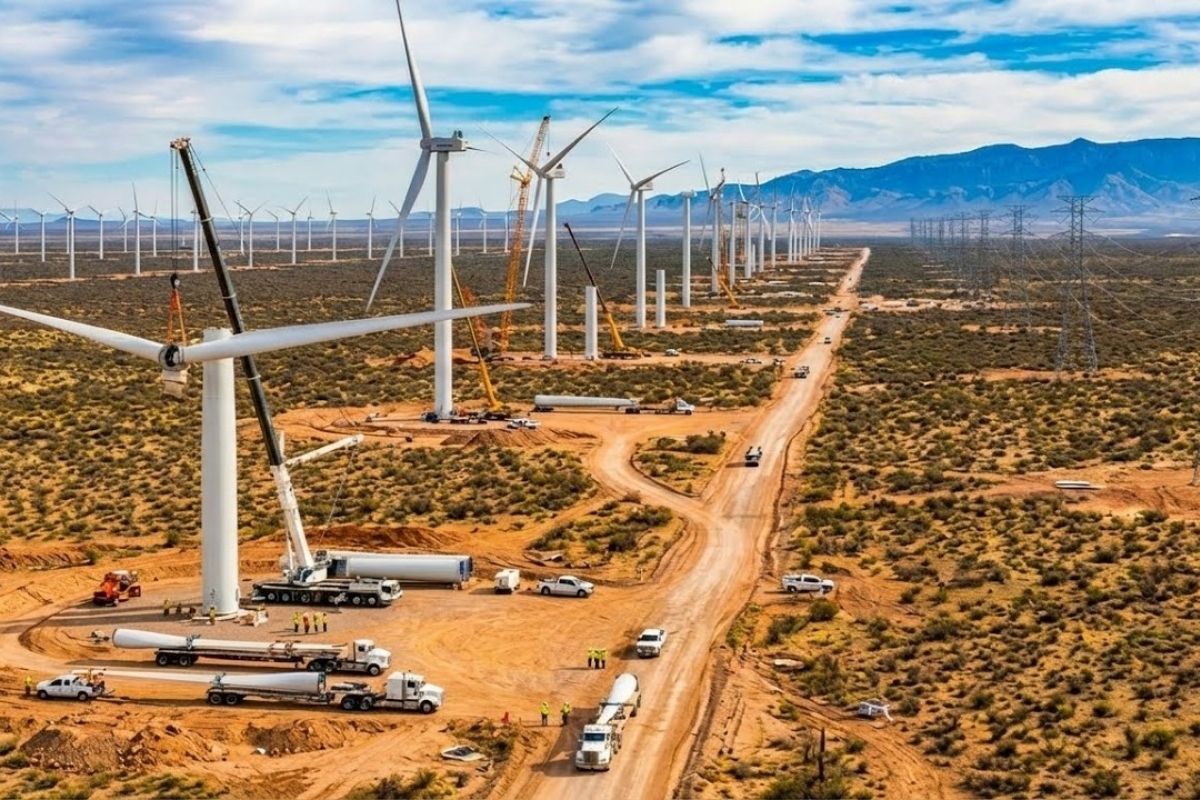


The SunZia Wind Project Mobilizes Thousands of Workers in the High Desert of New Mexico, Following Approval of the US$ 11 Billion Project, Featuring Over 900 Turbines and 885 Km of Transmission.
The SunZia wind project started to change the heart of the American Southwest with an industrial-scale mobilization in the high desert of New Mexico. Thousands of workers and heavy machinery spring into action following the approval of the US$ 11 billion project, which aims to install over 900 turbines.
Operating in three counties in New Mexico, the SunZia wind project combines the construction of a land-based wind farm, underground cables, a substation, and a transmission line of 885 kilometers, forming the the largest renewable energy infrastructure in the Western Hemisphere.
The Mobilization in the High Desert and the Opening of Access Roads

The SunZia wind project begins with the creation of physical access to a massive area. The first stage involves clearing thousands of hectares to build roads capable of accommodating oversized components. These are not makeshift trails, but pathways designed to sustain loads of hundreds of tons.
-
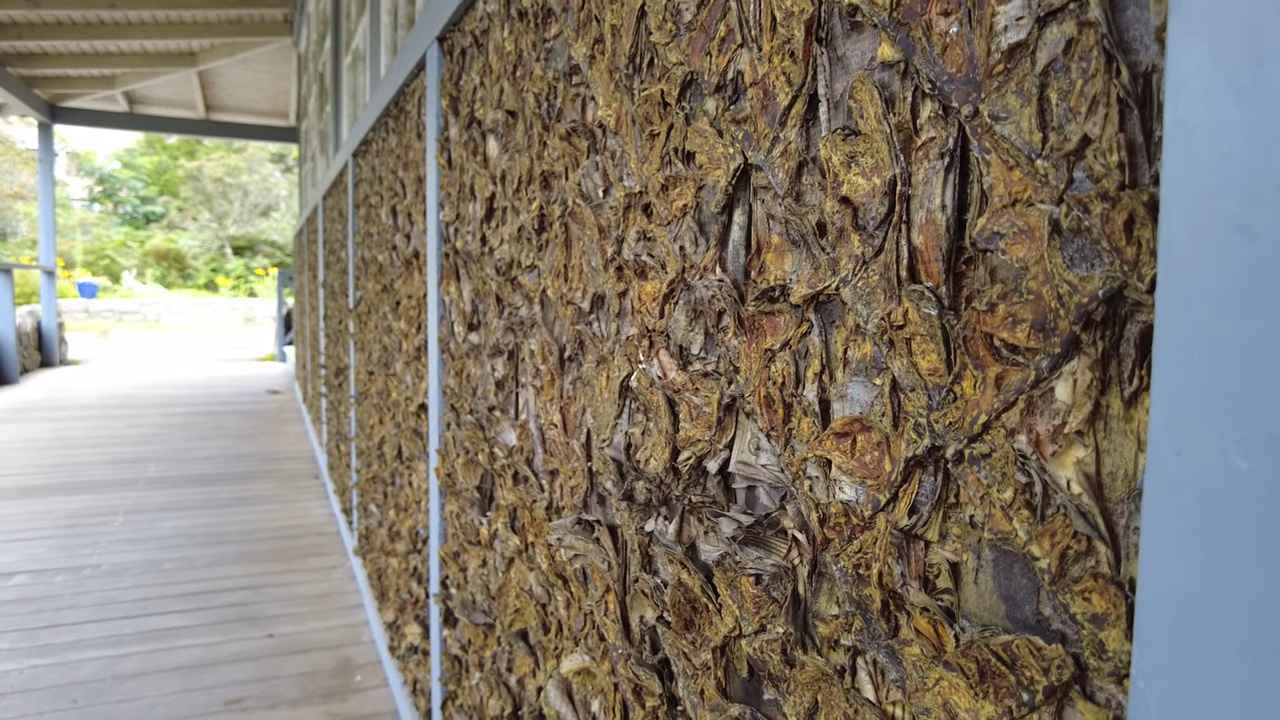
Engineer builds house with over 100,000 old newspapers and impresses with its durability; known as Paper House, the property has walls with 215 layers of varnished newspaper and furniture where it is still possible to read headlines from more than a century ago.

-
A couple swapped Rio Grande do Sul for a styrofoam house facing the sea in Santa Catarina and went viral by revealing why they opted for EPS walls reinforced with steel and concrete to live near the beach.

-
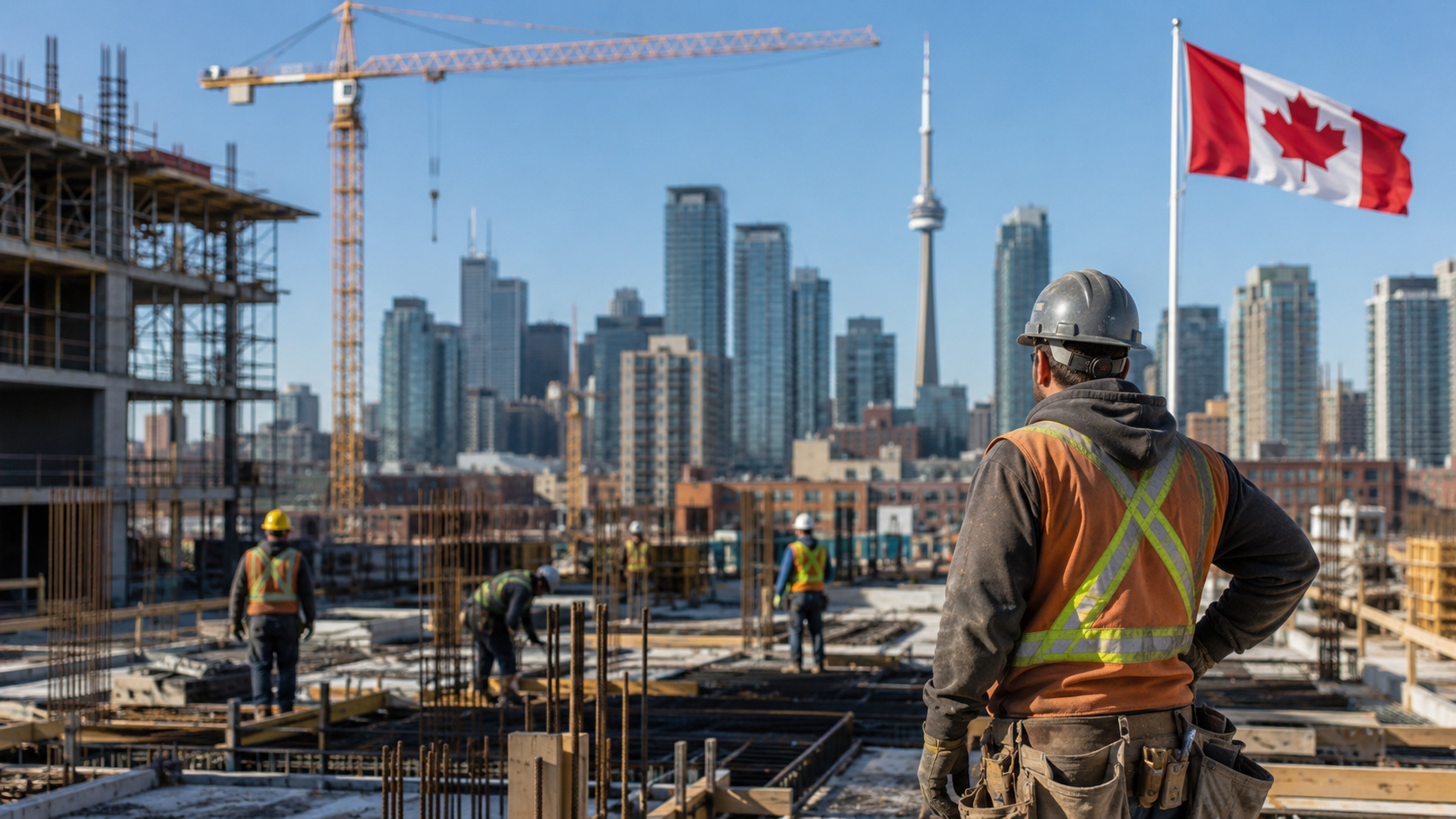
Labor shortage halts construction in Canada: the country rushes to build houses, bridges, and billion-dollar projects while mass retirements turn carpenters, electricians, welders, plumbers, and machine operators into highly sought-after professionals by companies.

-
A R$ 370 million tender for the construction of 4 prisons in SC is released from blockage after correction of flaws, unlocking works in Chapecó, Lages, and Xanxerê, and reigniting the debate on the urgency of the Santa Catarina penitentiary system.


Operators work in 12-hour shifts to level the terrain precisely and ensure proper compaction, preventing the soil from yielding under the weight of the cranes.
Local stone is crushed and reused to reinforce the roads, while dump trucks spread a base of rubble and gravel to stabilize the route and reduce dust.
Each segment is checked with the extreme length of the turbine blades to be transported in mind.
Giant Foundations, Deep Excavation, and the Choreography of Concrete
With the roads ready, the focus of the SunZia wind project shifts to the foundations, considered the anchoring point for the giant wind turbines. Excavators open circular cavities, removing tons of earth in hard terrain, requiring high-powered hydraulics to break rock.
Each excavation is treated as a precision operation, creating a space wide enough to accommodate the entire internal structure.
Under the New Mexico sun, hydration and safety become daily priorities. First, a layer of clay is applied to level the base. Then, tons of rebar arrive.
Ironworkers weave a dense mesh of steel, manually interconnecting thousands of crossings. The rebar is organized in a radial pattern to disperse wind loads. Next, the rebar cage is positioned as a critical connection between the tower and the ground. Any misalignment jeopardizes the turbine installation.
On concrete day, logistics take center stage: trucks from the batching plant maintain a continuous flow. Hundreds of cubic meters of concrete fill the pit, and crews vibrate the mix to eliminate air pockets, ensuring a monolithic block.
The surface is finished by hand for a perfect seal. The foundation cures covered, gains strength, and is then backfilled, leaving only the pedestal exposed.
Transport and Assembly of Towers: Cranes, Sections Weighing Almost 100 Tons, and Millimetric Precision
In the maneuver yard, the SunZia wind project assembles components for over 900 turbines. The transport requires specialized trailers and escorts, coordinating thousands of oversized loads.
Tower sections weighing nearly 100 tons move slowly to the installation points.
On-site, the main crane is assembled to lift hundreds of tons to great heights. High-strength slings are secured, each piece is checked, and the base section is hoisted. Ground crews guide the steel cylinder to align with the foundation bolts.
Hydraulic wrenches tighten to exact specifications. Section by section, the tower grows, while internal ladders and platforms are connected, and technicians verify the integrity of the flanges between modules.
Nacelle and Rotor: The Heaviest Lift and the Decisive Moment for the Blades
After the tower, the SunZia wind project advances to the installation of the assembly that concentrates power and control.
The nacelle, with the generator and gearbox, undergoes inspection before lifting and requires calm winds due to the delicate and heavy lift.
Up high, teams secure the yaw system that allows the turbine to orient itself into the wind.
On the ground, assembly of the rotor begins. Three blades are attached to the central hub, each bolted to the pitch bearing, allowing angle adjustment for efficiency.
The blades, made with advanced fiberglass composites, are larger than a football field.
The lifting of the complete rotor becomes the most visual moment of the project. A sudden gust can be catastrophic. With precision, the hub meets the main shaft, is bolted on, and the turbine silhouette is complete.
Underground Cables, Substation, and the Path of Energy to the Grid
In the SunZia wind project, the turbine is not the end but the beginning. Miles of underground collection cables are buried to interconnect the turbines and transmit energy to the central system.
High-strength insulated cables carry the generation from each unit. Splicers make high-voltage connections and seal against moisture.
The lines are buried and protected before trench closures.
All routes converge to the substation, described as the central nervous system of the park. Giant transformers elevate the voltage for long-distance transmission.
Electricians install distribution bars and switching equipment that control the flow of gigawatts.
Security systems are tested to protect the grid against surges, preparing for the energy delivery stage.
885 Km Transmission Line: The Second Mega-Carrier in the Desert
To deliver energy to Arizona and California, the SunZia wind project includes the SunZia transmission line of 885 kilometers, a project that alone requires massive effort.
Thousands of tower foundations are drilled and poured along the desert. In rough terrain, helicopters help deliver steel where trucks cannot reach.
Linemen assemble lattice towers in parts, working at high altitudes and under various conditions. These structures have been described as responsible for carrying 3.5 gigawatts of high-voltage direct current.
The installation of the cables involves aerial precision with helicopters, while ground tensioners keep the conductor taut to avoid contact with the ground.
The lines cross canyons, rivers, and mountains. Environmental measures are incorporated into the process, with bypasses installed for wildlife protection.
Testing, Digital Control, and the Start of Large-Scale Generation
In the final stretch of the SunZia wind project, teams complete high-voltage connections rising to the generator.
Software engineers upload control algorithms to operate the machine. Gears, pumps, and fans undergo testing.
Safety elevators are inspected to allow maintenance. A first slow rotation confirms that the transmission is free and ready for speed.
A operations and maintenance building is erected for the site team.
The control room continuously monitors the turbines, while warehouses receive parts to keep the fleet running for decades.
Service vehicles are prepared for daily rounds. Restoration teams clean the area and replant native grasses to stabilize the soil.
With the substation energized, the order comes to initiate the first circuit. The blades tilt into the wind, rotors accelerate and convert kinetic energy into rotation.
The gearbox multiplies torque, the generator spins up, and electrons start to flow. More than 900 turbines come to life, one by one, feeding the transmission line westward.
Regional Impact, Energy Scale, and the Legacy of the Mega-Project
The SunZia wind project is described as a landmark capable of changing the energy landscape of the West, bringing new economic life to rural counties in New Mexico.
The operation is presented as the result of thousands of workers, millions of hours, and continuous dedication.
The combination of turbines, substation, and transmission forms a bridge between wind-rich deserts and cities with high demand.
In the end, the SunZia wind project is portrayed as more than just a power plant: a symbol of a decarbonized future, with energy that replaces emissions equivalent to millions of tons of carbon, while the blades continue to turn day and night.
The SunZia project in the southwestern U.S. is the largest renewable energy infrastructure project in the Western Hemisphere, with total completion expected in 2026.
If you could choose, what impresses you more about the SunZia wind project: the more than 900 turbines or the 885 km transmission line crossing the desert?







Para mim todo o projeto me impressiona pela mega operação.
Amazing clean green energy!
Cost per windmill and expected life and average output