






 Portuguese
  Spanish


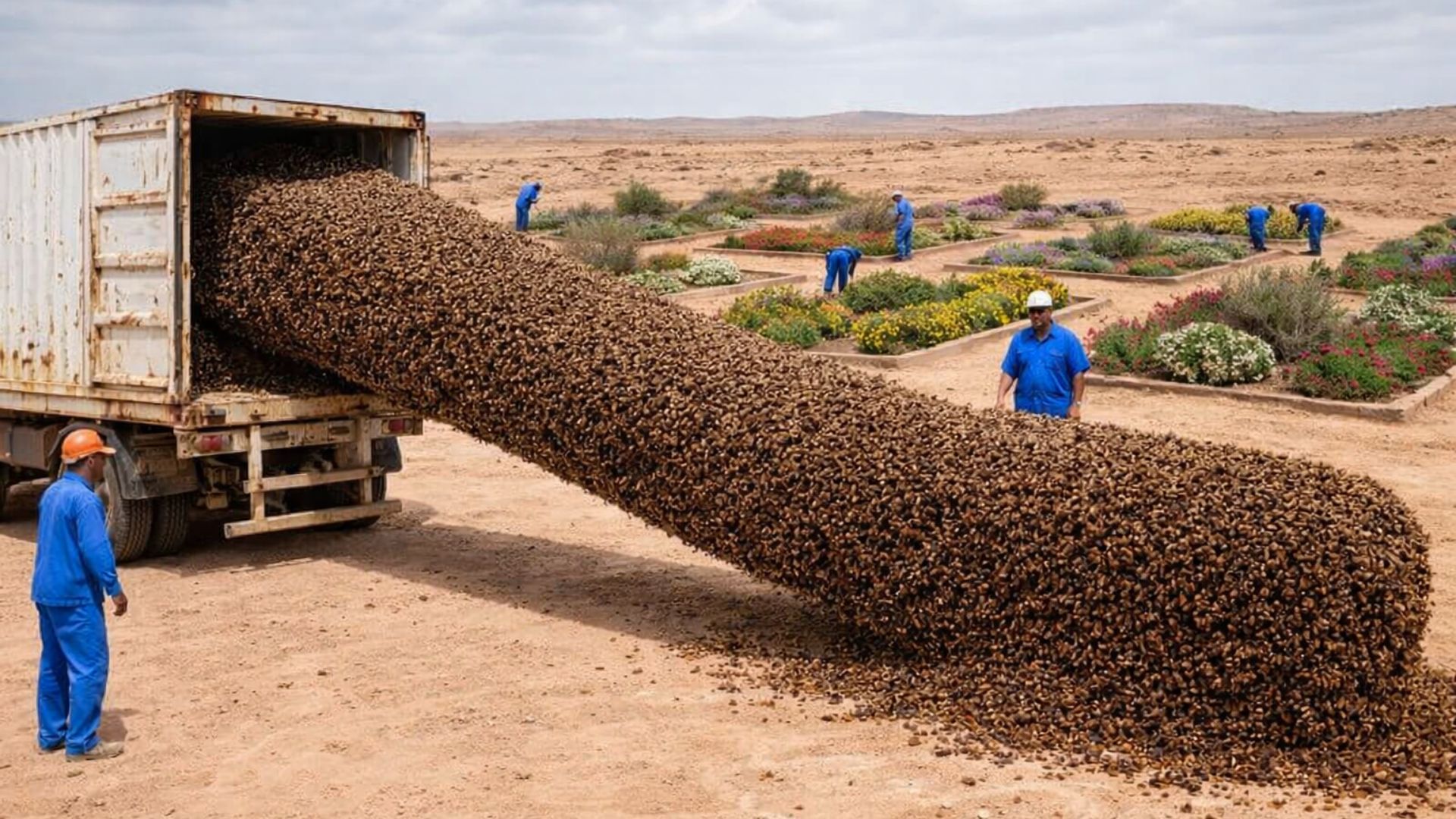


Extreme Heat, Melted Hives, and Billions of Dead Trees Revealed the Limits of Biology in the Sahara, Until an Unexpected Solution, Based on Simple Geometry, Began to Retain Water, Cool the Soil, and Halt the Advance of the Desert.
The Sahara Desert has established itself as one of the most hostile environments on the planet, with surface temperatures on the sand reaching 70 °C, a level of heat capable of making most known forms of life unviable.
In this extreme scenario, successive human attempts to halt the advance of the desert have failed. Billions of trees died shortly after being planted, while hives installed as part of ecological projects could not withstand the heat and ended up melting.
Strategies relying solely on technology or biological solutions have shown clear limits in the face of the scale of the problem.
-
Why Yellow is the Safety Color for Heavy Machinery: Origins and Benefits Since 1931

-
U.S. Channel Highlights 20 Brazilian Innovations Leading Latin America: From Açaí to Modular Homes and Biogas

-
Dog Goes Viral for Buying Its Own Food and Carrying the Bag Home in Its Mouth

-
Unfinished 150-Year-Old Church in Brazil’s Bahia Stands Without a Roof After Railway Shifted Alagoinhas’ Center


The turning point began when researchers and local communities stopped confronting nature directly and started seeking another logic of action.
Instead of insisting on brute force or high technology, the bet became using the geometry of the soil to retain water and slow down desertification.
The Bet on Bees as Ecological Infrastructure
For years, scientists and environmentalists have placed hopes on the introduction of bees as the initial driver of environmental recovery on the southern edge of the Sahara.
The logic seemed consistent. Bees are responsible for pollinating about one-third of the food consumed in the world and sustain productive chains valued at trillions of dollars.

In other arid regions, such as parts of the Nevada desert in the United States and the Arava Valley in Israel, the presence of these insects helped connect isolated patches of vegetation. The result was stable agricultural environments where exposed soil and dust once predominated.
The expectation was to replicate this model in Africa. Entire colonies, with queens selected for genetic resistance, were taken to areas on the edge of the Sahara.
The plan anticipated that the bees would function as a biological spark, accelerating pollination, increasing vegetative cover, and forming green corridors capable of halting the advance of sand.
When the Heat of the Sahara Imposes a Physical Limit
The Sahara, however, proved to be an adversary of another order. As soon as the colonies were installed, biological theory came into direct conflict with the physical reality of the desert.
The problem was not the absence of flowers or the distance between green areas, but something more basic: thermodynamics.
A hive needs to maintain an internal temperature close to 35 °C to function. When the air exceeds 40 °C, the bees enter a state of emergency, abandoning nectar collection and seeking only water to try to cool the inside of the hive.
In the Sahara, this effort proved insufficient. The sand easily exceeds 60 °C and can reach 70 °C at certain times.
Under these conditions, the wax of the comb loses rigidity, the honey liquefies, and the internal structure of the hive begins to give way. Combs collapse, larvae are suffocated, and the bees’ own home turns into a thermal trap.
Even species accustomed to African heat could not survive when the hive began to melt. It became evident that bees could not be the first line of defense. They depend on a minimally functional ecosystem to act: they do not make it rain, do not break vitrified soil, and do not create fertile land on their own.
Hardened Soil as the Root of Desertification
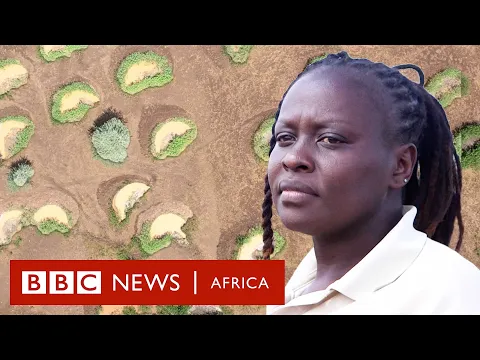
The environmental crisis in the Sahel, the strip that separates the Sahara from the savanna, is not limited to the absence of rain. Seasonal storms dump millions of liters of water every year over the region. The problem begins when this water reaches the soil.
Decades of intense sunshine, combined with constant trampling by livestock, have turned the land into a hard and impermeable crust, similar to concrete. When rain falls, it does not infiltrate. It quickly runs off the surface, forming torrents that wash away the last traces of fertile soil and carry them to rivers and oceans.
In this process, water, which should generate life, begins to act as a force of destruction. Young trees planted in these conditions face a double blockade: roots that cannot penetrate the hardened soil and surface moisture that evaporates in a matter of hours under the intense sun.
Planting billions of trees without treating the ground has proven ineffective. The seedlings died top-down, burned by the heat, and bottom-up, unable to access water and nutrients.
The Great Green Wall and the Change of Strategy
It was in this context that the Great Green Wall gained traction, a continental project that spans over 20 countries, from Senegal to Ethiopia. Despite its name, the initiative does not consist of a continuous barrier of trees. The focus is on a network of interventions aimed at restoring hydrology and soil functionality.
The central idea is straightforward: capture every drop of rain exactly where it falls. Instead of large dams or high-tech works, local communities have started employing basic engineering solutions, using simple tools and the soil itself as the main resource.
How Half-Moon Pits Work
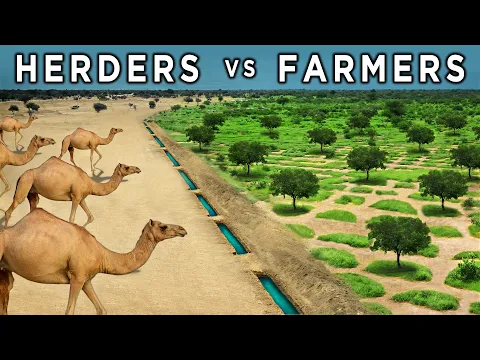
The technique that stood out in this process is the half-moon pit. It is a semicircular excavation, with the opening facing against the slope of the terrain. The removed earth is accumulated at the curved edge, forming a small containment barrier.
When rain descends the slope, the geometry of the half-moon slows the flow and prevents the water from gaining enough speed to cause erosion.
The captured water accumulates, exerts pressure on the hardened crust, and breaks the surface tension of the soil. From there, it begins to infiltrate underground, where the sun cannot evaporate it quickly.
Inside these cavities, the temperature can be up to 15 °C lower than in the exposed sand surrounding them. Without pipes, pumps, or electricity, an underground reservoir forms that returns moisture to the soil.
The Gradual Return of Vegetation in the Sahel
With the water retained, farmers sow resilient native grasses, whose roots penetrate the softened soil and increase porosity. Within a few years, previously barren areas begin to exhibit visible green patches.
The shade reduces soil temperature, moisture is retained longer, and insects return. With them, birds begin to circulate again, bringing seeds from other plants.
Native trees, such as acacias, sprout from seeds that have remained dormant in the soil for years.
As these green patches connect, the soil stabilizes, and water begins to be absorbed instead of running off. Where there was once extreme heat and silence, pastures, agriculture, and conditions for the permanence of local communities emerge.
The Sahara has shown that it resisted biology and technology in isolation, but began to yield when the strategy started to respect its basic physics.
By transforming the relationship with the soil and water, a simple design in the sand began to do what millions of trees and hives could not accomplish alone. What else might be being overlooked today for seeming too simple to tackle gigantic problems?




Se fomos feito a imagem e semelhança de Deus, somos filhos dele, então somos semi deuses e podemos mudar o que foi criado, de uma forma ou outra.
Corretíssima a sua observação!
Q maravilha, técnicas antigas provando que dá certo
TRUMP está certíssimo
That his followers are a bunch of morons? We know.