






 Portuguese
  Spanish
  3 min of reading
  2 comments


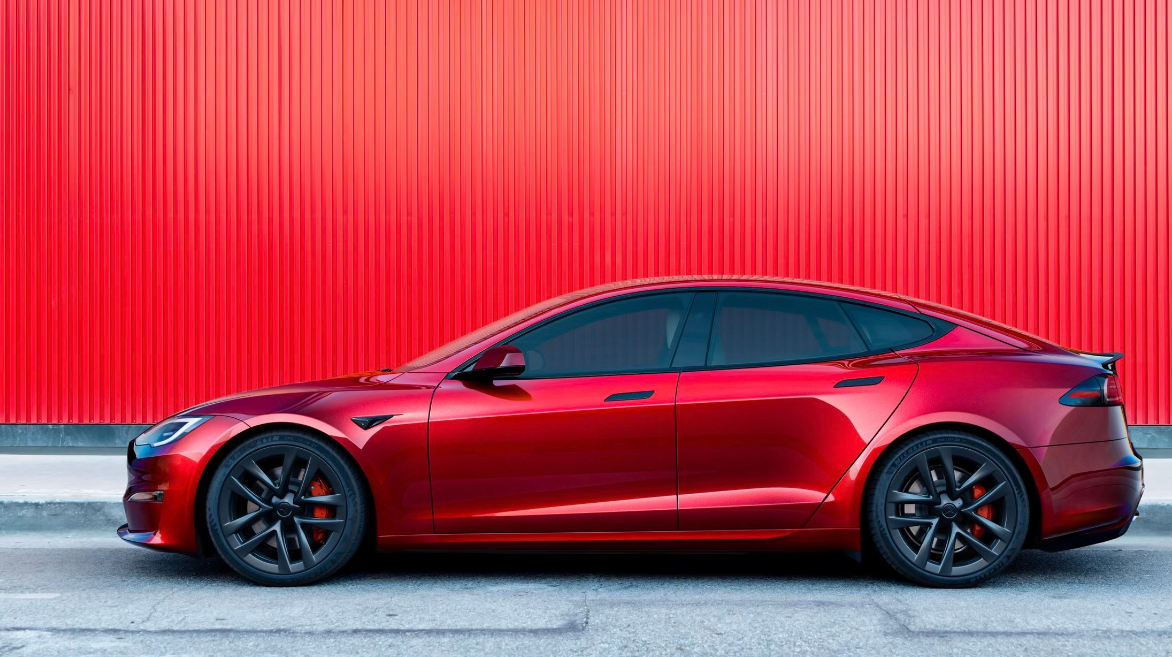


A Wealthy Oil Country Surprises By Adopting Electric Cars As National Preference, With 90% Of Vehicles Sold Being Powered By Electricity.
In a world where sustainable mobility is gaining more prominence, a Nordic country, rich in oil, is standing out by transforming its automotive fleet.
With nearly 90% of new car sales in 2024 being fully electric models, the nation shows how consistent policies and tax incentives can drive a historic change.
Norway, once again, has demonstrated its global leadership in the transition to sustainable mobility.
-
Two new 300cc models from QJ Motor are expected to arrive in Brazil as SBM to target the CB 300F and shake up the low-displacement market, with more power and liquid cooling than Honda.

-
Camaro may reappear in 2027, but not as you remember: Chevrolet prepares the return of the icon with four doors, manual transmission, and an extreme performance version to face the new era of sports cars.

-
Is the BYD Song Pro worth it? The Anderson Sincero channel says it doesn’t exceed R$ 140,000, and the price dropped by R$ 47,000, reinforcing the depreciation of the plug-in hybrid in the Fipe table.
-
Caoa Changan CS75 arrives for R$ 199,990 with 4.77 m in length, a trunk of up to 1,620 liters, 8-speed Aisin transmission, 180 hp, 37.2 inches in screens, and Zero Gravity seat with massage.


Data released by the Norwegian Road Federation (OFV) confirms that 88.9% of new cars sold in 2024 in the country were fully electric. This number brings the Nordic country closer to achieving the goal of eliminating internal combustion vehicles from the market.
While other European Union countries face significant challenges to meet electric vehicle sales targets, Norway is on the verge of becoming the first country in the world to operate exclusively with zero-emission cars.
The head of the Norwegian Road Federation, Christina Bu, predicts that the country will practically eliminate gasoline and diesel-powered cars in the near future.
Oil Is Abundant – Is Fuel Price High?
Interestingly, despite being one of the largest exporters of oil in the world, the price of gasoline there is high, often exceeding the European average, as part of a strategy to discourage the use of fossil fuels.
Over the past few years, the average price of gasoline in Norway has fluctuated between €2.3 and €2.5 per liter, among the highest in Europe.
For comparison, in Germany, the average price hovers around €1.8 per liter, while in France it’s about €1.9.
This significant difference is a direct result of taxes that penalize the consumption of fossil fuels, redirecting resources to initiatives that favor electric mobility.
Tesla Dominates, But Other Brands Shine Too
Tesla has solidified its position as the best-selling brand in Norway in 2024, with 24,259 units registered.
The Tesla Model Y led the overall ranking, with an impressive 16,858 units sold, followed by the Tesla Model 3, with 7,264 units.

Other popular models also stood out, such as the Volvo EX30 (7,229 units), the Volkswagen ID.4 (7,222 units), and the Toyota bZ4X (6,007 units).
Among the ten best-selling cars, nine were 100% electric. The only exception was the Toyota Yaris, a hybrid that ranked 9th due to its very low fuel consumption.
Success Strategies
The surge in electric car sales in Norway is the result of consistent public policies.
The country has imposed high taxes on combustion vehicles while offering generous tax incentives for electric models.
Benefits such as exemption from import taxes and VAT have made electric cars more accessible to the population.
Paradoxically, these policies have been funded by the profits generated by the oil and gas industry. In 2023, Norway produced 2 million barrels of crude oil per day, ranking as the 12th largest producer worldwide.
Oil, natural gas, and derivatives exports accounted for 62% of the total value exported by the country in 2023, reaching approximately 1.2 trillion Norwegian crowns, about US$ 111.6 billion.
Electric Fleet Surpasses Gasoline
Another significant milestone was achieved in September 2024, when the electric vehicle fleet surpassed that of gasoline cars.
According to the OFV, of the 2.8 million automobiles registered in the country, 754,303 were electric, while 753,905 were gasoline-powered.
Although diesel cars still make up the majority, with 999,715 registered units, their sales are declining rapidly. The Norwegian market reflects a consistent and accelerated shift toward cleaner mobility.
Political Continuity
The head of the OFV, Christina Bu, emphasized that one of the key factors for Norway’s success was the continuity of public policies aimed at electric mobility.
Regardless of the party in power, the country has maintained consistent efforts to encourage the adoption of electric vehicles.
“In other countries, we see incentives being introduced and then quickly withdrawn. In Norway, we avoid this kind of instability, and that has been crucial to the progress we’ve made,” Bu stated.


Isso porque as baterias de estado sólido ainda não entraram pesado no mercado. Com baterias de estado sólido, só não terá carro elétrico quem gosta de poluir o ambiente…
Assim é fácil: exportam poluição e dão uma de ecologicamente corretos!