






 Portuguese
  Spanish


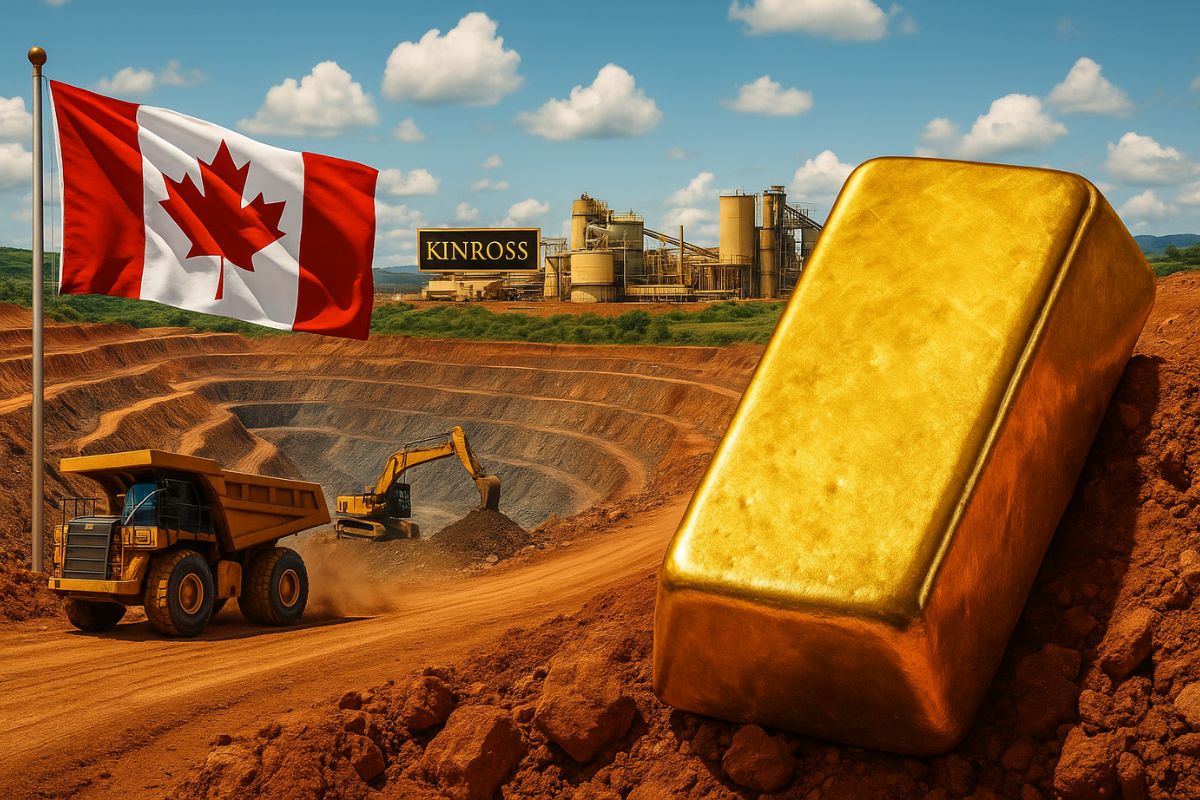


Still A Powerhouse in Gold Production in Brazil, Country Attracts Canadian Miners. Even With a Smaller Share in the Global Scenario, Brazil Remains Relevant and Receives Strong Presence of Canadian Companies in the Sector
In the 16th century, Brazil accounted for half of the world’s gold production. Today, that share is about 2%, but the country continues to be a reference in the sector. In 2023, it was the 13th largest producer in the world, with 70 tons extracted, according to industry data.
Despite the relative decline in global share, gold production in Brazil remains strategic — and increasingly dominated by foreign miners, especially from Canada, which currently accounts for about 50% of the gold extracted in the country.
The Canadian Dominance in Gold Mining in Brazil
Among the Canadian mining companies operating in Brazil, Kinross Gold Corporation leads by a wide margin. In 2023, the company extracted 17 tons, equivalent to almost a quarter of the total national production, concentrated mainly in the Paracatu (MG) mine — the largest in the country.
-
Brazil’s 2026 Tax Refund: Record 9.58 Million Filers in Largest Payout Ever, But a Key Detail on Priority Recipients Draws Nationwide Attention

-
Itaú Alters Hybrid Work Model, Increasing Office Days from 2028, Prompting Employees to Adjust to New Routine
-
Facing Labor Shortage, Japan Plans to Invest $34 Million to Attract Foreign Workers in Construction, Healthcare, Industry, and Commerce

-
Brazilian City Makes Remarkable Leap, Becomes 4th Wealthiest in the Country with GDP of R$ 134.1 Billion




In addition to Kinross, companies such as Equinox Gold, Aura Minerals, Jaguar Mining, Dundee Precious Metals, and Pan American Silver (which, despite its name, earns 80% of its revenue from gold) operate in Brazilian territory. This massive presence is not by chance: Canada is one of the largest global hubs for mining finance, with the Toronto Stock Exchange (TSX) hosting 40% of the world’s publicly traded mining companies.
Why Brazil Attracts So Many Canadian Miners
Until 1995, Brazilian legislation prohibited mining by foreign capital companies. With the opening of the sector, Canadian miners took advantage of an investment void in gold extraction, as national companies were more focused on iron ore and other metals.
The timing also favored this expansion: while gold production in Brazil lacked capital, Canada already had a mature financing ecosystem for mining — a legacy of its own history as a mining powerhouse since the 19th century. Today, over 1,300 Canadian mining companies operate outside their territory, with Latin America as a preferred destination.
The Role of Vale and the Competition for the Metal
Vale, the largest miner in Brazil, ranks second in the national gold production ranking, with 19% of the total. The leadership goes to Kinross, followed by AngloGold Ashanti (16%) and Equinox Gold (11%).
In Vale’s case, gold is a byproduct of copper extraction in the Salobo and Sossego mines in Pará. In 2023, the residual gold from these operations alone totaled 13 tons, equivalent to more than US$ 1 billion at the average price for the year. Part of this production is already committed under fixed-price supply contracts, such as the agreement made in 2013 with the Canadian Wheaton Precious Metals, which guarantees it 75% of the gold production from the Salobo mine.
The Impact of Record Prices on the Sector
The price of gold reached historic levels, with the troy ounce (31.1 g) surpassing US$ 3,500 in 2024 — well above the breakeven point of US$ 1,000 cited by experts. This surge boosted revenues for miners: Kinross reported a 38% increase in one year, while Equinox saw a 75% rise.
With this appreciation, operations in Brazil have become even more lucrative for Canadian companies, consolidating their presence in the market and reinforcing the importance of the country as a relevant producer.
Do you believe that gold production in Brazil should have a larger share of national companies, or is foreign capital essential to keep the sector competitive? Share your opinion in the comments.








E muito fácil levar vantagens e depois deixar a sujeira para povo limpar…quando se trata de extração de ouro , degradação é muito grande . O solo não se recupera como muitos dizem que sim.
Ao menos 50% da producao por empresa nacionais
O Brasil sendo Brasil dá tudo de mãos beijadas pro estrangeiro é só recebem migalhas é ainda nossos governantes batem palmas