






 Portuguese
  Spanish


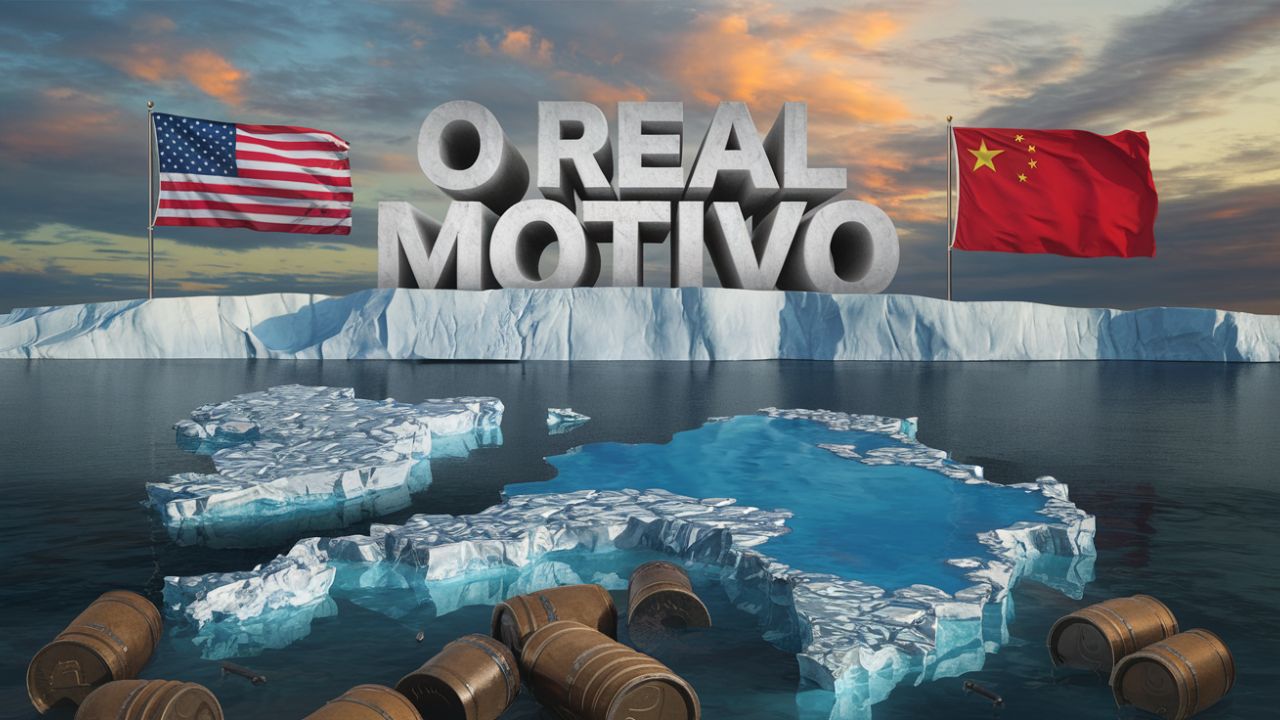


With 31.4 billion barrels of oil and vast reserves of critical minerals essential for the energy transition, Greenland has become the center of a geopolitical dispute that attracted even Donald Trump.
When Donald Trump expressed interest in buying Greenland, many reacted with disbelief. However, behind this unusual proposal lies a strategic backdrop: critical minerals, oil, and gas hidden beneath the ice. Greenland, an autonomous territory of Denmark, stands out as a key player in geopolitical disputes and the global energy transition.
The Current Scenario in Greenland
Since 2009, Greenland has had autonomy in various areas, but still depends on the Danish kingdom for defense and foreign policy matters. Its control over underground resources makes the territory highly strategic.
With accelerated melting due to global warming, Greenland has been revealing its natural wealth. Studies indicate that about 3.9 trillion tons of ice were lost between 1992 and 2018, exposing previously inaccessible reserves of critical minerals, oil, and gas.
-
Brazil’s 2026 Tax Refund: Record 9.58 Million Filers in Largest Payout Ever, But a Key Detail on Priority Recipients Draws Nationwide Attention

-
Itaú Alters Hybrid Work Model, Increasing Office Days from 2028, Prompting Employees to Adjust to New Routine
-
Facing Labor Shortage, Japan Plans to Invest $34 Million to Attract Foreign Workers in Construction, Healthcare, Industry, and Commerce

-
Brazilian City Makes Remarkable Leap, Becomes 4th Wealthiest in the Country with GDP of R$ 134.1 Billion




Energy Reserves: Oil and Gas Under the Ice
The Geological Survey of Denmark estimates that the west coast of Greenland contains about 18 billion barrels of oil. U.S. data suggests even more impressive numbers: 31.4 billion barrels of oil and 148 trillion cubic feet of natural gas.
Despite the enormous energy potential, Greenland decided in 2021 to halt the issuance of new licenses for oil and gas exploration. This decision reflects the pursuit of a more sustainable future and environmental preservation.
Critical Minerals: Key to the Energy Transition
The island hosts a vast amount of critical minerals, such as lithium, nickel, cobalt, graphite, and rare earth metals. These resources are essential for clean energy technologies, such as batteries, wind turbines, and electric vehicles.
Greenland is strategic for diversifying the supply of critical minerals and reducing dependence on China, which dominates the production and processing of many of these materials. This geopolitical context reinforces U.S. interest in establishing greater influence in the region.
Geopolitical and Strategic Interests
Located in the Arctic Circle, Greenland is a strategic point between the U.S., Europe, and Russia. Besides natural resources, the geographic position offers military and commercial advantages.
China has already shown interest in financing mining projects in Greenland, raising concerns for the U.S. Diversifying the supply chain is crucial to ensure the economic and energy security of Western powers.
Is Greenland For Sale?
Trump’s proposal to purchase Greenland was firmly rejected by Denmark and Greenland. Local leaders emphasized that the territory is not for sale, especially at a time of increasing desire for independence from Denmark.
Even if it were feasible, buying Greenland would alter the global geopolitical balance. The implications go far beyond minerals and oil, touching on the sovereignty of a people and the relationships between nations.
Greenland is not just a mass of ice isolated in the Arctic; it is a territory rich in natural resources and strategically positioned. Trump’s interest reflects the growing importance of critical minerals in the energy transition and geopolitical disputes. However, the issue goes beyond resources: it involves sovereignty, sustainability, and the future of a territory crucial to the world.







