Portuguese
  Spanish



Scientists Discovered A Rare Mineral In An Asteroid That Is Older Than The Planet Earth, Having Roamed The Universe For Billions Of Years Before Hitting The Ground
Among the mineral treasures that Earth harbors, some are truly extraordinary, transcending our planet and connecting us to the cosmos. Krotite, a mineral that is older than Earth itself.
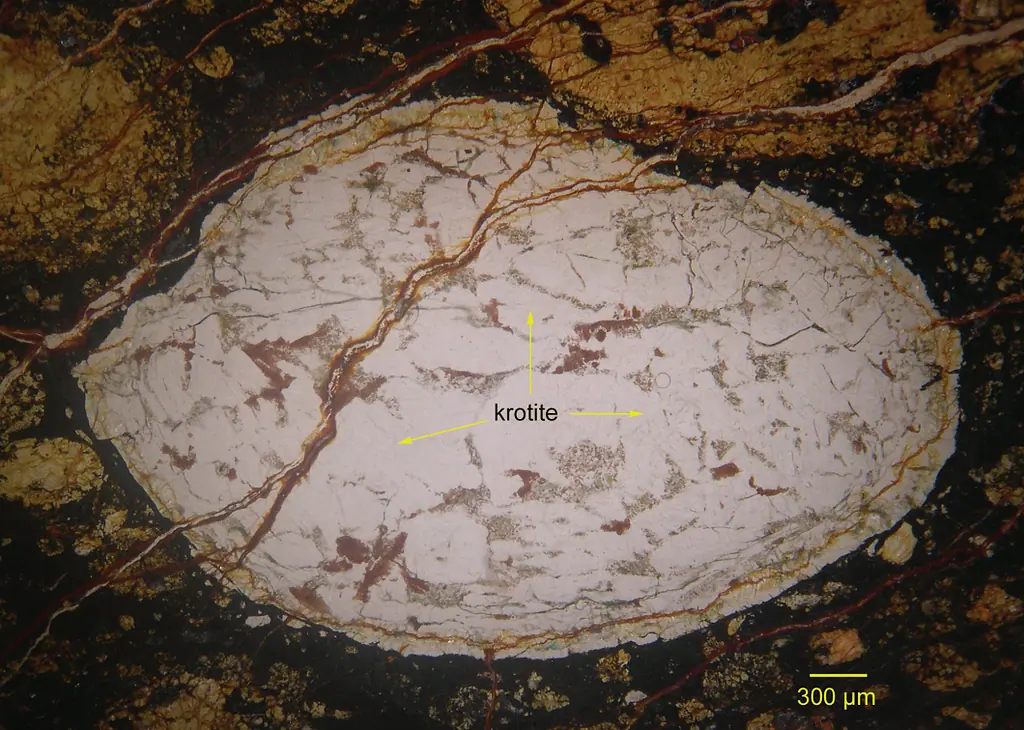
Krotite formed under extreme conditions billions of years ago, transporting us back to the dawn of the Solar System. Discovered in 2011, a krotite was identified in a meteorite fragment called NWA 1934, found in Africa.
This piece of space rock roamed the universe for billions of years before falling to Earth. Its formation occurred at temperatures above 1,500 degrees Celsius, in low-pressure environments—conditions that can’t be naturally replicated on our planet today.
-
AI Video Generator Automatically Creates Subtitles and Animated Captions

-
São Paulo Unveils Latin America’s Largest Underground Reservoir, Holding 900 Million Liters, in the Greater São Paulo Area

-
Chinese Teen Wins Gold in Germany for Invention Turning Air Moisture into Underground Irrigation in Drought-Stricken Areas

-
Desertification Threatens Brazil’s Caatinga: 85% of Semi-Arid Region Affected, 30 Million at Risk, and Efforts Underway to Restore 10 Million Hectares by 2045





An Ancient And Mysterious Mineral
Krotite was born in the protoplanetary disk surrounding the young Sun 4.6 billion years ago. This environment, filled with dust and gases at high temperatures, was the cradle of various celestial bodies, including planets.
Its composition, a combination of calcium, aluminum, and oxygen, reflects the violent and intense conditions of that period.
Meteorites like NWA 1934 act as time capsules, preserving minerals in their original state. Unlike terrestrial rocks, which are constantly reshaped by tectonic activity and erosion, these space fragments provide a pristine view of the past.
The analysis of krotite allows scientists to explore the processes that shaped our Solar System, from planet formation to the emergence of complex chemical elements.
Cosmic Concrete
Interestingly, humanity has already created something similar to krotite. Certain types of concrete, specifically calcium aluminate cement, have a similar chemical composition. However, there is one crucial difference: while krotite exhibits a specific crystalline arrangement, man-made materials have distinct atomic structures, resulting from their formation conditions.
Another mineral found exclusively in meteorites, dmitryivanovite, shares chemical similarities with krotite. Both are named after renowned scientists. Krotite was named in tribute to Alexander N. Krot, a cosmochemist who significantly contributed to the study of the primitive Solar System, while dmitryivanovite honors Dmitriy A. Ivanov, a prominent geologist.
A Window To The Cosmic Past
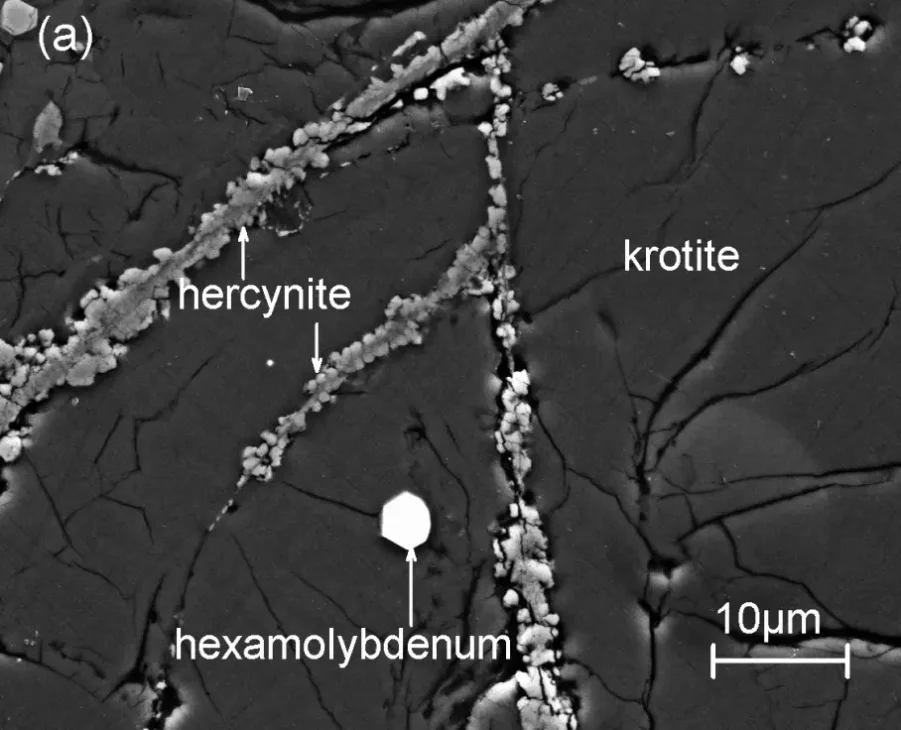
The composition and structure of krotite reveal fascinating clues about the early Solar System. Research suggests that minerals like it formed from condensation and crystallization processes in the hot, gaseous environment of the solar nebula. These processes involved different minerals surrounding the initial cores, followed by partial melting events and complex chemical reactions.
Studying krotite is like turning the pages of a cosmic book. Each mineral detail provides answers about the conditions leading to the origin of planets, moons, and other celestial bodies. For instance, the calcium and aluminum-rich inclusions (CAIs), of which krotite is a part, help understand how primordial material is specified to form the building blocks of planets.
Geology Above Our Heads
The discovery of krotite also reinforces a truth often overlooked: geology extends beyond Earth. It permeates the universe, connecting us to events and processes that occurred billions of years before our planet even existed. The analysis of extraterrestrial minerals broadens our understanding of the cosmos and challenges our perceptions of time, space, and evolution.
Even as a tiny and modest fragment, krotite carries significant weight. It is a tangible reminder of the vast scales of time and the immense forces shaping the universe. More than a mineral, it is a key piece in the cosmic puzzle that helps us unravel our own origin.
The next time we look at the sky, we may remember: among the stars, there are stories etched in minerals like krotite, waiting to be discovered. After all, geology is not just beneath our feet—it is also above our heads, in lost fragments of the cosmos.