Portuguese
  Spanish


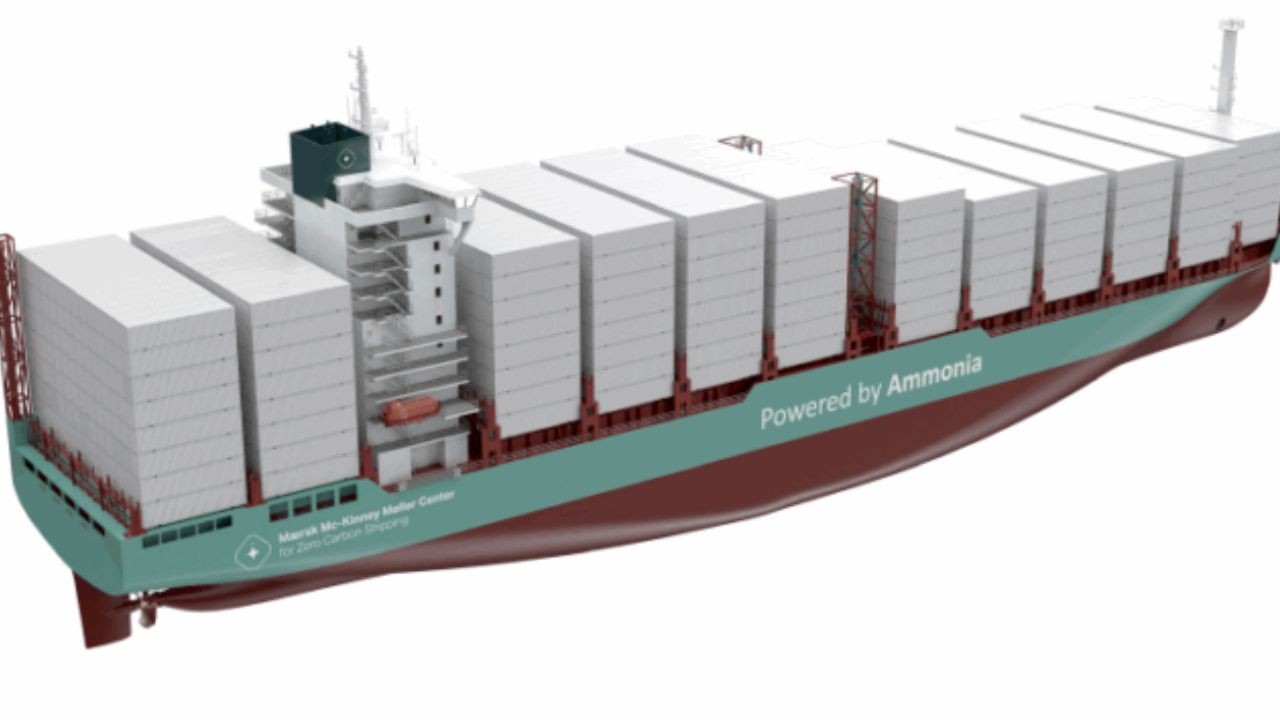

International Collaboration Develops Concept of 3,500 TEU Feeder Ship, Focusing on Safety and the Feasibility of Ammonia as Fuel to Decarbonize Maritime Transport.
The Mærsk Mc-Kinney Møller Center for Zero Carbon Shipping (MMMCZCS) has revealed a conceptual design for a 3,500 TEU feeder container ship powered by ammonia. The initiative, developed with strategic partners, represents a significant advancement in the technical qualification of ammonia as a viable energy source for the future of shipping.
A Technological Leap for Shipping with Ammonia
The project was a collaboration between MMMCZCS and industry giants. Among the partners are the engine manufacturer Everllence, A.P. Møller-Maersk, the classification societies ABS and Lloyd’s Register, the Danish Maritime Authority, the Maritime and Port Authority of Singapore (MPA), engineering company Deltamarin, and Eltronic FuelTech.
The ship concept was built on pillars of safety and cargo capacity. It considers an early deployment, using 60-cylinder two-stroke engines that are already available. The design also anticipates a scenario where the ammonia supply infrastructure is not yet fully developed.
-
The FLIP: A 108-Meter Ocean Laboratory That Stood Vertically for 60 Years, Dismantled in 2023

-
North Korean Fiasco: Launch of the Largest Warship Ends in Sinking

-
While giant ships still burn heavy fuel and the maritime sector races against climate targets, Maersk and Vale are starting to bet on ethanol as a new route to reduce emissions at sea.

-
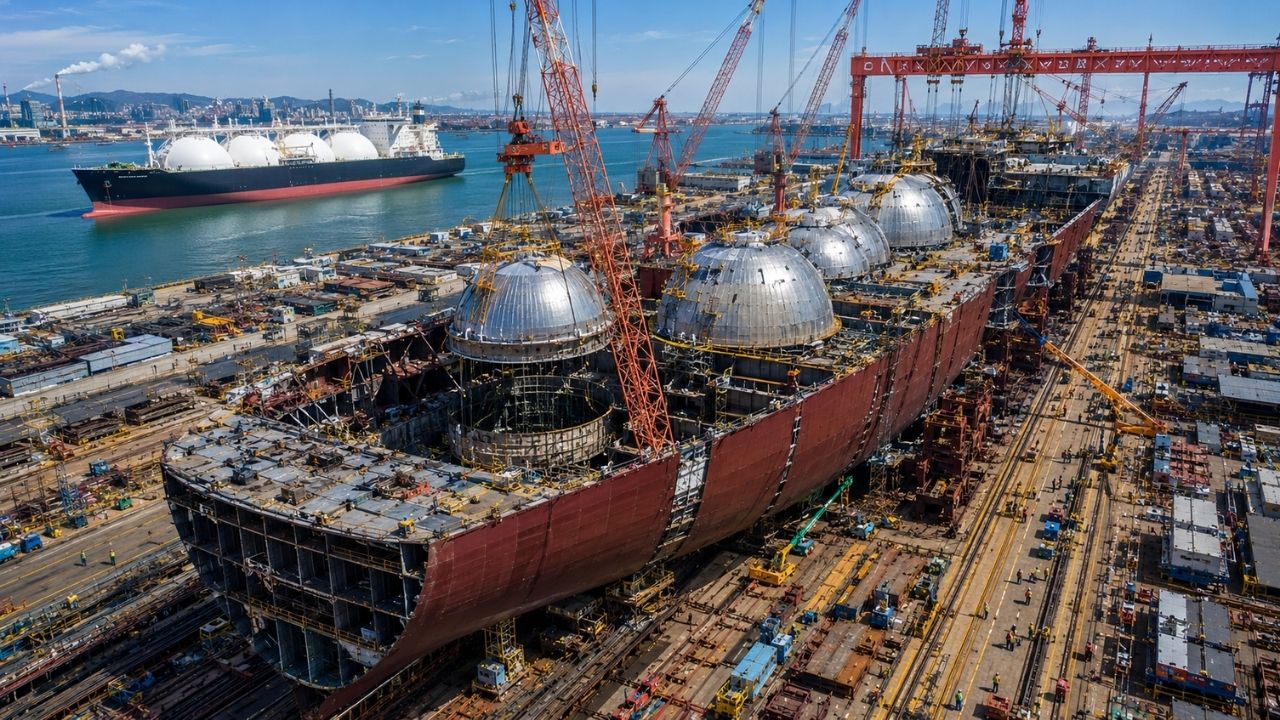
China begins construction of the world’s largest LNG ship, a 344-meter giant capable of supplying 4.7 million homes for a month, carrying 271,000 m³ of gas, and placing QatarEnergy in the largest naval order ever recorded in world history.


Thus, the arrangement would allow the ship to be fueled by a conveniently sized gas carrier, about 20,000 m³. The final concept is described as a “leap forward” for the technical qualification of ammonia as maritime fuel.
Design Focused on Safety and Efficiency
Safety was the central focus of the project. The overall goal was to create “a safe container feeder that integrates state-of-the-art ammonia fuel technology.” The design offers clear advantages to ensure safety.
The ship’s Type A storage tanks balance safety and space efficiency. The centralized refueling station provides flexibility for safe berthing and fuel transfer.
Additionally, the fuel preparation room (FPR) can be positioned near the engine room, which reduces risks and aids in the safe handling of ammonia. The ventilation system of the unit was also designed to direct potential leaks away from crew-accessed areas.
The Potential on the Path to Decarbonization
Ammonia is a highly attractive option for maritime transport. It has the potential for a 97% reduction in greenhouse gas (GHG) emissions if produced from renewable energy (e-ammonia).
This is not the first project of its kind for MMMCZCS. In July 2023, the entity and its partner Foreship received approval for a 15,000 TEU box ship also powered by ammonia, as part of a feasibility study in Singapore.
The Reality of Ammonia Use
Despite its potential, ammonia presents considerable challenges. Its toxicity, flammability, and corrosiveness are serious issues. The infrastructure for its use is still underdeveloped and the technology immature.
The lack of prescriptive regulations for ammonia-powered ships has also been a factor that required the exploration of alternative design processes and in-depth risk assessments during the creation of the concept.
The Need for Capacity Building for the Ammonia Era
The transition to ammonia heavily depends on the workforce. An MMMCZCS report from October 2024 noted that most seafarers are “willing” to work with this clean fuel.
However, the center highlighted in February 2025 that a significant workforce reshaping is necessary to prepare professionals for the safe handling and use of ammonia. According to MMMCZCS and Lloyd’s Register, at least 800,000 workers will need to undergo specialized training programs to qualify for handling this sustainable fuel.