Portuguese
  Spanish


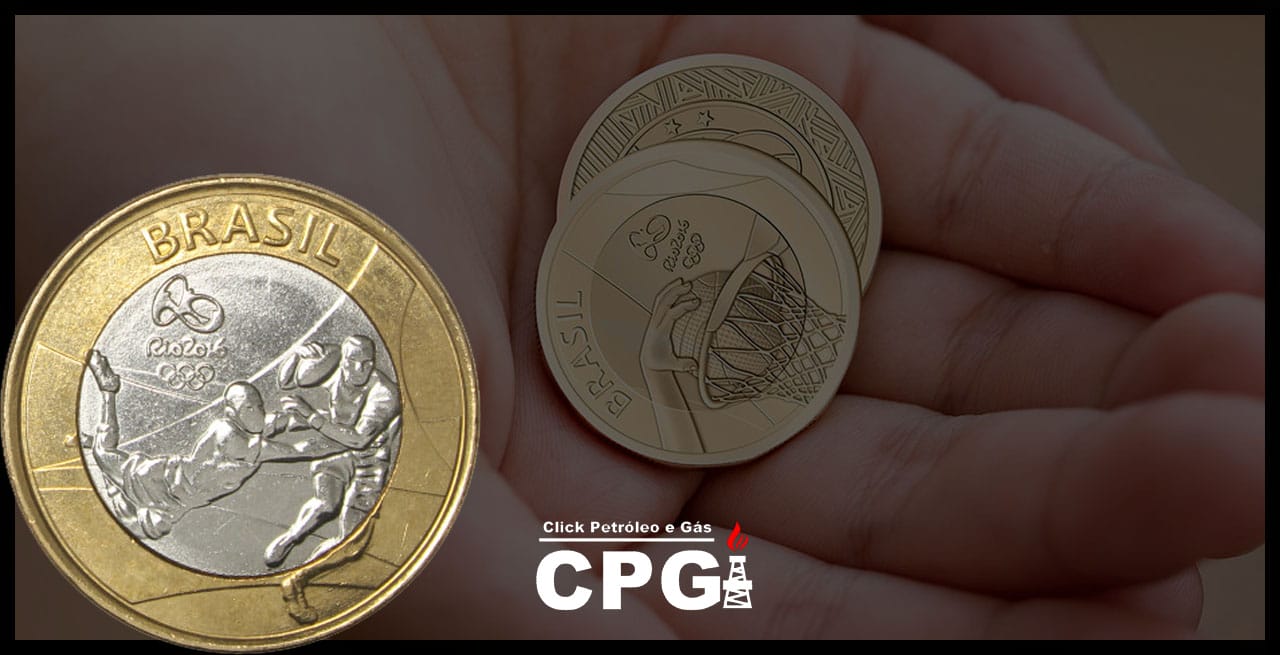

R$ 1 Coin Made in Reference to the Rio de Janeiro Olympic Games Can Be Worth 650 Times Its Original Value.
Nearly eight years after the Rio de Janeiro Olympic Games, the topic is still trending. However, now the reason is not the athletes and the competitions that took place back then, but rather the coins.
Yes, coins. This happens because a year before the Rio de Janeiro Olympics, the Central Bank (BC) released a series of commemorative models that reference the sports practiced that year.
One of these coins is currently worth R$ 650. We’re talking about the model created to honor rugby. This sport is not one of the most traditional in Brazil, but nonetheless, it was honored by the Central Bank that year.
-
China’s Century Megaproject Wows the World: Massive Water Transfer Network Moves Water from Wet South to Arid North, with Ambitious Plans in the Tibetan Plateau Involving Giant Tunnels at Altitudes up to 4,000 Meters

-
Petrobras Launches Bold $12 Billion Plan to Build 42 Vessels and Create Over 5,000 Jobs

-
Former Carrefour site in Rio de Janeiro may become affordable housing complex with 600 units after nearly 20 years of closure and legal battles.

-
Shopee Turns Instagram Posts and Reels into Shopping Showcases, Allowing Creators to Tag Products and Earn Commissions




Characteristics of the Rugby Coin
Among the characteristics provided by the Central Bank at the time of launch are the year, 2015, and others such as:
- Minting: 2nd;
- Sport: Rugby;
- Authorized Minting: 20 million;
- Weight: 7g; Material:
- Stainless Steel (core) and Bronze-Plated Steel (ring);
- Diameter: 27mm;
- Edge: Serrated;
- Minting Method: Common.
When You Can Sell the Coin for Its Maximum Value
You have the Rugby coin and are now wondering about its value? First, it’s important to highlight that, traditionally, that is, under normal conditions, it is worth only R$ 2. However, some models contain minting errors.
These anomalies increase the value of the model. According to information, the first error in question is called “marked date.” In this imperfection, the year 2015 is struck on the other side of the piece. With this error, a person who currently holds this coin can profit up to R$ 25.
However, there’s another error, this one rare, that can cause the coin to reach the R$ 650 mentioned in the article. According to reports, this anomaly, which causes collectors to seek the coin, is known as “inverted reverse.”
Today, the Central Bank, when minting coins, adopts a reverse standard method, that is, the horizontal axis (HA). However, minting errors cause some models to come out of production deviating from this standard.
These are known as “inverted reverse,” a very rare characteristic. In summary, these models with this imperfection feature an alignment contrary or inverted to the original alignment.
To check if a coin has this defect, hold the model with the face in normal position and facing you. Then, flip it bottom to top. If it appears upside down, it is the “inverted reverse.” Therefore, the coin is rare. All coins with this defect, regardless of value or edition, are worth more in the market for these objects.
Read also: Check Out SEVEN VERY Rare and Valuable Models from the Real Plan