






 Portuguese
  Spanish


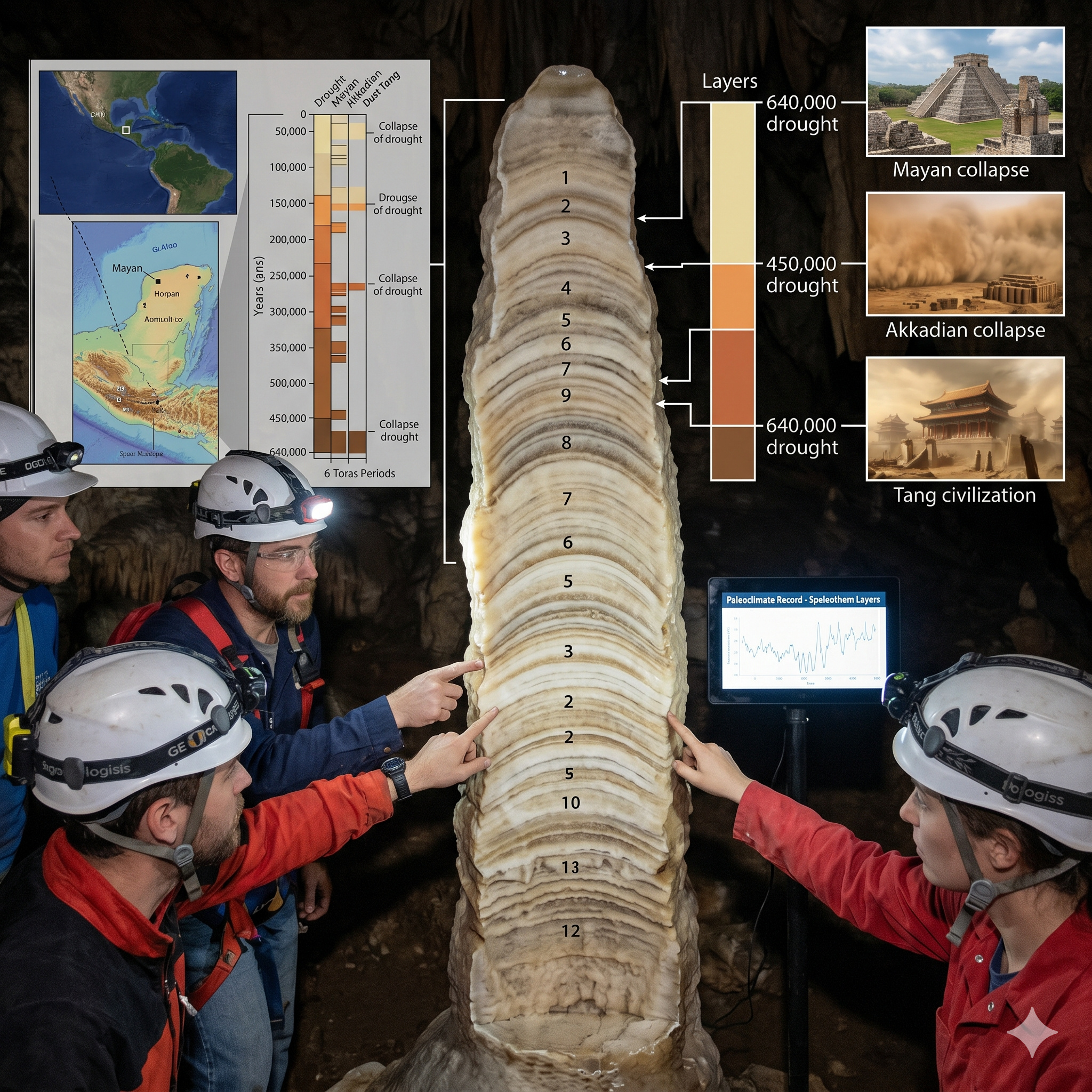

Study with speleothems up to 640,000 years old links prolonged droughts to the collapse of civilizations in China, the Middle East, and the Americas.
Research published between 2020 and 2025 in journals such as Science, Nature Communications, Nature Climate and Atmospheric Science, and Nature has placed cave formations at the center of one of the most precise fronts of terrestrial climate reconstruction. Studies with speleothems, such as stalagmites and carbonate deposits formed drop by drop, have analyzed cave records from China, Brazil, and the Arabian Peninsula, using chemical signatures to reconstruct changes in rainfall, monsoons, aridity, and atmospheric circulation on scales ranging from thousands to hundreds of thousands of years, and in some cases, even millions of years.
These formations grow slowly as water seeping through the soil carries minerals into caves and deposits calcium carbonate in successive layers. Each layer acts as a chemical time capsule of the environment in which it formed, preserving variations in oxygen and carbon isotopes, as well as trace elements like magnesium and calcium, which are indicators used to infer past changes in humidity, monsoon intensity, and water availability.
The result is a high-resolution natural archive that helps us see the climate far beyond written historical records and modern instrumental measurements. Instead of revealing only isolated events, speleothems allow for the comparison of current climate behavior with long cycles of rain and drought already recorded in caves in sensitive regions, such as central-eastern Brazil, southwestern China, and currently arid areas of Arabia, where ancient wet phases show that dry landscapes were not always so.
-
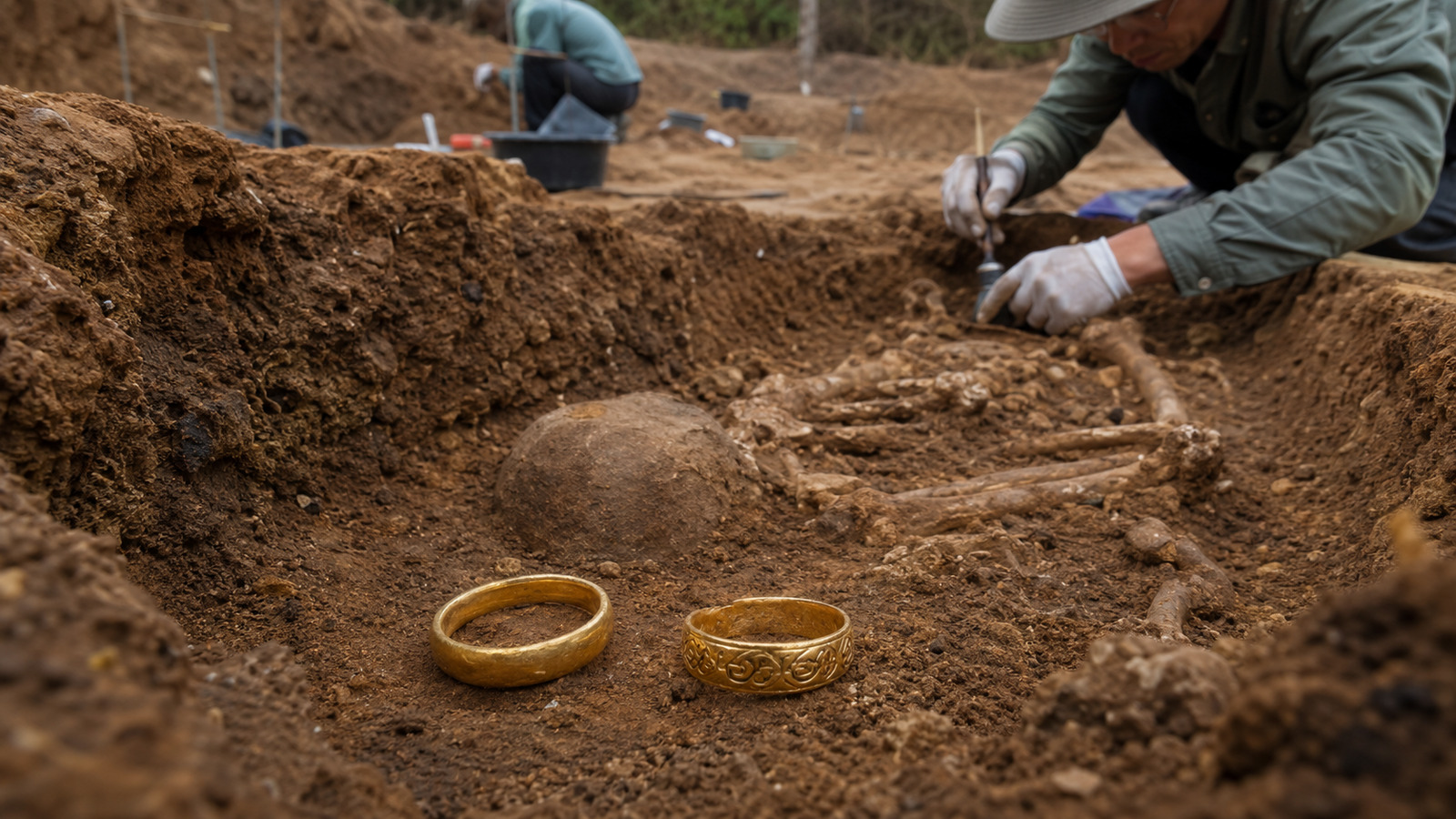
2,000-Year-Old Gold Rings Found with Human Bones in Thailand Reveal Rare Burial and Feature Ancient Indian Inscription

-
Lenovo Unveils Legion Y700 Tablet with RGB Backlighting, 5G, and SIM Card Support

-
World’s First Nuclear Hydrogen Unit Begins Operation: Copper-Chlorine Technology with Initial Capacity of 150 Liters per Hour, Aiming for 3,000 Liters per Hour
-
Mechanics Retrofit Old Fiat Uno with BYD Electric Motor for Silent, Low-Voltage Operation Reaching Nearly 60 km/h in Home Test


Uranium-thorium dating method allows for reconstruction of up to 640,000 years
The reliability of these records is directly linked to the method used to date the layers. Researchers use the uranium-thorium dating technique, which allows for determining the age of each layer with high precision, even on scales of hundreds of thousands of years.
This method makes it possible to:
- reconstruct continuous climate sequences
- identify periods of intense rain and prolonged drought
- compare events between different regions of the planet
Some records, especially in caves in China, reach up to about 640,000 years, offering an extremely rare temporal window in climate science.
Records connect monsoon patterns, the Amazon, and the Middle East
By analyzing speleothems from different regions, scientists have been able to connect seemingly independent climate systems.
In China, caves like Dongge record variations in the intensity of Asian monsoons. In the Middle East, formations in caves in modern-day Turkey reflect changes in the rainfall regime of the Fertile Crescent. In Latin America, records associated with the Amazon and nearby regions help reconstruct periods of drought and humidity.
These data show that the global climate is interconnected by complex systems that respond to planetary-scale changes.


The rainfall behavior in one region can be related to changes in another, even if separated by thousands of kilometers.
Prolonged droughts coincide with the collapse of great civilizations
One of the most impactful findings of these studies is the correlation between extreme climate events and moments of social instability.
The records indicate that periods of prolonged drought coincide with crises in civilizations such as:
- the Tang dynasty in China
- the Akkadian Empire in the Middle East
- the Mayan civilization in Mesoamerica
These droughts, with an estimated duration between 50 and 200 years, appear clearly in the layers of speleothems, marked by changes in oxygen isotopes that indicate a reduction in precipitation.
Although not the sole cause of the collapses, these climatic events appear as decisive factors at critical moments for these societies.
Tang Dynasty faced weakening monsoons recorded in Chinese caves
In China, records from the Dongge cave show significant variations in the intensity of monsoons over the centuries.
This data coincides with periods of instability during the Tang dynasty, when climatic changes may have affected agricultural production and food security.

The reduction in rainfall in monsoon-dependent regions would have had a direct impact on the economy and social organization. Climate appears as a silent factor that may have contributed to the weakening of one of the greatest dynasties in Chinese history.
Akkadian Empire faced severe drought recorded in the Middle East
In the case of the Akkadian Empire, one of the first great empires in history, cave records in the Middle East show evidence of a prolonged drought associated with the so-called 4.2-kiloyear climatic event.
This period was marked by a significant reduction in rainfall and environmental changes that affected agriculture in the Mesopotamia region.
The drop in agricultural productivity would have contributed to political and social instability, coinciding with the empire’s decline.
Maya civilization went through periods of drought identified in natural records
In Mesoamerica, data from lakes and caves indicate that the Maya civilization faced multiple episodes of drought during the Late Classic period.
These events appear in natural records as changes in the chemical composition of sediments and subterranean formations.

The prolonged reduction in rainfall would have affected:
- food production
- water supply
- the stability of densely populated cities
These factors appear as important elements in the decline process of Maya urban centers.
Speleothems record climate even before the existence of written records
One of the most relevant aspects of these discoveries is the timescale involved. While written historical records cover only a few thousand years, speleothems allow us to observe the climate long before the emergence of civilizations.
This makes it possible to compare recent events with long-term climate patterns. In practice, these formations function as a “memory of the planet,” recording changes that no human society was able to document directly.
Correlation does not mean a single cause, but it reinforces the role of climate
Scientists emphasize that the collapse of civilizations is the result of multiple factors, including politics, economics, and internal conflicts.
However, the temporal coincidence between prolonged droughts and periods of instability reinforces the role of climate as a pressure element. Extreme climatic events can:
- reduce agricultural production
- increase conflicts over resources
- weaken social structures
Climate alone does not determine the fate of civilizations, but it can act as a trigger at critical moments.
Studies broaden understanding of current climate risks
By reconstructing past events, researchers also offer clues about the future. The analysis of prolonged droughts in different regions shows that the climate system is capable of generating long-lasting extreme events.
This data helps to better understand:
- natural climate variability
- impacts of environmental changes
- vulnerability of human societies
The climate past recorded in caves becomes a tool for interpreting current and future risks.
Given this evidence, can climate continue to influence the destiny of modern societies?
With records spanning hundreds of thousands of years and revealing consistent patterns of drought associated with times of crisis, speleothems show that climate has always been a relevant factor in human history.
Today, with greater scientific knowledge and technology, the ability to predict and react to these events has increased, but the dependence on natural resources remains.
The question that remains is direct: to what extent are modern societies prepared to deal with prolonged climate events similar to those that have already impacted civilizations in the past?


