






 Portuguese
  Spanish
  6 min of reading
  0 comments


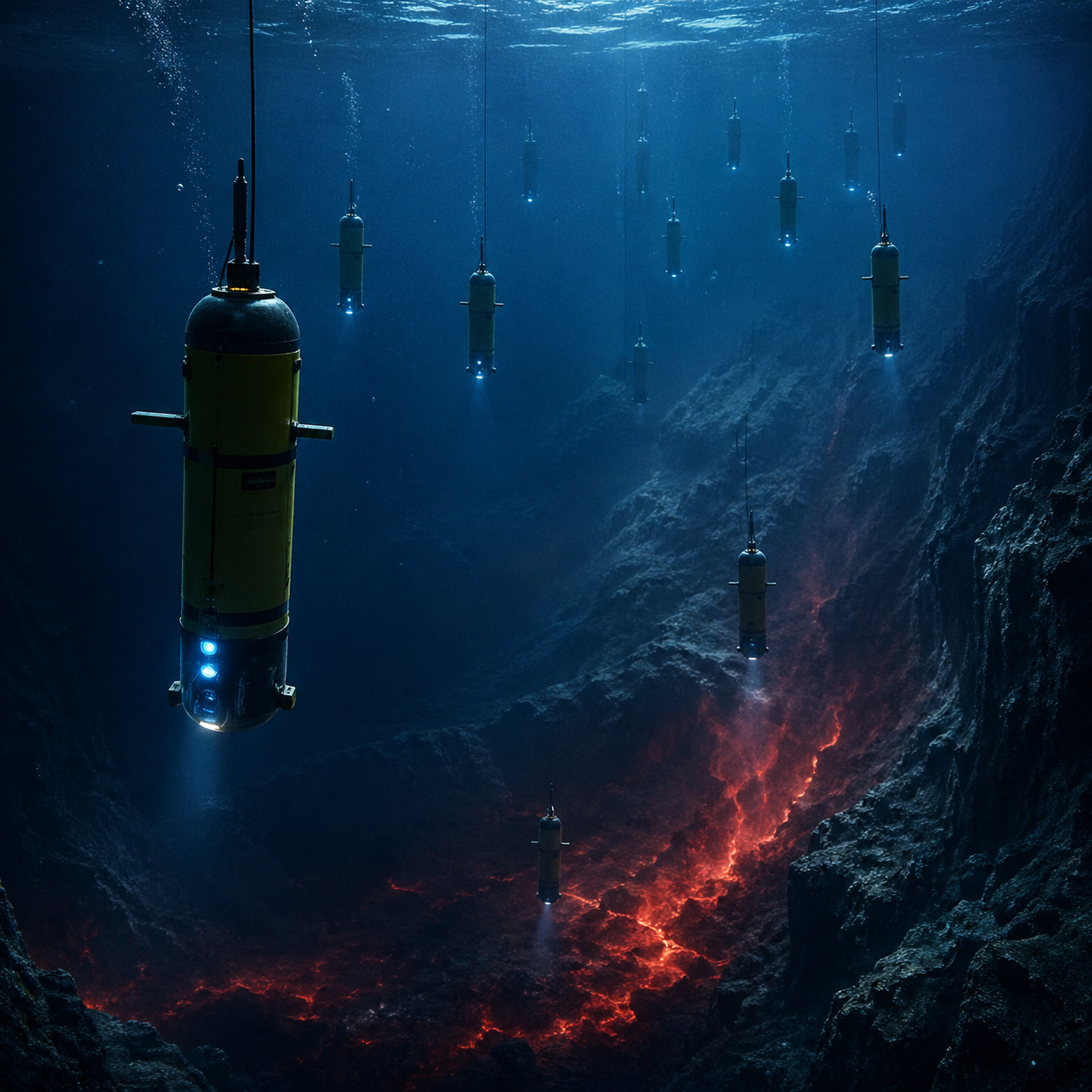
Deep Argo network monitors the deep ocean up to 6,000 meters, but coverage is still insufficient to measure all the heat accumulated on the planet.
In 2025, the Scripps Institution of Oceanography reported that the Deep Argo network already had more than 200 active floats, capable of reaching depths of up to 6,000 meters to measure temperature, salinity, and pressure in the deep ocean. The advancement expands climate observation below 2,000 meters, but also exposes a critical gap: the international goal is to reach 1,200 Deep Argo floats, a number considered necessary to monitor the deep ocean on a global scale.
This means that, even with the technological leap, about 85% of the ideal network has not yet been deployed, leaving vast areas of the deep ocean dependent on sparse measurements by ships, fixed sensors, and occasional campaigns. The warning is clear: while satellites and buoys already help monitor the surface and upper layer of the ocean, the depths where heat is absorbed, transported, and stored remain partially out of the continuous view of science.
The central point of this topic is clear: while the ocean’s surface is relatively well observed by satellites and buoys, the deep layers — where much of the planet’s heat is being stored — remain partially unknown.
-
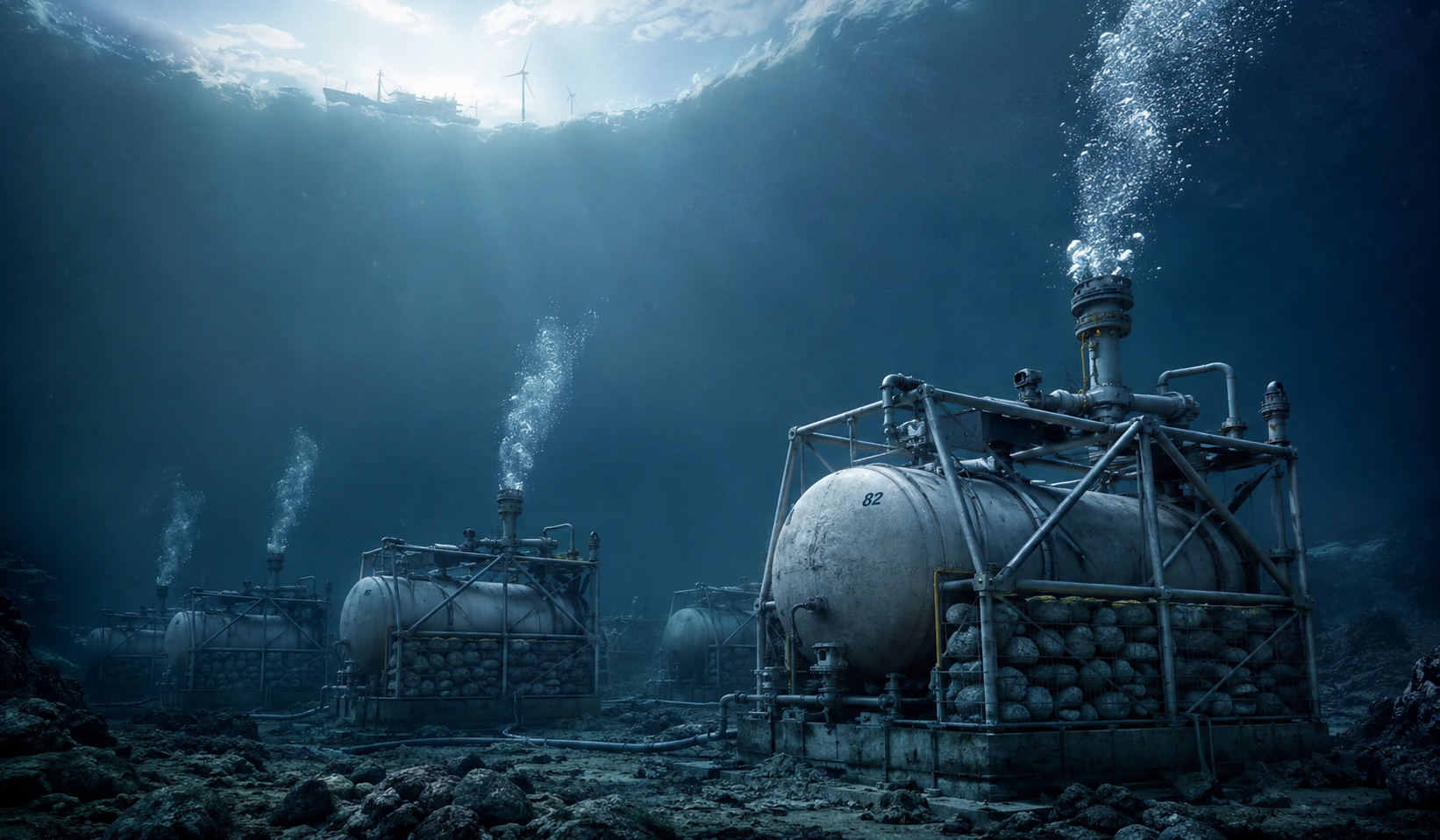
While scientists test giant balls on the seabed, a startup wants to sink concrete and steel tanks held by cages filled with stones up to 700 meters deep to transform compressed air into an invisible underwater battery.

-
Former NASA engineer transforms drones into “seed helicopters” capable of firing 300 balls per minute, targeting degraded areas with half-meter precision, and planting up to 40 million trees per year in a new race for aerial reforestation.

-
Brazil deploys drones to scatter seeds on nearly inaccessible slopes and attempts to transform degraded hills into forests with aerial planting up to 100 times faster, in a green offensive launched in Rio de Janeiro.
-
Second half of June brings more intense cold, polar air mass, and above-average rainfall in Brazil




What is Deep Argo and how do these robots operate at thousands of meters deep
The Deep Argo system is part of an evolution of the Argo program, created in the early 2000s to monitor global oceans. While traditional floats operate up to about 2,000 meters, the new generation is designed to reach much greater depths, reaching 6,000 meters, which covers practically the entire global ocean volume.
Each float is an autonomous robot equipped with sensors that measure temperature, salinity, and pressure. It follows a relatively standardized operational cycle:


The equipment descends to the programmed depth, remains at rest for a determined period, and then slowly ascends to the surface, collecting data along the water column. Upon surfacing, it transmits the information via satellite to research centers, where the data is processed and incorporated into climate models.
This process repeats continuously for years, allowing the construction of time series that show how the ocean is changing in depth.
The main advantage of Deep Argo is precisely this ability to access regions that were previously practically inaccessible continuously, especially below 2,000 meters, where most traditional instruments did not operate regularly.
The deep ocean stores most of the planet’s heat and changes invisibly
One of the most important points of this topic is the distribution of energy in the climate system. Consolidated studies indicate that more than 90% of the excess heat generated by global warming is absorbed by the oceans. Much of this heat does not remain on the surface but is distributed along the water column, including at depths greater than 2,000 meters.
This means that the deep ocean functions as the planet’s main energy reservoir, even though it is practically invisible for direct observation.
The problem is that, without adequate measurements at these depths, scientists are limited in their ability to accurately understand:
- How much heat is being stored
- At what rate it is accumulating
- How it is being redistributed by ocean currents
- What the future impact on the global climate will be
This data gap is exactly what the Deep Argo program aims to fill.
Even with more than 200 robots, most of the deep ocean is still not monitored
Despite the technical advancement, the current coverage of Deep Argo is still considered insufficient to adequately represent the global ocean.
The goal of 1,200 floats is not arbitrary. It was defined based on the need to cover different oceanic regions with sufficient density to capture relevant spatial and temporal variations.

With just over 200 units in operation, large areas remain without continuous direct observation, especially in remote regions, such as:
- Southern Ocean
- Large Pacific basins
- Parts of the deep Atlantic
- Polar and subpolar regions
This gap creates a scenario where the planet’s most important climate system is being observed incompletely, which limits the accuracy of forecasts and models.
Why measuring heat at depth is essential for predicting future climate
Sea surface temperature is often used as a climate indicator, but it represents only a small fraction of the ocean system.
Heat stored at depth directly influences processes such as:
- Thermal expansion of water, which contributes to sea level rise
- Intensity and frequency of storms and cyclones
- Global ocean circulation
- Heat exchanges between ocean and atmosphere
Without deep data, part of these dynamics remains poorly understood, which can generate relevant uncertainties in medium and long-term climate projections.
Furthermore, heat stored in the ocean can be released slowly over time, prolonging the effects of global warming even if greenhouse gas emissions are reduced.
The technical challenge of operating equipment at 6,000 meters depth
Taking instruments to extreme depths is not trivial. At about 6,000 meters, water pressure can exceed 600 atmospheres, an extremely hostile environment for any electronic or mechanical equipment.
Deep Argo floats need to be designed to withstand:
- Extreme pressures
- Low temperatures
- Corrosion
- Long periods without maintenance
- Limited communication
Each unit represents a significant technological investment, which also helps explain why the global network has not yet reached the ideal number.

Furthermore, the logistics of deploying and maintaining this equipment in remote ocean regions adds operational complexity to the project.
The lack of deep ocean data can limit the understanding of climate change
One of the most critical points highlighted by scientists is that the lack of complete deep ocean coverage creates significant uncertainties. Without sufficient data, climate models need to work with estimates or extrapolations, which can affect:
- Global warming projections
- Sea level rise estimates
- Forecasts of extreme events
- Climate risk assessment
This does not mean that science has no answers, but that some answers still have a greater margin of uncertainty than ideal, especially regarding the long-term behavior of the climate system.
Deep Argo emerges precisely as an attempt to reduce this uncertainty by expanding the available database.
The expansion of the Deep Argo network could redefine the precision level of climate forecasts
If the target of 1,200 floats is reached, the scientific impact could be significant. A denser network would allow for:
- More detailed monitoring of deep currents
- Better understanding of heat storage
- Reduction of uncertainties in climate models
- Greater capacity to predict sea level changes
- More precise integration between oceanic and atmospheric data
This advancement is not only technical but strategic, as it directly improves the global capacity to anticipate and respond to climate change.
The deep ocean remains one of the planet’s biggest knowledge gaps
Despite decades of oceanographic research, the deep ocean is still one of the least understood regions on Earth.
While satellites monitor the surface with high resolution, and terrestrial sensors track the atmosphere in detail, the deeper layers of the ocean remain one of the greatest challenges in scientific observation.
Deep Argo represents a concrete step forward in this direction but also highlights the size of the gap that still exists.
Ultimately, what this topic reveals is something difficult to ignore: even with advanced technology and hundreds of robots operating at depth, most of the system that stores the planet’s heat is still not monitored with the necessary precision.
Given this, the inevitable question remains: if the deep ocean is Earth’s primary energy reservoir and is still not fully mapped, to what extent do we truly understand the speed and dimension of ongoing climate change?







-

-

-

-

-

15 people reacted to this.