Portuguese
  Spanish


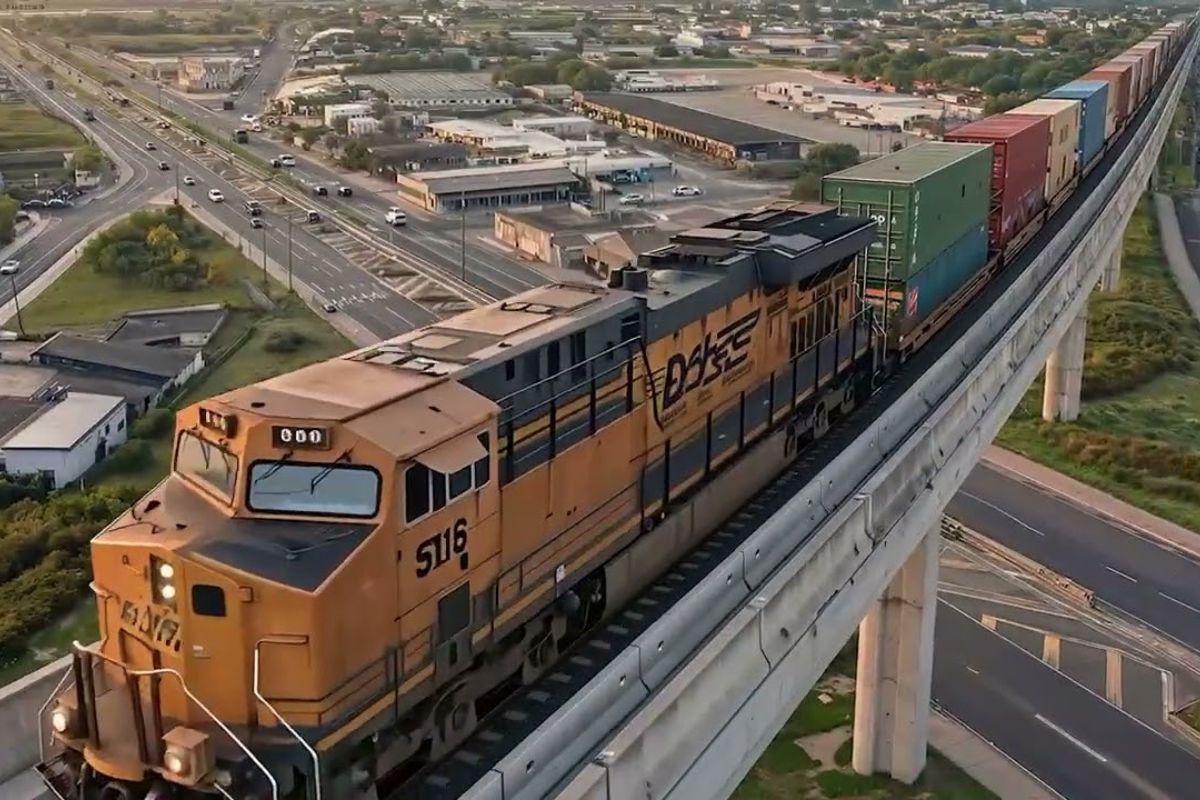

City Hall presented to DNIT a project of R$ 260 million to raise the railway from 1884 to seven meters in Pinheirinho. Under the tracks, complete urban renewal. 300 families will be relocated. Bidding expected by 2028.
The City Hall of Criciúma presented to the National Department of Transport Infrastructure in Brasília, on Tuesday, April 14, the project to elevate the tracks of the Tereza Cristina Railway in the urban area of the city. The plan aims to raise the railway line to seven meters high in the section between the Pinheirinho neighborhood and the Maina River up to the intersection with Centenário Avenue, in the Milanese neighborhood. The estimated cost is R$ 260 million.
Mayor Vaguinho Espíndola signed a technical cooperation agreement with DNIT and presented an unprecedented video showing how the elevated layout will look. According to him, under the tracks will emerge “a new city,” with complete urban renewal of the area currently occupied by about 300 houses built along the railway.
Why are the tracks in Criciúma a problem?

The Tereza Cristina Railway has existed since the imperial period. The first tracks arrived in southern Santa Catarina between 1880 and 1884, installed by the British company The Donna Thereza Cristina Railway Co. The railway was built to transport coal from the Lauro Müller mines to the port of Imbituba, passing through Criciúma.
-
28-meter, 156-ton titans traveled 20,000 km from China to the port of Santa Catarina: Portonave received 7 fully electric megacranes, part of a R$ 210 million package, to double container handling.

-
They exchanged the idea of a large house for a 35 m² warehouse, spent US$ 12,000 on the structure, and created a tiny house in Colorado with space to live and work.

-
A newly opened terminal in the middle of the Amazon has begun transporting soy and corn through Amapá, eyeing the queue of ships that is congesting the ports in the South.

-
Goodbye to old tiles: renovation technique without construction transforms bathrooms in a few hours, eliminates debris, and reduces costs with coverings using special paints, high-resistance adhesives, and modern finishes that completely renew the space.


The problem is that the city grew around the tracks. What in 1884 was open field has turned into neighborhoods, commerce, schools, and hospitals. Today, the railway cuts through the urban perimeter of Criciúma at ground level, with level crossings that disrupt traffic, cause accidents, and divide entire neighborhoods. In Pinheirinho, 300 families built houses literally on the edge of the railway domain, in a vulnerable situation.
The railway continues to operate. There are 164 kilometers of track transporting coal to the Jorge Lacerda Thermoelectric Complex in Capivari de Baixo. The concession is private, operated by Ferrovia Tereza Cristina S.A. since 1997. The government maintained the use of coal until 2040 in the reform of the electric sector, which means that trains will continue to pass.
What does the project foresee in practice?
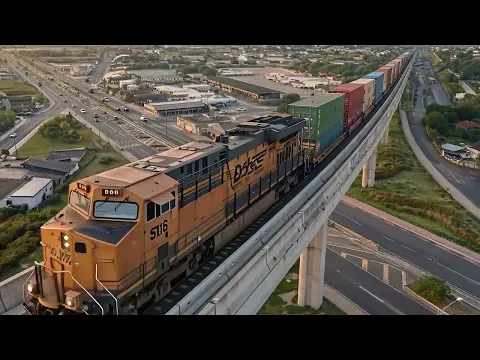

The elevation of seven meters transforms the railway into an aerial structure similar to a continuous railway viaduct. Trains pass overhead, and below, the space is freed up for redevelopment: streets, sidewalks, lighting, green areas, and integration between neighborhoods that are currently separated by the line.
The project includes the relocation of families living within the domain area. In January, the city hall had already obtained a diagnosis from the federal government regarding the vulnerable population in the region. Families will be moved to areas within Pinheirinho and the Cristo Redentor neighborhood.
The expectation is that the bidding for the work will occur during Espíndola’s first term, which runs until 2028. The next step is to invite Ferrovia Tereza Cristina S.A. to participate in the construction of the project and return to Brasília with Santa Catarina parliamentarians to secure funding.
What is the context of this project in Santa Catarina?
The mayor classifies the project as pioneering in the state. Santa Catarina faces the same problem in other cities cut by railways, such as Joinville, where the Railway Bypass is under construction to divert trains away from the city center. The difference is that Criciúma does not propose a bypass. It proposes to keep the railway exactly where it is and elevate it above the city.
Criciúma was elected the 4th smartest city in Southern Brazil and the 16th in the country by the Digital City Network. The mayor received the title of Innovative Mayor 2026 at the Santa Catarina Congress of Digital Cities in April. The city is structuring a Smart City PPP with LED lighting, video monitoring cameras, telecommunications, and a photovoltaic plant.
The elevated railway fits into this context. It is not just an engineering project. It is a decision to redesign an entire city that was born around a coal railway line installed by the English in the 19th century and which, 142 years later, still cuts through the urban center at ground level.
R$ 260 million to raise tracks seven meters. Below, a new city. Above, coal going to the thermoelectric plant until 2040. Criciúma is this: past and future sharing the same viaduct. What do you think about this construction?